
Skip to: Course Modules Tutor Price FAQs
AN EXPERIMENTAL APPROACH TO MIXED MEDIA WITH STITCH
Online contemporary textile art course | Learn with Shelley Rhodes
Enrolment closes 10 Aug | Places are limited
DIRECT TUTOR FEEDBACK
PRIVATE ONLINE COMMUNITY
LIFETIME ACCESS
From field notes and slow stitching to contemporary textile art that’s boro inspired
Deliberately distress, repair, and remake your work
Are you drawn to worn surfaces, found objects, the things most people overlook?
You probably already have the fabric, threads, paper and paints. What you don't have is a way to connect it all into a body of work that's recognisably yours.
If you're ready to take the risk – to burn, bury, layer, stitch, rip and repair what you've already made, and create something new, Finding Fragments has the process for that.
Nothing you make is wasted – every fragment is where the next piece begins.
Finding Fragments is a sustainable, reusable process… everything becomes part of the work.
This course is life-changing. It’s so jammed packed with ideas, techniques, and know-how – plus it provides a great framework for working in a series. I wish I had seen it ten years ago.
- Roberta W.
Everything you make starts feeding everything else.
Make field notes on prepared walk cards and paper grounds to capture the essence of a place, adding personal resonance to the foundation of your artwork.
Use a collection of objects as a source of inspiration for colour, drawing, printing and mark-making. Combine photographs with expressive marks as your ideas begin to come together.
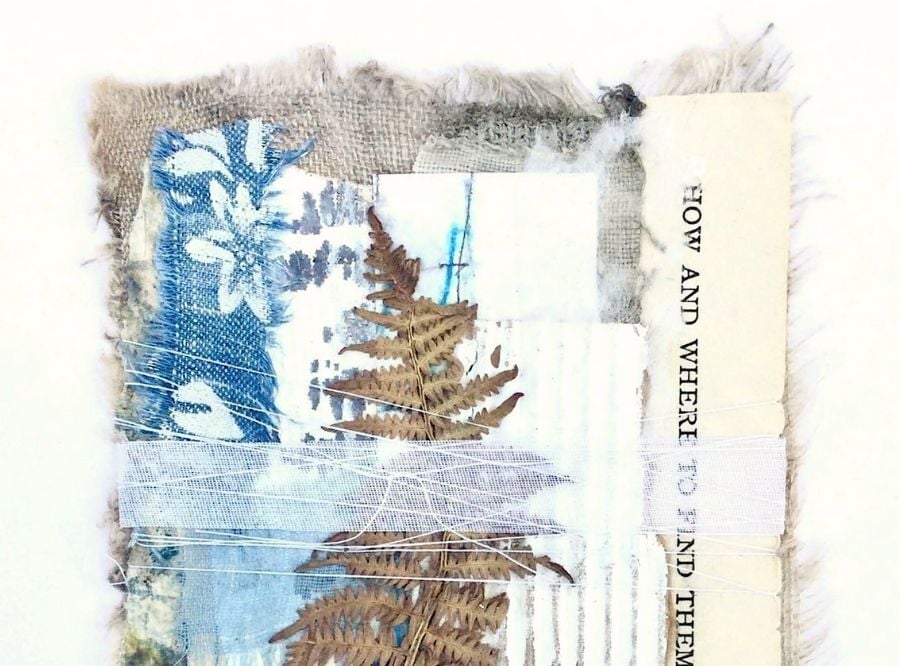
Explore a wide range of mark-making techniques on fabric and paper, then cut, distress, reconstruct and reconnect your pieces to create dynamic, balanced compositions.
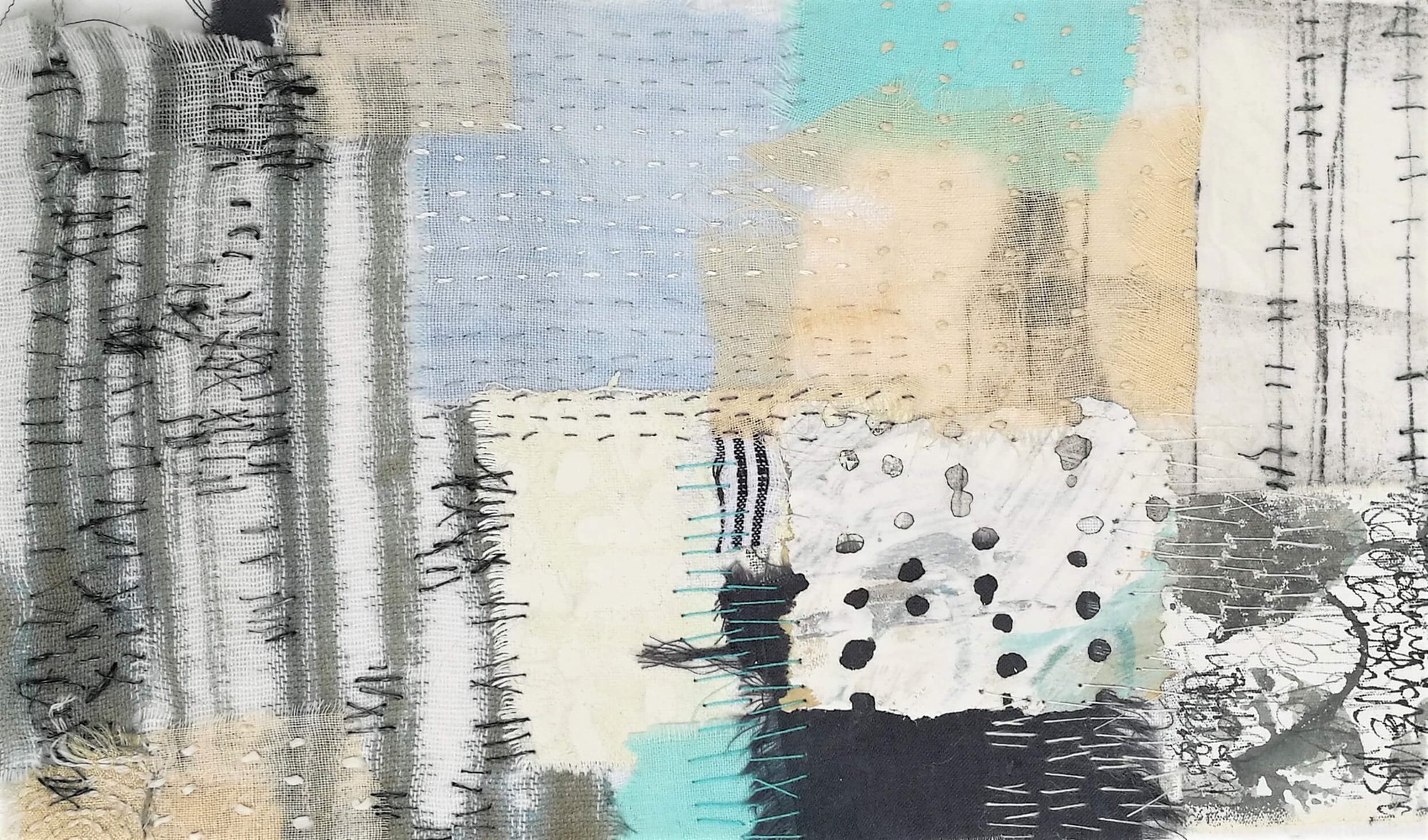
Discover Shelley's contemporary approach to boro and kantha, transforming old garments and every last scrap into richly layered, hand-stitched mixed media artworks.
Alter, weather and transform your work through stitching, distressing and manipulation, embracing the unexpected relationship between intention and chance.
Build confidence working in small, flexible formats, and learn simple, professional ways to present and display your finished pieces.
Enrolment closes 10 Aug Places are limited
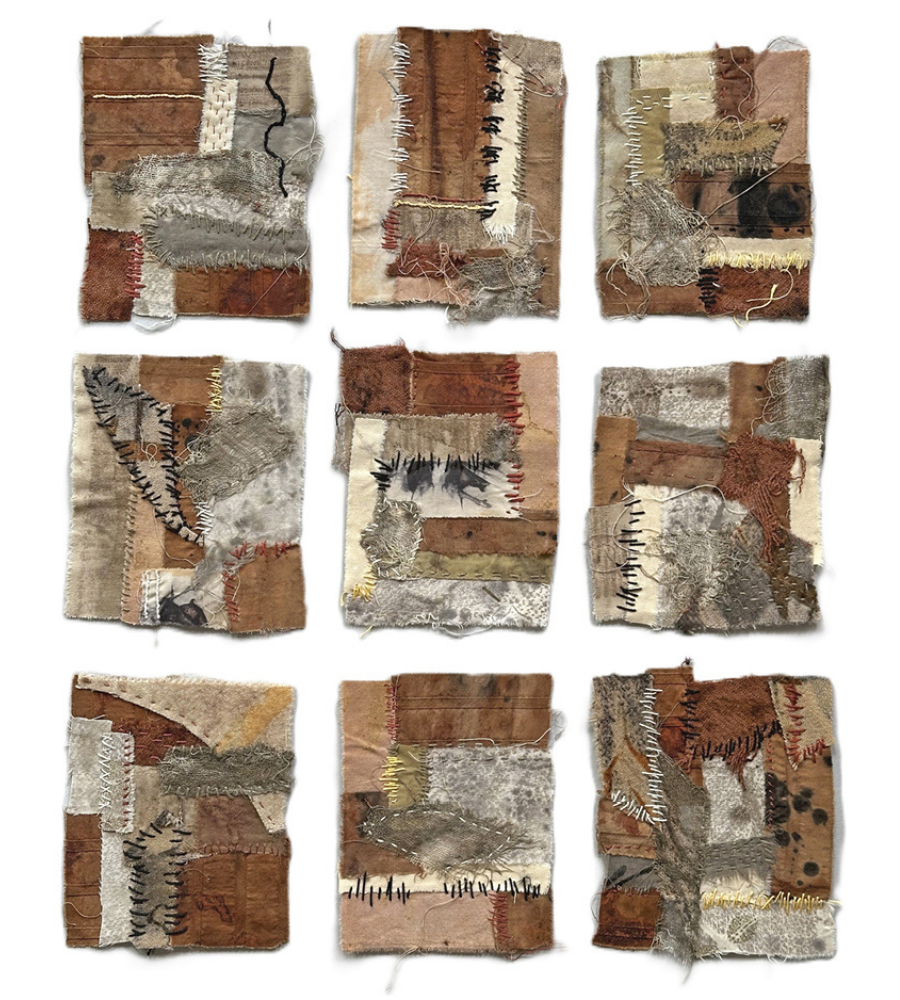
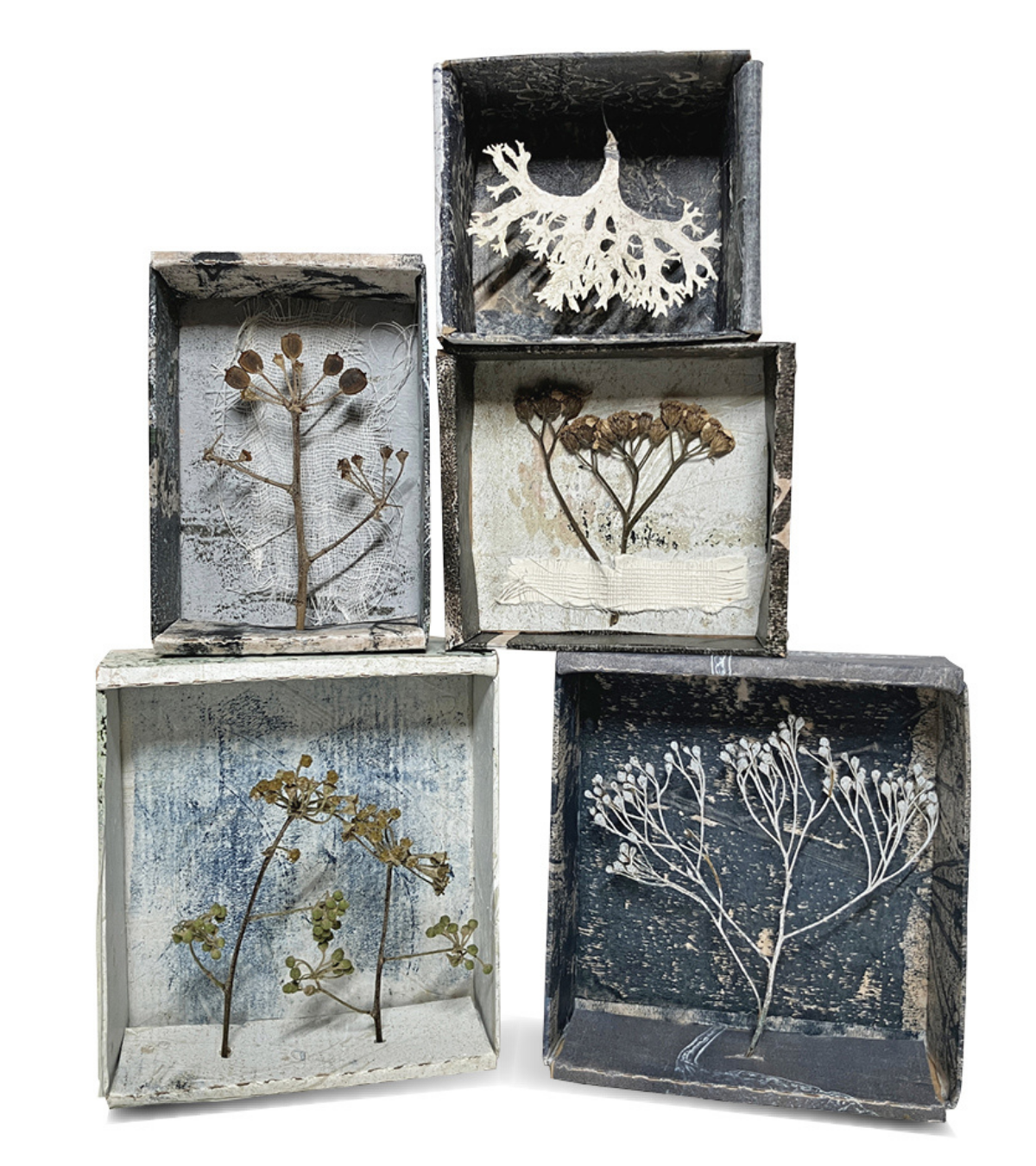
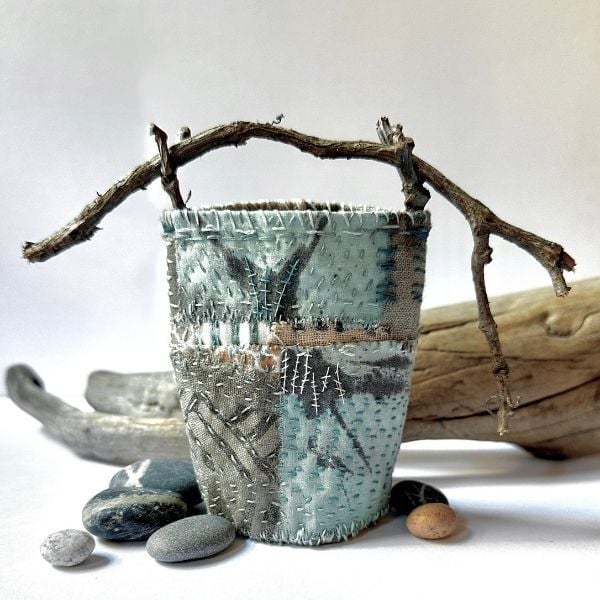
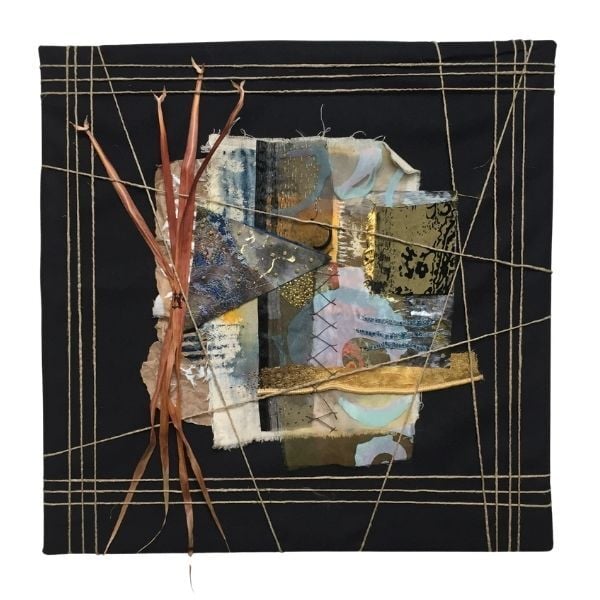
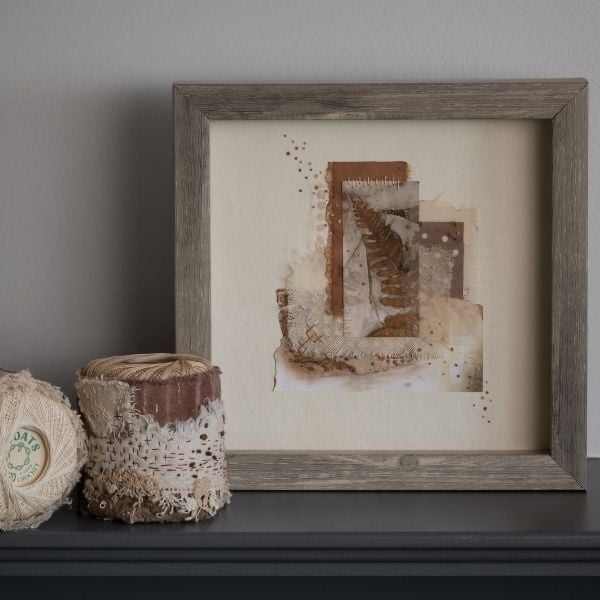
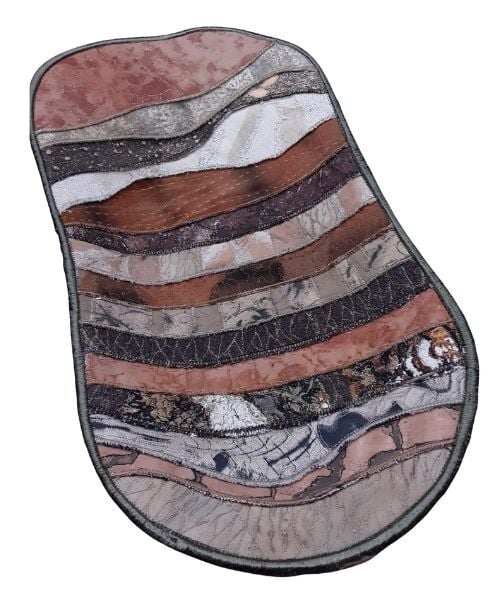
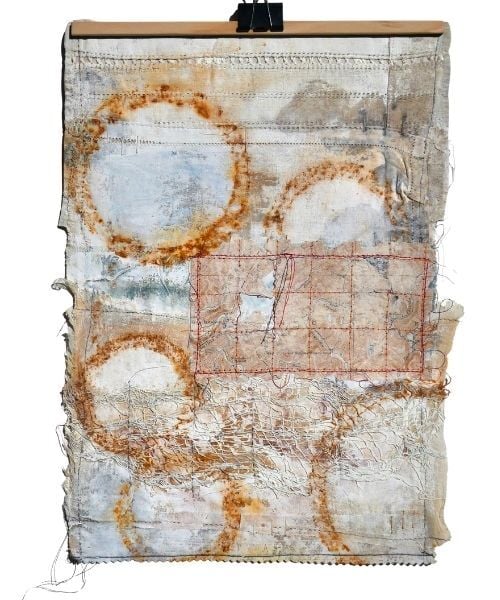
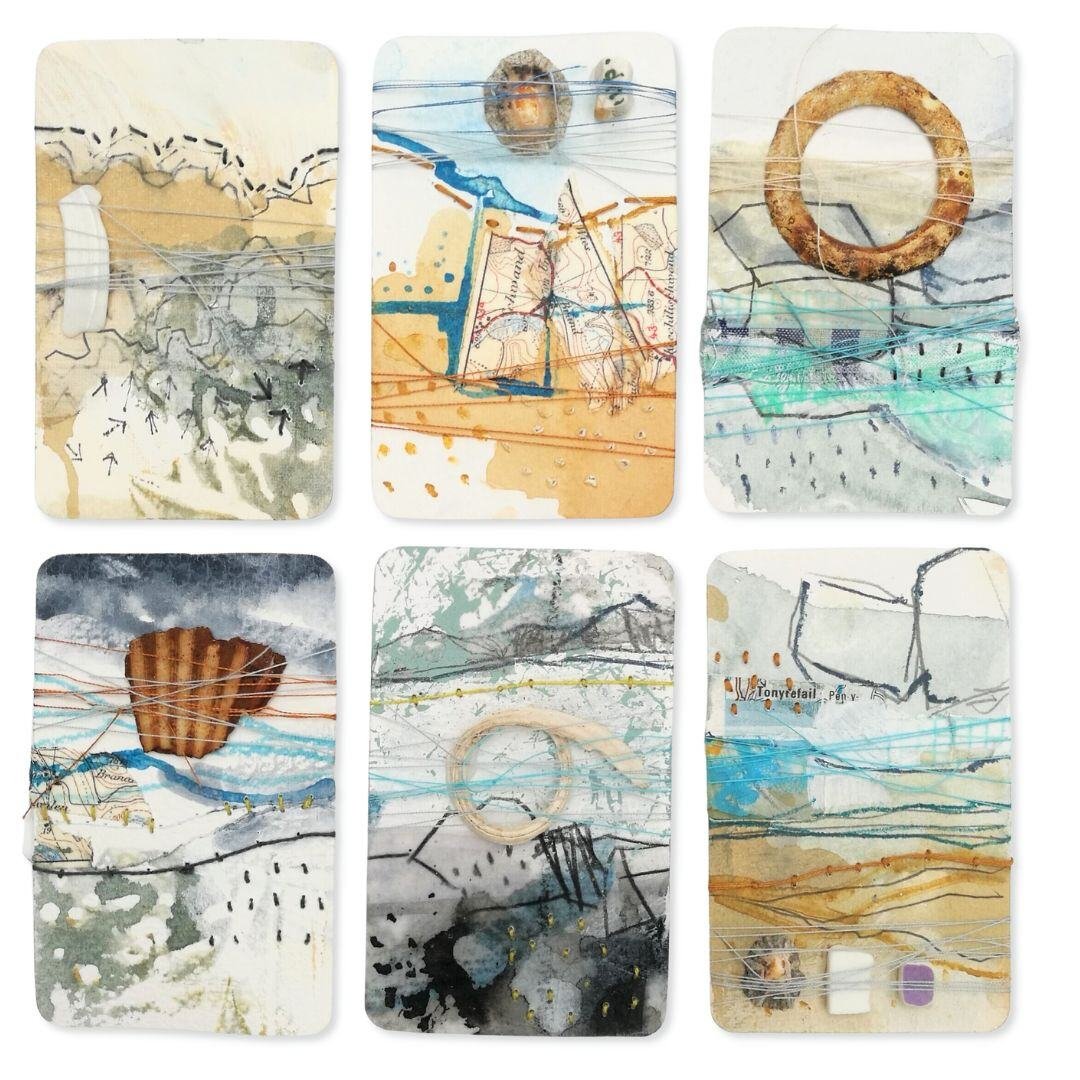
Previous student work from Shelley's course
Finding Fragments is perfect if…
- You're drawn to worn surfaces, found objects, and imperfect things - and you want to turn them into finished contemporary textile art.
- You've always suspected the abandoned pieces, the offcuts, the things headed for the bin could become something. This course is built on that instinct.
- You're ready to cut up and rebuild your own work - to treat slow stitch, boro inspired repair, and textile collage as one connected practice, not separate skills.
- You're tired of making single pieces and want to build a series that keeps going after the course ends.
Finding Fragments is probably not right if…
- You're precious about your finished work. This course asks you to distress and rebuild pieces you've already made.
- You want to know what you'll make, before you begin. Nothing here runs to a fixed outcome – the work emerges as you gather, fragment, and reconstruct.
- You want to make work that looks like Shelley's. She teaches her process – slow looking, repair, reassembly, so what you finish is recognisably yours.
I think of the reconstruction process as a form of repair – mending, healing and making whole again.
- SHELLEY RHODES
I’ve worked in mixed media fabric collage for years, however, I’ve always moved toward a final product from the start. This course changed my process dramatically. Now, I may start with an idea, but know that I’ll be constructing, deconstructing and reconstructing maybe many times, and push boundaries to create something fresh.
Working small, and slowly has changed my art practice in a very profound way. I have a whole new voice with all of my background practices. I love that I am finally putting 40 years of many different classes altogether now in smaller pieces and wonder why I never did this before!
I've taken to heart the use of non-conventional threads, taken pleasure in stitching inspired by boro, Kantha and using scraps influenced by the ethos of mottainai. So much of the course 'spoke' to me and fired up my creativity. It will stay with me for life.
The course felt magical – adding layers, fragmenting and reworking allowed new aspects of the pieces to happen in unexpected ways. It became easier each time to be bold, to work, tear and then repair in a new way. This will inform all my textile work in the future.
I was feeling stuck and unsure how to move forward. I’ve now discovered a process that has added new depth to my work and I have many many new ideas to explore. A joyful experience that has helped me restart an art practice after a long break.
I’ve been a painter for the past 30 years and felt like it had run its course for me, and I no longer wanted to continue even being an artist. I'm happy to say it's a studio and creative fibre hub now! This course will develop your creativity beyond your expectations and your work and life will be reinvigorated.
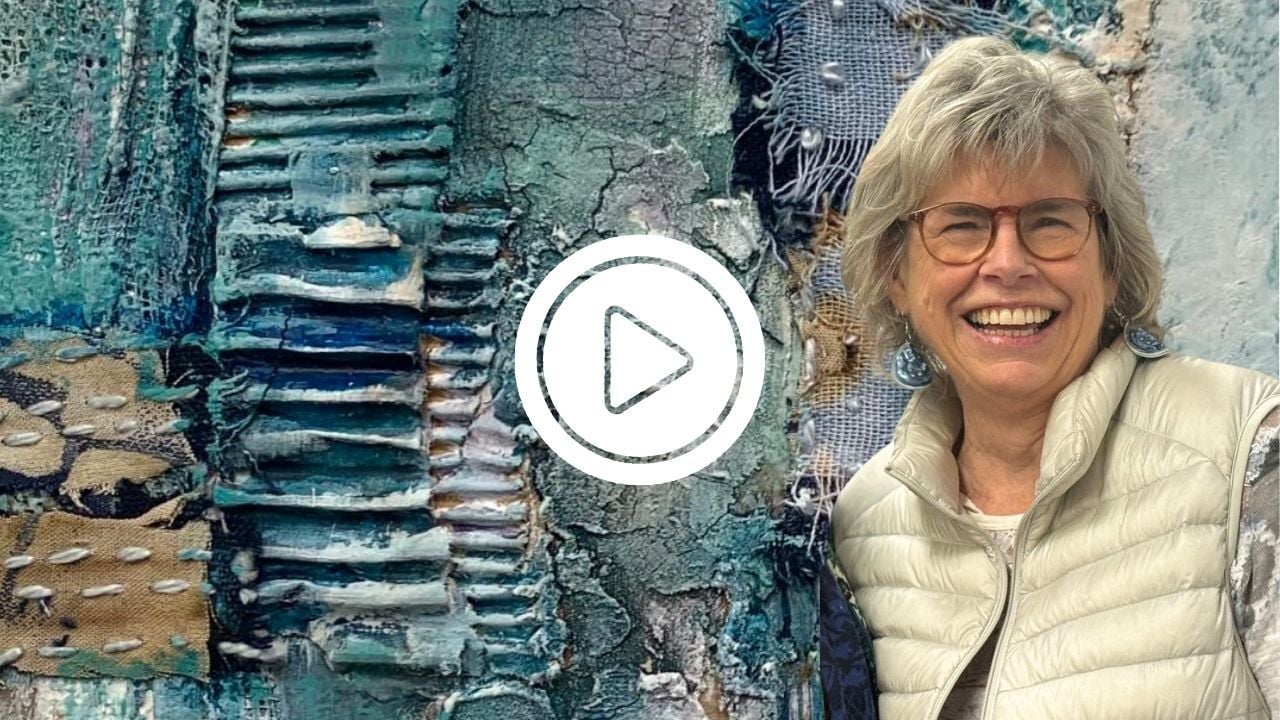
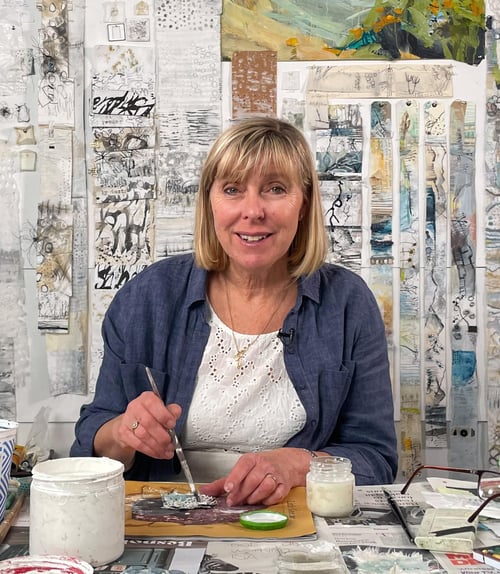
Shelley Rhodes is a full-time mixed media and textile artist with twenty years of professional practice, international exhibitions, and two Batsford books: Sketchbook Explorations and Fragmentation and Repair.
A member of the Textile Study Group, she travels widely, working on location – gathering field notes and found objects, drawing on Japanese Boro and Mottainai as core influences.
In Finding Fragments, she shares her process, not how to make work that looks like hers. The work that comes out the other side is entirely yours.
I will help you to notice and see beauty in the smallest of fragments and incorporate them into your artwork.
- SHELLEY RHODES
This course really resonated with my curiosity and encouraged me to push things further and then further still. Shelley Rhodes was hands down the most generous, attentive and dedicated mentor I have worked with. She shared a vast array of techniques that I’ll be taking forward and growing in my practice.
Shelly is one of the most generous artist-teachers I know. Her calm, encouraging delivery motivated me to take risks with new techniques, approaches, materials, and themes. This was a game changer for my art practice:I learned to incorporate all the things I love – paint, paper, found objects, and textiles. I've never experienced such rich content and community support as I did with this class.
I’ve been both challenged and inspired by this course in equal measure. I have found the courage to make then fragment and rework pieces, something I would not have had the bravery or skill to do without this course and Shelley's attentive encouragement, guidance and support.
Even though we all took the same course, it's fascinating to see the individual character coming through each person's work. It wasn't just a case of following the modules and producing something exactly the same.
Shelley is approachable, open to other ways of working, and encouraging. Her depth of knowledge is so evident. Best class I’ve ever taken, and you offer some great ones and have studied with a lot of artists! It will change the way I work.
Shelley presented many techniques but encouraged everyone to use whatever worked for them in their own way. This flexibility worked well for my process. I was able to take a fresh approach to transform an abandoned project into a finalized mixed-media piece that I am happy with. Thank you, Shelley!
Part 1: Field notes – observe, gather, interpret
Part one shares how Shelley approaches her daily practice, organises her research, and turns it into finished artwork.
-
Module one: Making field notes
Taking time to stop and look is a skill. Inspired by Shelley’s popular book, Sketchbook Explorations, this first module teaches you her approach to observing and recording the world outside – finding marks, textures, patterns, and fragments that will become the raw material for everything that follows. You'll go out into your own environment, and learn to see it as a source.
By the end you'll:
- Develop a personal approach to observational drawing, mark making, and field recording in your own environment.
- Make walk cards and strip sketchbooks on prepared surfaces – small, portable formats for gathering marks on the move.
- Build your first collection of field notes, drawings, and gathered fragments ready to take into the studio.
-
Module two: Reworking a collection
Your field notes now come back to the studio, and the work begins. Shelley shows how raw marks and gathered materials can be reworked, layered, and developed – and how to start building a colour palette that belongs to your environment rather than to convention. The samples made here become the foundation for everything else.
By the end you'll:
- Rework photographic fragments and field drawings into layered mixed media samples.
- Select a personal colour palette drawn from your own observational research.
- Extract marks from field notes and begin developing them as surfaces in paper and cloth.
-
Module three: Making a mark
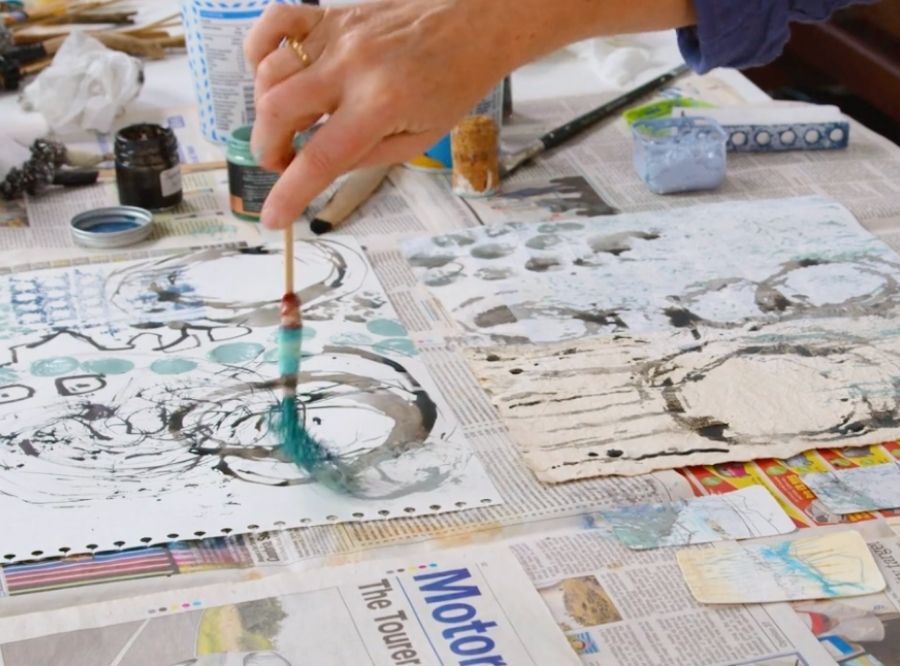
Mark making is the connective tissue of Finding Fragments. In this module, Shelley expands your vocabulary – not just with drawing tools but cola pens, printing blocks, wax, clay slip, fabric and ink. The goal is a mark-making toolkit that belongs to you and is unconventional, specific to how you work, and impossible to replicate.
By the end you'll:
- Explore mark making in mixed media, using a wide range of tools and materials (including unconventional ones).
- Make your own cola pens and simple printing blocks as reusable mark-making tools.
- Build a body of mark-making samples – varied in texture, pressure, and material – to draw on throughout the rest of the course.
-
Module four: Fragmentation and reconstruction
This is where the course changes gear. Shelley fragments finished pieces – slicing, tearing, cutting – and teaches how to select, arrange, and reassemble the parts into something new. What feels finished, becomes raw material. What feels like failure becomes a starting point. This is the module that students return to again and again.
By the end you'll:
- Fragment your existing work – drawings, photographs, samples – and select pieces for reassembly.
- Arrange and join fragments into stitched collages, working through multiple configurations before committing.
- Complete a series of fragmented pieces that demonstrate individual decision-making rather than prescribed outcomes.
Part 2: Making changes – transform, rework, represent
Part two takes a more experimental approach, with Shelley encouraging you to push the boundaries of your own ideas and experiences to produce work that’s completely unique to you.
-
Module five: Inspired by Boro
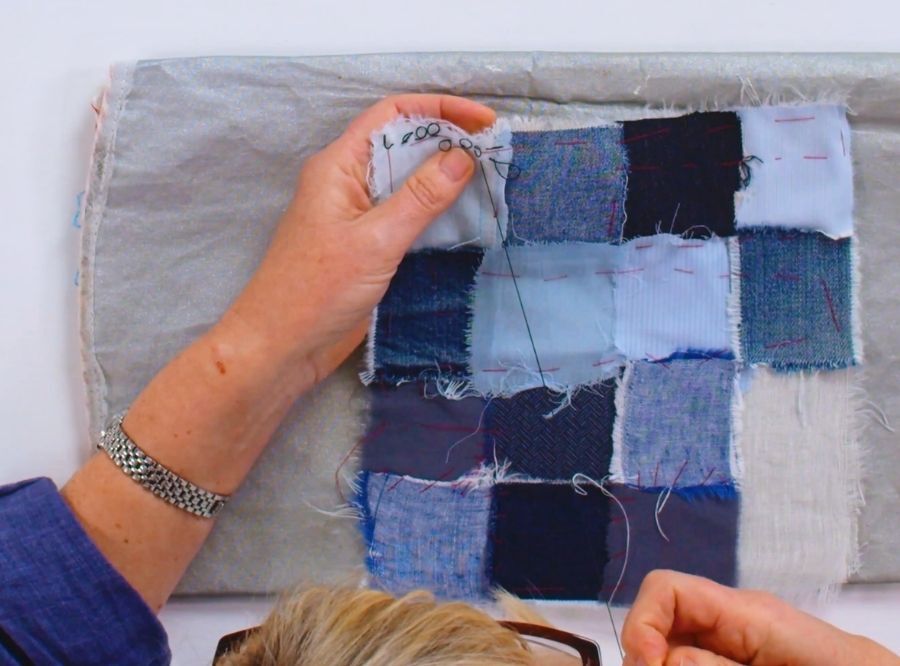
Boro is the Japanese tradition of repairing worn cloth rather than discarding it – patching and mending until the repairs become part of the surface's history. Shelley brings this boro inspired art into mixed media practice: distressing fabric, coating surfaces, stitching through damage rather than hiding it. This module is where the philosophy of the course becomes physical.
By the end you'll:- Distress and rework fabric pieces using techniques drawn from boro repair traditions.
- Apply stitch, patching, and surface alteration to pieces from earlier modules – working with what you made rather than starting fresh.
- Develop a series of reworked pieces where repair is a creative decision, not a correction.
-
Module six: Inspired by Kantha
Kantha – the running stitch tradition of South Asia – becomes Shelley's departure point for a sustained exploration of stitch as surface. She works not in faithful reproduction, but in the spirit of the tradition: repetitive slow stitch that holds layers together and creates texture in its accumulation. Students explore running stitch samplers, alternative materials, and stitched collages that trap and bind fragments within cloth.
By the end you'll:
- Make running stitch samplers on a range of grounds, exploring rhythm, density, and variation.
- Use stitch to trap and bind fragments – building surfaces where stitch and material are inseparable.
- Explore coating and develop samples that move stitch into mixed media territory.
-
Module seven: Alteration, destruction and transformation
This is the most experimental module in the course. American artist Jasper Johns said, ‘Take an object. Do something to it. Do something else to it’, so similarly, Shelley invites you to explore the idea of working on something, reworking, and then reworking again. The results are abstract textile art: surfaces with age and memory. Students work through large-scale samples and learn to resolve them into finished pieces.
By the end you'll:
- Prepare and coat mixed media using plaster, clay slip, and wax.
- Distress and weather samples using multiple techniques – rusting, burying, staining, burning.
- Resolve developed samples into finished work and begin constructing new pieces using the full range of techniques from the course.
-
Module eight: Displaying your work
This module gives you many ideas about ways to present fragments into finished work. Shelley shows you how to think about multiples, series, and scale, with practical approaches to displaying work in boxes and containers, book formats, frames, and hangings. The course closes with the question of how the work belongs together, and what that tells you about where your practice goes next.
By the end you'll:
- Explore multiple formats for displaying and presenting fragments – books, boxes, frames, hangings.
- Complete a resolved body of work from the course, having arranged and presented it as a series.
- Identify the through-line in your own work and articulate what your practice looks like going forward from here.
Join Shelley in the student community for personal feedback and direction, 24 July-18 September, 2026.
You’ll be supported every step of the way with:
Direct interaction with Shelley for up to 8 weeks.
9 + hours of professionally filmed lessons showing real details, not just the steps.
Lifetime access for unlimited learning
Worldwide community of artists.
Your questions answered via two live Q&As.
Comprehensive workbooks to reinforce your learning.
… plus return to the community and resources time and time again to extend your learning.
Finding Fragments
• Shelley is live in the student community 24 July-18 Sept
• 8 modules with cinematic video lessons
• 9 hours of professionally filmed content
• 2 live Q&A sessions with Shelley
• Up to 8 weeks of feedback from your tutor
• Lifetime access to all course materials
• Access to a private student community
• Comprehensive resource guides
• Private online learning portal
This is a rare opportunity to learn directly from Shelley Rhodes
Enrolment closes 10 Aug | Places are limited
Our promise of excellence
We take great pride in our commitment to excellence. Our productions are professionally crafted to the highest standards, and our professional tutors share decades of knowledge with generosity and care.
To protect their IP and your investment, our money-back guarantee offers a full refund if you’ve watched less than 10% of the course within seven days and are not satisfied. See our terms for details.
Our friendly team is here to support you before, during and after your course. Reach out anytime at support@taketwoart.com – we’re always happy to help.
Have another question? We’re here to help! Please contact the Take Two team at support@taketwoart.com
Course-specific FAQs
-
How is Finding Fragments different from other mixed media or textile art courses at Take Two?
Finding Fragments students are encouraged to chop up work they’ve already made – by cutting into something finished, distressing it, then rebuilding it into something new. Nothing is too precious to take apart. Finding Fragments is unique in that brave, bold approach to art making, where failure is simply the next starting point.
The second half of the course brings in Boro and Kantha repair traditions – Japanese and South Asian mending philosophies that treat damage as creative material, not a problem to fix. Distress, then repair. Break down, then build back up. -
I've done other online art courses and not seen a lasting change in my practice. Will Finding Fragments be different?
Most technique-based courses give you something to add to what you already do. Finding Fragments is structured differently – it's a process course. It's built around how Shelley really works: going outside, gathering raw material, developing it through drawing and mark making, then transforming it through fragmentation, repair, and stitch.
Here's what students say. Kim Saxe, who previously took the course: "I took your class a couple of years ago and continue to use what I learned and revisit it." While Roberta Wagner said, "It also provides a great framework for working in a series. I wish I had seen it ten years ago." That's the difference between a technique course and a process course. -
Is Finding Fragments suitable for someone who’s returning to making after a few years away from it?
Yes, and the way the course is structured makes it genuinely well-suited for this situation.
The first module starts with observation and gathering: going outside, noticing what draws your attention, recording it in whatever way feels natural. There's no assumed level of current practice. Shelley's instruction in the course introduction is direct: "Work will be inspired by your own environment, whether it's urban, rural, or coastal."
You don't need to pick up where you left off. You start from wherever you are now – which might be a walk along the street with a sketchbook, or picking something up off the ground. That's enough to begin.
-
I lack confidence in my work. Will this course help?
Finding Fragments is a process course, not an outcome course – and for students who struggle with confidence in their work, that distinction changes everything.
Shelley teaches students to be brave: to rip up work that is not working, rework it, and find that what comes out the other side is richer than what went in. Scraps are not failures. They are the next starting point. Play is not optional – it’s the method.
The meditative quality of slow stitch, the reflective practice of field notes, the freedom to deconstruct and reconstruct – all of these bring students back to the pleasure of making rather than the judgement of the made. Confidence follows from that shift, not from producing work you immediately love. -
What is Boro textile art, and how does it feature in Finding Fragments?
Boro is the Japanese tradition of repairing worn cloth – stitching and patching worn fabrics rather than discarding them, until the repairs become part of the surface's history and beauty. The word comes from the Japanese word for "tattered rags." In Boro work, mending is not a correction, it is the work.
In Finding Fragments, Shelley draws on the spirit of boro in Module five (Inspired by Boro). Students work with distressed and worn fabric, using stitch and patching to transform rather than discard. The approach also extends into Module six (Inspired by Kantha), where Shelley shares how the running stitch tradition of South Asia is brought into her work – another practice of slow, repetitive stitching that holds and transforms cloth.
Neither module teaches traditional Boro or Kantha as a technical reproduction. Both use the philosophy of repair as the conceptual engine for mixed media surface work. -
Do I need a dedicated studio or a lot of materials to take this course?
There’s no dedicated space or expensive materials list required. The course begins with what you can find outside – and Shelley’s explicit about this from the beginning: she works with peeling walls, worn surfaces, broken things, and whatever her pockets can hold. The starting point is observation, not acquisition.
As the course progresses, you'll work with fabric, scraps, paper, stitch, and some coating materials (wax, plaster, clay slip) – but the guidance throughout encourages you to use what you have on hand first. A complete materials list with supplier recommendations by country is provided to enrolled students.
Course Logistics FAQs
-
How much does it cost to enrol?
Enrolment in Finding Fragments is:
AUD $579 | USD $429 | GBP £319 | EUR €369 | NZD $699 | CAD $579
Payment plans of 2 or 5 months are available at checkout – no need to email us, just select your preferred option when you enrol.
A note on value: this is a course students describe going back to again and again. Lauren said she finds herself returning to the modules "over and over" and that lifetime access "is not a bonus – it is a necessity." You're not paying for eight weeks. You're paying for a resource that will keep working for you for years.
If you're a beginner wondering whether you're ready – you are. This course was designed to meet you exactly where you are. -
What materials and supplies are required for this course?
The material guide is available to downloaded here. Complete material list will be available once you purchase the course
We encourage you to use what you already have first – you don't need to buy everything at once.
If the combined cost of course and materials is a concern, the payment plan option at checkout may help spread the overall investment. Any specific questions before you enrol? Reach us at support@taketwoart.com. -
When does enrolment close?
Enrolment closes on 10 August 2026
-
Do I have to watch the videos at a set time or follow a schedule?
There is no fixed schedule, but there are two live Q&A sessions during your tutor’s live interaction period – on 12 August and 3 September. The course was built for people with full lives – you watch when you want, pause when you need to, and return to a module three times if that's what it takes.
As Wendy put it: The freedom to take your time and disappear down your own rabbit hole is such a joy. -
How does interacting with your tutor actually work?
Between 24 July - 18 September, Shelley is available in the private student community group on Facebook. This isn't a cursory presence – students consistently describe her feedback as detailed, personal, and genuinely engaged with their individual work.
There are also two live Q&A sessions where you can submit questions in advance:
Live Q&A #1: 12 August Live Q&A #2: 3 September 2026
These are streamed via YouTube and later uploaded into the course portal so you can watch even if you can't join live.
After 18 September, your tutor steps back from the group – but the community stays open, and you have all the course content for life. -
Do you offer closed captions?
Yes we do. We offer closed captions in English, Spanish, German and French.
-
I’m not very tech-savvy. Will I be able to manage an online course?
Yes. Our students regularly report – with visible relief – how straightforward the platform is to use. If you can watch a video on your phone or computer, you can do this.
And if anything doesn't work as expected, we're easy to reach. We're well known for our customer support – just email support@taketwoart.com and a real person will help you. -
Can I take this course on my phone or tablet?
Absolutely. The course is fully responsive and works across laptop, tablet, and phone. Switch between devices freely – all you need is an internet connection.
-
What currencies do you accept?
We've set up geolocation to display your local currency where possible and currently accept AUD, USD, GBP, EUR, CAD and NZD. If yours isn't listed, your bank will convert the charge automatically – you won't be blocked from enrolling.
-
What if I need support during my course?
Post in the student community group and someone will respond – whether that's your tutor during the live interaction period, a Take Two team member, or a fellow student. The group is active and genuinely supportive.
For technical questions, or if you'd prefer not to use the Facebook group, email support@taketwoart.com directly. -
Can I gift this course to someone?
Yes – and it's a beautiful gift. Email us at support@taketwoart.com with the details and we'll create a personalised digital voucher for you.
A note from Shelley Rhodes
My way of working began with me collecting things, and being unwilling to throw anything away. Now, every fragment left over from a previous project goes back into the next one. The Japanese have a word for it: mottainai. Too good to waste.
What I now love most about it is the arranging – laying out what I have, shifting things until something clicks. And often, the most interesting piece is the one nobody else would have kept, like discarded prints pulled from the bin that became work nobody recognised as their own.
This process took me twenty years to find. May this course give you somewhere to start – and to keep returning to.
- SHELLEY RHODES
Ready to make work where nothing’s wasted and everything’s reworked?
This is a Signature online course developed in partnership with Shelley Rhodes and leading online course creators, Take Two.
It’s one of several process-led courses available at Take Two taught by working artists in their field.
Enrolment closes 10 Aug Places are limited

© 2026 TAKE TWO ART. ALL RIGHTS RESERVED.
We acknowledge the traditional custodians of country throughout Australia and their continuing connection to land, sea and community.
We pay our respects to them and their cultures and to their elders both past and present and extend that respect to all Aboriginal and Torres Strait Islander peoples today.