


Skip to: Course Modules Tutor Price FAQs
A QUILT IS WAITING IN EVERY SONG, MEMORY, AND SKETCH.
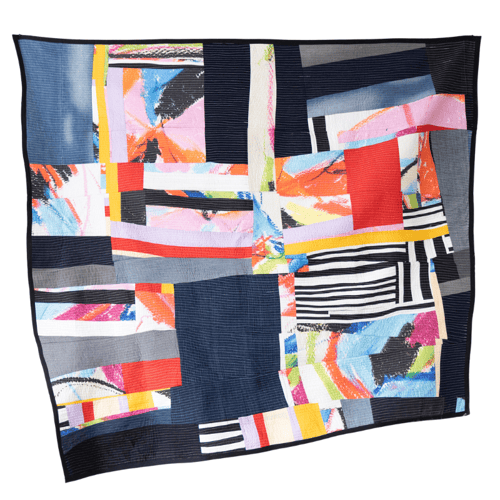
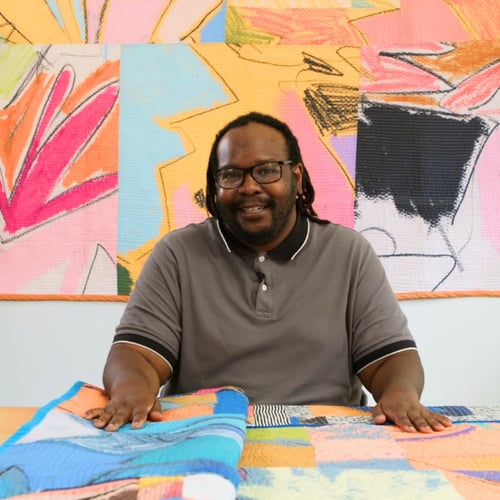
An online course making abstract quilts with Julian Jamaal Jones.
Enrolment closes 2 December | Places are limited
DIRECT TUTOR FEEDBACK
PRIVATE COMMUNITY
LIFETIME ACCESS
Where can a quilt begin?
Maybe you've been tempted to try quilting for years – the colour, the cloth, the object – but the rulers and perfect points have put you off. Why so many rules? Isn't there a more intuitive approach?
Or maybe you're more experienced, and yes, your quilts check all the boxes, but you have a developing feeling that you need to shake things up.
Julian Jamaal Jones's first quilts were inspired by the quilters he admired most. They were good. But they weren't him.
So he started somewhere else entirely.
My work begins in many different ways – through drawing, colour, memory, music, personal experiences, and sometimes simply a feeling that I want to explore.
– JULIAN JAMAAL JONES
That's okay. You can start with a simple sketch, and Julian will walk you through the rest.
Your skills are ready for something new: a fresh way into composition and colour.
If you already paint and draw, you'll love taking your marks off the page or canvas, and onto cloth.
Start where you're at, finish with a quilt.
Here's what you'll make, learn and discover.
Make your first abstract quilt with no quilting background needed – every step is taught.
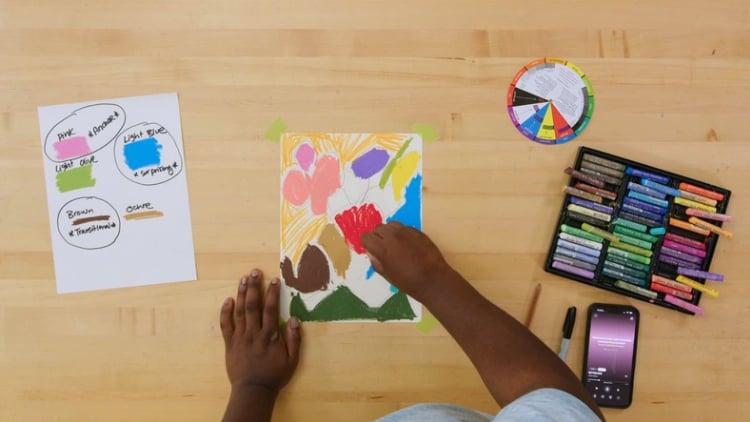
Discover how a song, a photo, a poem or a memory can deliver you a colour palette.
Print your drawings onto fabric – at home or professionally - for fabric that's entirely your own.
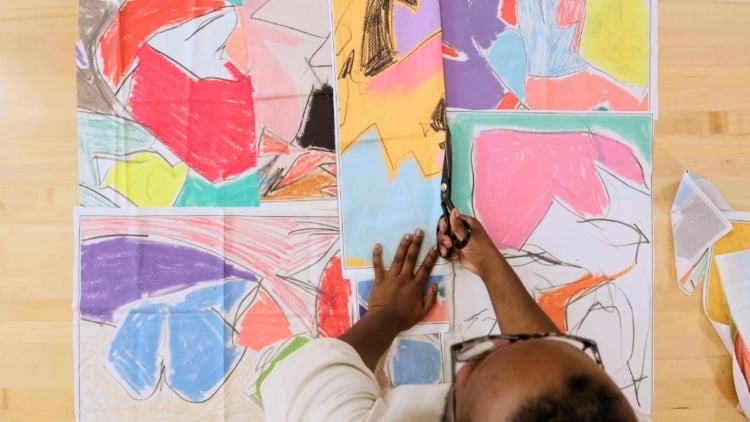
Compose without a pattern, cutting and arranging pieces of any size into a quilt top that's balanced on your terms.
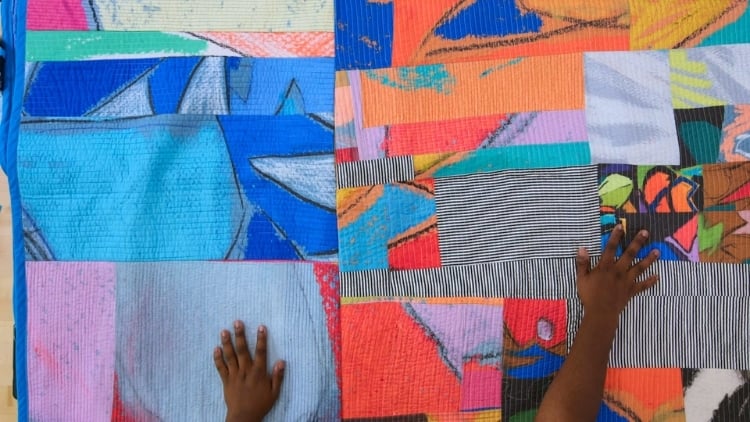
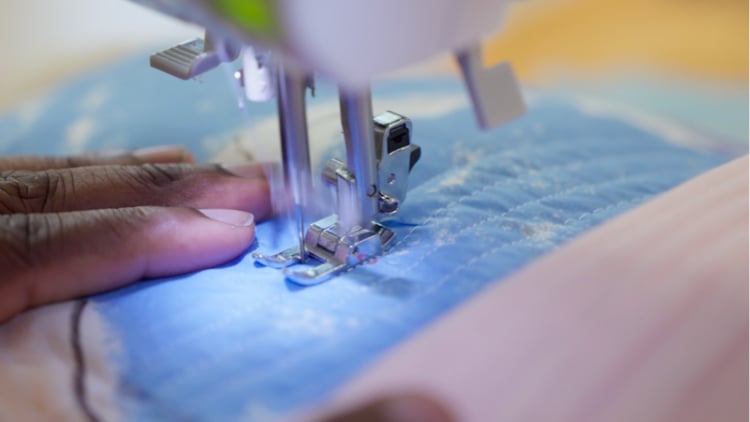
Use stitch the way you’d use a pastel – quilting lines become marks that add movement and texture across the whole surface.
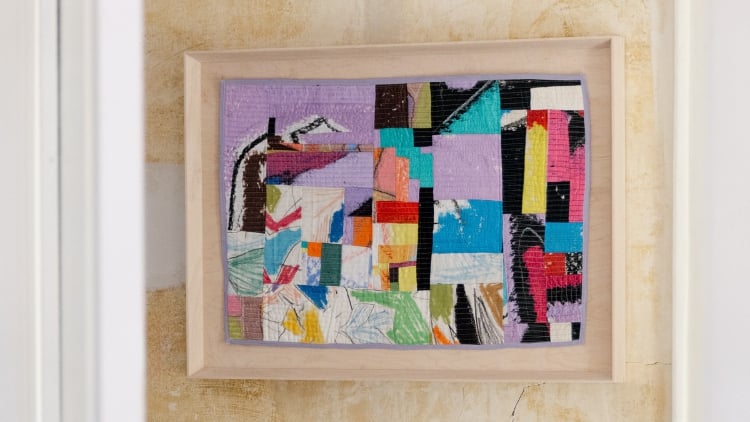
Learn to finish your piece – layering, quilting and binding – so it's ready to hang on a wall or use every day.
Enrolment closes 2 December | Places are limited
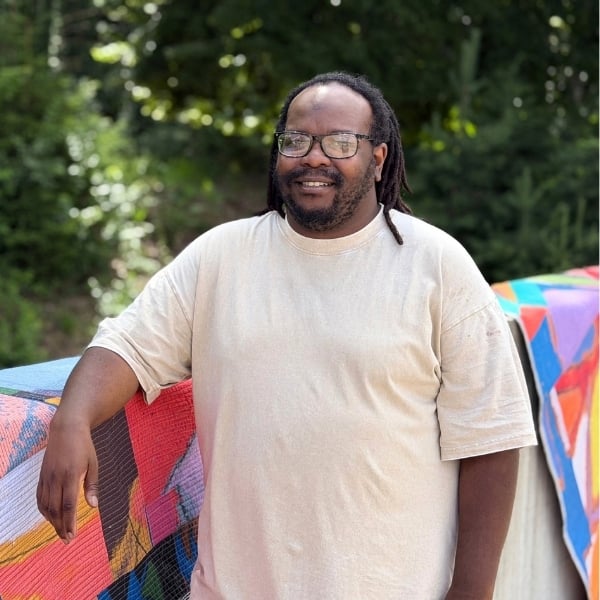
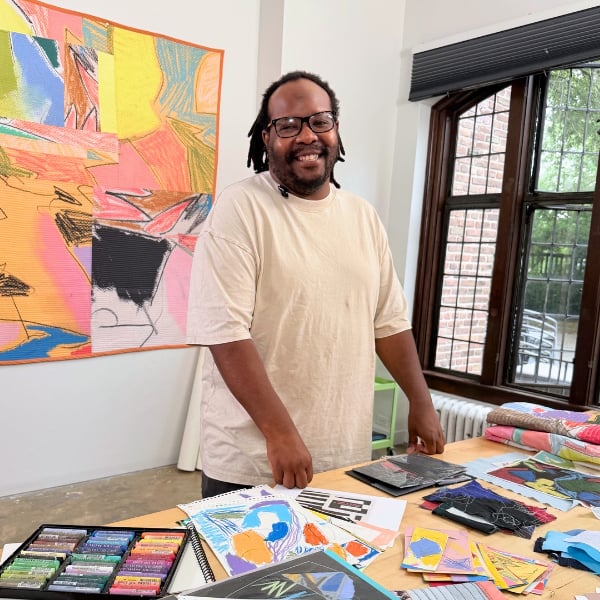
Julian Jamaal Jones came to quilting through a camera lens. A self-taught fashion photographer, he turned to cloth during graduate school at Cranbrook, where he discovered his great-grandmother and grandmother had been quilters.
He taught himself to sew, print and compose. Today his quilts are held in museum collections, including Cranbrook Art Museum, and his mission is to see quilting celebrated as fine art.
His hope for you in this course?
That your quilt looks nothing like his. (He means it.)
For my traditional quilters, I see your rulers. I see your rotary cutters… but I invite you to take a break from all that, and just open yourself up.
- JULIAN JAMAAL JONES
Here’s what she thinks:
Here's how your sketches become a quilt, step by step. Each module builds on the one before, from loose sketches and colour palettes to printing your drawings onto fabric, then piecing, quilting and binding at least one abstract quilt of your own.
Click the arrow
to expand each module below
-
Module one: Intuition, emotion, and gesture
Your first marks begin with what you already carry – your memories, your music and the moments that shaped you.
Along the way, you’ll:
- Turn a memory, photo or journal entry into words, colours and gestures.
- Redraw a traditional quilt block, such as a log cabin, then crop, overlap and stretch it into something new.
- Respond to music through mark and colour, and let go of constraints through exercises like using your non-dominant hand, or a limited palette.
-
Module two: Colour, tone and composition
‘…you don’t want colours to control you. You want to control your medium.’ – Julian
You’ll explore how to:
- Make your own colour wheel, and give each colour a meaning that’s personal to you.
- Create a palette from a memory or a song, guided by Julian’s idea of anchor, transitional and surprising colours.
- Use cropping and positive and negative space to give a busy composition room to breathe.
-
Module three: Translating sketches into textile
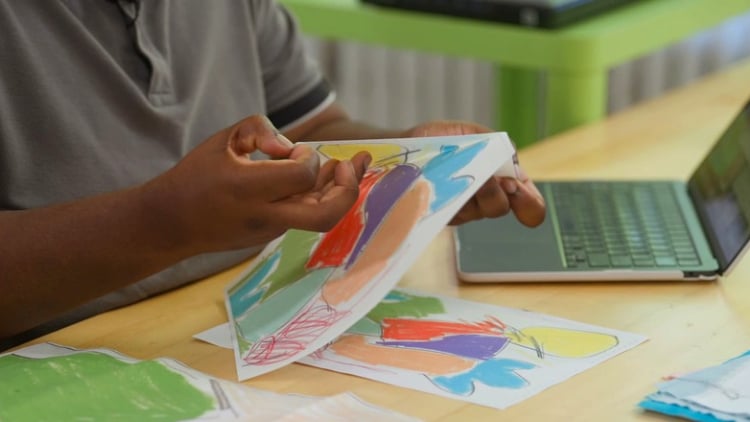
From sketchbook to fabric – Julian shares the methods he’s taught himself, and explores some new techniques as well.
From scan to print, you’ll:- Select the sketches that hold the strongest emotion, and prepare them for their move from paper to fabric.
- Scan or photograph your work, then edit it on your phone, tablet or computer.
- Print onto fabric at home, try iron-on transfers, or research whether a custom fabric printing supplier suits you, and what to check before you order.
-
Module four: Sewing and stitch as mark making
Any machine with a straight stitch will do. Already confident with hand stitching? You’re welcome to sew by hand instead.
At the machine or by hand, you’ll:
- Learn your way around your sewing machine, and how to guide fabric through it with control.
- Piece small patchwork with straight seams, angles and irregular shapes – whatever suits your work.
- Discover the three places stitching can become part of your design – piecing, top stitching and binding.
-
Module five: Composing, piecing and quilting
‘I do not plan my quilts… I kind of let the fabric speak to me…’ – Julian
Working on a table, a wall or the floor, you’ll:
- Find your anchor, transitions and ending point as you lay out your printed fabrics.
- Piece your quilt top in columns, using what Julian calls ‘the kissing method’.
- Layer, baste and quilt your quilt, from Julian’s matchstick lines to a stitch style of your own, and watch texture appear as you go.
-
Module six: Finishing, presenting, and reflection
Knowing when a quilt is finished is a feeling, not a rule. Julian helps you recognise it, then brings your quilt to the wall and your growth into focus.
To finish, you’ll:
- Trim your quilt, with the option of curved edges or angled corners.
- Bind it, using pre-made binding or your own from scraps, in a colour that changes the quilt's whole character.
- Hang, label and photograph your quilt for your wall, an exhibition or your feed.
-
+ Plus 1 bonus lesson: Inside Cranbrook Art Museum
Step inside Cranbrook Art Museum with Julian and Kat Goffnett, Associate Curator of Collections. Peek behind the scenes of curating a show, and discover the artists – including Cranbrook alumni – who excite them most. Julian also reflects on his own work in the exhibition.
-
+ Included with your enrolment
Finding the Light: Phone Photography for Artists
As a Take Two student, you'll also have access to Finding the Light. Learn to photograph your quilts and textile work so they look as good on screen as they do in real life – perfect for sharing your work or entering an exhibition.
Gesture, Colour, Quilt is perfect for you if you're looking to…
- Learn to quilt in a fresh, contemporary way.
- Turn a song, a photo, a poem, or a memory into marks, colour and cloth.
- Take your love of abstract art onto cloth.
- Bring a completely fresh approach to quilting you've done for years.
- Finish at least one abstract quilt, pieced from cloth, printed with your own drawings.
Gesture, Colour, Quilt is probably not right if you're…
- Only wanting to learn traditional quilting skills.
- Wanting a set pattern to follow towards a predictable result.
You’ll be supported every step of the way with:
Direct interaction with Julian for up to 8 weeks.
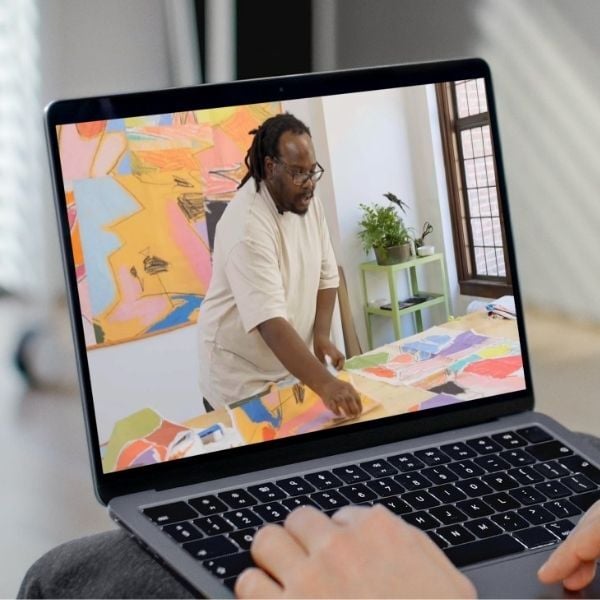
6+ hours of cinematic video lessons showing real details, step by step.
Lifetime access for unlimited learning
Worldwide community of artists.
Your questions answered via two live Q&As.
Comprehensive workbooks to reinforce your learning.
… plus return to the community and resources time and time again to extend your learning.
Gesture, Colour, Quilt
Payment plans available at checkout
Your enrolment includes:
6-module Gesture, Colour, Quilt course, plus a bonus gallery video
6+ hours of professionally filmed lessons
8 weeks of interaction with Julian
2 live Q&A sessions
Private student community
Student exhibition opportunity
Comprehensive resources and workbooks
Lifetime course access
Enrolment closes 2 December | Places are limited
Our promise of excellence
We take great pride in our commitment to excellence. Our productions are professionally crafted to the highest standards, and our professional tutors share decades of knowledge with generosity and care.
To protect their IP and your investment, our money-back guarantee offers a full refund if you’ve watched less than 10% of the course within seven days and are not satisfied. See our terms for details.
Our friendly team is here to support you before, during and after your course. Reach out anytime at support@taketwoart.com – we’re always happy to help.
A note from Julian Jamaal Jones
You don’t have to have everything figured out before you begin. Give yourself permission to experiment, make mistakes, change directions, and discover something unexpected along the way.
Throughout this course, I want to encourage you to approach your own work with curiosity and freedom. I hope it gives you new tools and techniques, but more importantly, encourages you to trust your own ideas and develop a visual language that feels personal to you.
- JULIAN JAMAAL JONES
Have another question? We’re here to help! Please contact the Take Two team at support@taketwoart.com
Course-specific FAQs
-
I've never made a quilt. Can I do this?
Yes. Julian walks you through each stage, from your first sketch to binding. He taught himself to quilt, and as he says: '…if I can do it, you definitely can do it.'
-
I've never made abstract work. Where do I start?
With marks on paper. Start with something (anything!) that moves you, and sketch in response, long before you cut any fabric.
-
I already quilt. Will this push me?
Yes. This isn't a technique refresher. It's a new way into composition and colour, starting from your own drawings rather than a pattern.
-
I draw and paint, but have never made quilts. Is this course for me?
Yes. Your drawings become the starting point, and the colour and composition you explore will carry straight back into your painting.
-
Colour has never been my thing. Is that a problem?
Not at all. Julian makes colour theory simple, showing you how to build a palette.
-
Does Julian paint or draw directly on the fabric?
No. He draws on paper, and prints his sketches onto fabric. Techniques for mark-making directly on fabric are not taught. However if it’s something you’re keen to do, you will likely find others doing the same in the community group.
-
What equipment and software do I need?
Something to capture your sketches (a scanner or the camera on your phone), an app to edit them – a phone app works – and a way to print onto fabric.
-
Can I print my own fabric at home, or have it printed professionally?
Both, and you don't need to buy a printer: home printing and iron-on transfers are taught, or you can send your files to a professional fabric printer.
-
Can I use found fabric and my stash, and mix different fabrics?
Yes. Julian mixes quilting cotton, linen, crepe, stretch cotton and calico, and he encourages you to bring in found fabric and your stash.
-
Do I need a sewing machine?
To follow Julian’s techniques, yes – any domestic machine with a straight stitch will do. Julian suggests starting small while you find your feet.
-
What if I prefer hand stitching?
Hand stitching isn't taught, but experienced hand stitchers can adapt the techniques from this course, if that's your preference.
-
How big will my quilt be?
You choose. Julian suggests starting small (for example 45x60", or A2) while you find your feet – then scaling up when you're ready.
Course Logistics FAQs
-
How much does it cost to enrol?
Enrolment in Gesture, Colour, Quilt is:
AUD $499
USD $349
GBP £269
EUR €314
NZD $619
CAD $499
Payment plans of 2 or 5 months are available at checkout – no need to email us, just select your preferred option when you enrol.
A note on value: Students describe our courses as resources they return to again and again, and that it's not just an investment for eight weeks. You're paying for a resource that will keep working for you for years. -
What materials and supplies are required for this course?
A guideline of materials required can be downloaded here. A complete material list will be available once you purchase the course.
We encourage you to use what you already have first – you don't need to buy everything at once.
If the combined cost of course and materials is a concern, the payment plan option at checkout may help spread the overall investment. Any specific questions before you enrol? Reach us at support@taketwoart.com.
-
When does enrolment close?
Enrolment closes on 2 December 2026 at 9am AEDT.
-
Do I have to watch the videos at a set time or follow a schedule?
There is no fixed schedule, no live sessions you have to show up for. But there are two live Q&A sessions during your tutor’s live interaction period – on Wednesday 2 December 2026 and Monday 11 January 2027, at 4pm EST (8am AEDT the following day) – both of which will be available for replay.
The course was built for people with full lives – you watch when you want, pause when you need to, and return to a module three times if that's what it takes.
As Wendy put it: "The freedom to take your time and disappear down your own rabbit hole is such a joy." -
How does interacting with your tutor actually work?
Between 13 November 2026 and 22 January 2027, Julian is available in the private student community group on Facebook. Eight weeks of feedback from Julian. There's a two-week break over Christmas.
There are also two live Q&A sessions where you can submit questions in advance:
Live Q&A #1: 2 December 2026
Live Q&A #2: 11 January 2027These are streamed via YouTube and later uploaded into the course portal so you can watch even if you can't join live.
After 22 January 2027, your tutor steps back from the group – but the community stays open, and you have all the course content for life. -
Do you offer closed captions?
Yes we do. We offer closed captions in English, Spanish, German and French.
-
I’m not very tech-savvy. Will I be able to manage an online course?
Yes. Our students regularly report – with visible relief – how straightforward the platform is to use. If you can watch a video on your phone or computer, you can do this.
And if anything doesn't work as expected, we're easy to reach. We're well known for our customer support – just email support@taketwoart.com and a real person will help you. -
Can I take this course on my phone or tablet?
Absolutely. The course is fully responsive and works across laptop, tablet, and phone. Switch between devices freely – all you need is an internet connection.
-
What currencies do you accept?
Your local currency will display where possible, and we currently accept AUD, USD, GBP, EUR, CAD and NZD. If yours isn't listed, your bank will convert the charge automatically – you won't be blocked from enrolling.
-
What if I need support during my course?
Post in the student community group and someone will respond – whether that's your tutor during the live interaction period, a Take Two team member, a fellow student or an alumnus. The group is active and genuinely supportive.
For technical questions, or if you'd prefer not to use the Facebook group, email support@taketwoart.com directly.
-
Can I gift this course to someone?
Yes. A Take Two digital gift card lets you give this course, or any other. Choose the amount and currency, add a message, and it arrives by email straight away. Plus... our gift cards never expire. Your friend can enrol whenever they’re ready! Buy a gift card.
Ready to find the quilt waiting in your marks and colours?
Learn to make abstract quilts with contemporary quilting artist Julian Jamaal Jones.
Enrolment closes 2 Dec Places are limited

© 2026 TAKE TWO ART. ALL RIGHTS RESERVED.
We acknowledge the traditional custodians of country throughout Australia and their continuing connection to land, sea and community.
We pay our respects to them and their cultures and to their elders both past and present and extend that respect to all Aboriginal and Torres Strait Islander peoples today.