Sarah Brayer: Washi and Phosphorescence
Take Two learned more about Sarah Brayer's traditional paper art and stunning phosphorescence - read about and watch this artist interview here.
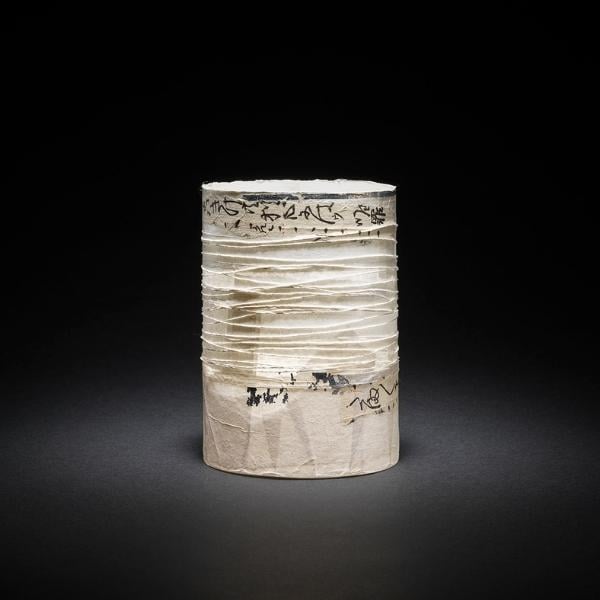
A chance encounter watching linen and cotton rags shredded, pulped and transformed into exquisite sheets of paper ignited a passion that would carry British-based artist Ellie Burkett to North East Japan.
For several years, Ellie immersed herself in the centuries-old paper-making traditions, where the boundary between paper and fabric dissolves. Her time in Japan became a formative study, exploring the delicate process of turning paper into thread, a practice that intertwines material and memory.
After a career in art education, Ellie returned to this early fascination, literally picking up the thread of her creative journey. Her work speaks through layers, patches and stitches, tactile gestures that suggest how memory and loss unfold with fragments of the past quietly carried into the present.
Ellie crafts sheets that are stitched, cast, painted or printed. Some papers are robust and sculptural. Others are delicate and translucent, embodying the tension between fragility and resilience. Each element in her work, whether thread print or stitch fragment, must harmonise, giving the piece room to evolve organically. Ellie’s work retraces and reimagines the past through the paper pieces and textiles she creates, and she joined Take Two to explain her journey and process.
Ellie studied Fine Art Textiles at college, where she learned the fundamentals of weaving, stitching, dying and machine embroidery. “We were left to do studio practice and encouraged to go to other departments. I had links with the print department, which led me to a paper mill in Kent. I saw how cotton and linen were used to make paper, and then it wasn’t long before I looked at books about Japan and paper and realised how it is used. The attitude towards paper was so different. It is used in architecture and is strong, not a throw-away or weak material. When I graduated I knew I had to go to Japan, and I was invited to go to Fukushima, first on a tourist visa, then as a student.”
When Ellie first arrived in North East Japan in the 1980s, she was immediately struck by the country's unique relationship with paper. However, "the first word I learned was 'earthquake' because there was a tiny tremor," she recalls. "It was quite overwhelming to start with!"
Ellie's perspective shifted when she was introduced to the ancient art of paper thread-making, known as Shifu. "That was just like a light bulb moment," she says. "I felt it was what I had come to Japan to see. It was everything I could have hoped for. The fact that paper could be taken to those extreme measures, from something that's flat to something that's made into thread that can be woven and washed—was just a delight."
Ellie learned from instructors despite her limited Japanese and slowly developed her skills. “I naively thought I could be an apprentice to a papermaker but I soon realised it was more productive to be an artist in Japan. There were many teachers who were instrumental and I built up relationships with them.”
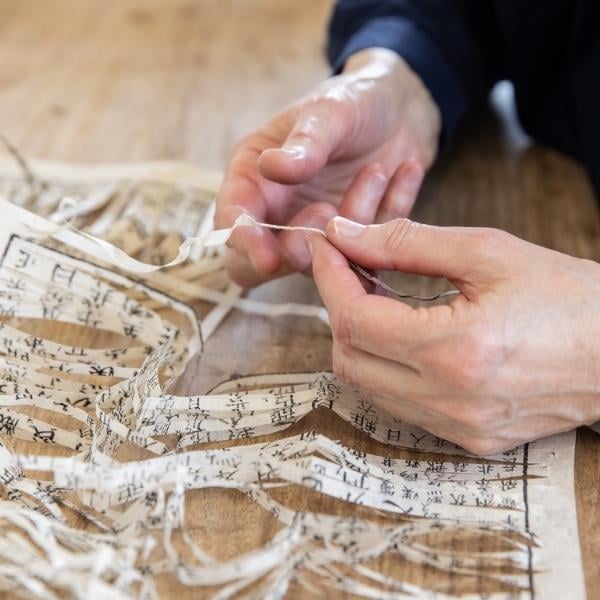
Shifu means ‘paper cloth’.
Ellie explains the Shifu creation process in detail: "The paper is called shifugami, and it's very fine. First, it's slashed/cut by hand, then rolled on a stone, and it becomes the start of some threads that are then separated and further twisted on a spinning wheel to make it strong for weaving. It is a laborious process and often involves dampening the paper overnight, but each stage has its own personality. I like to arrest the process at certain stages, so you can still see the text of the paper that I’m using. I call myself a contemporary artist because I have immersed myself in the technique, but I’m not trying to make Shifu in the traditional way."
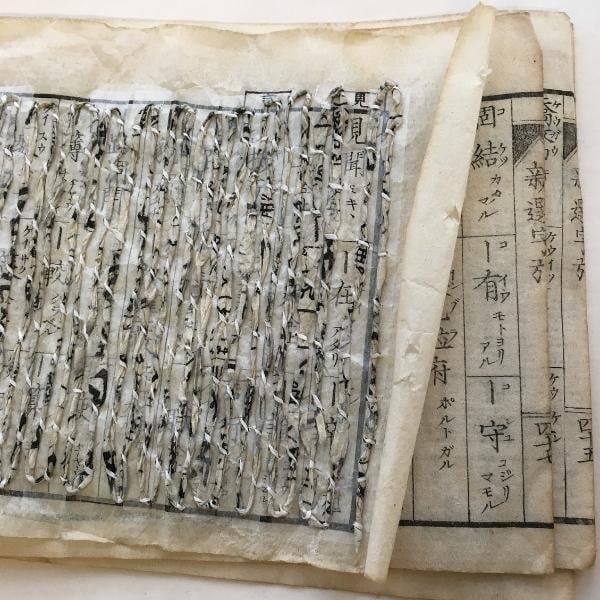
As she works, Ellie tries to suggest the story of the original pieces of paper she works with. She uses different types of paper and is always trying different options to see what it will do. An example is a poem that had been typeset on Japanese paper, “I tried and tested it, saw how strong it was, and that in turn shaped the final piece. I couldn’t make it into a continuous thread, I had to keep it within the constraint of the sheet of paper as I could, and then I worked with the bits left over.
Ellie refers to a Japanese phrase, ‘mottainai’, which expresses regret at things being wasted, similar to ‘waste not, want not’. She adds, “It’s a lifetime’s work, working with recycled or second hand paper, I often try things and the type of paper and materials will dictate what I do with it, whether it is used in a collage or turned into thread.”
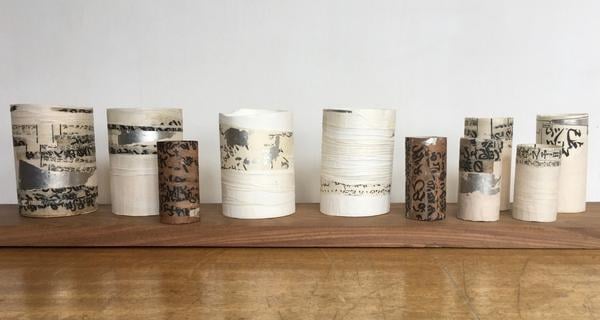
This sense of preservation manifests in Ellie's ‘Vessels’ series, created in response to the Fukushima disaster. “I was very moved by the terrible earthquake, tsunami and nuclear disaster, and I wanted to create a response for the ten-year anniversary. The paper speaks for the people… there is a strength in the vessels despite seeming fragile and there is strength in the people there as well.”
"I made 10 vessels to start with, and I continued to make one for each year," she explains. “They are almost like a prayer, or contemplation about the fragility and the strengths of the earth’s resources.”
Ellie uses konnyaku paste to treat and coat her paper artworks. It acts as a glue but isn’t excessively sticky… it makes the paper more supple and strengthens it. “It’s a wonderful paste that I couldn’t do without because it makes paper so much more pliable,” she says.
To share her knowledge, Ellie teaches ‘East Meets West’ paper and thread-making in London. "The courses are attended by artists who are interested in the story of the papermakers and process of traditional crafts," she says.
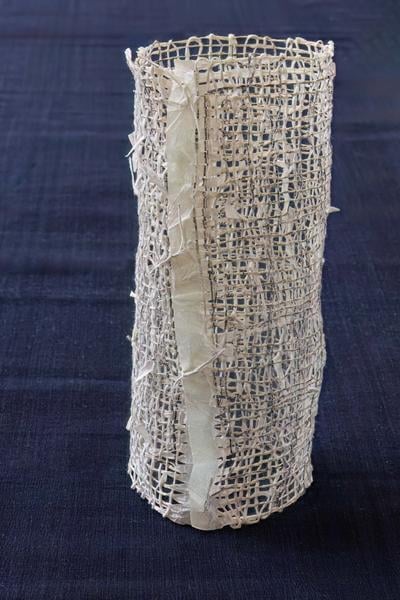
Ellie’s perspectives about art and being an artist include the following:
“Every artist must believe in their unique viewpoint.
Every artist must have a dedicated time or place to work, even if it is temporary and has to be cleared away.
Every artist must create an artistic community around themselves, whether it is in the studio, through teaching, Instagram or a group like Take Two, so long as you don’t feel like you’re working in isolation.
Every artist should get external stimulation for creativity. This could be walks, exhibitions, books or online forums. Artists need to top up their creative juices.
Every artist must avoid comparisons. Don’t wait until you feel ‘good enough’.”
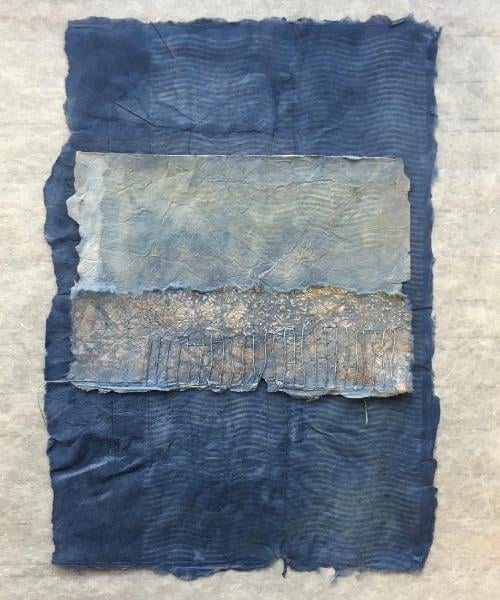
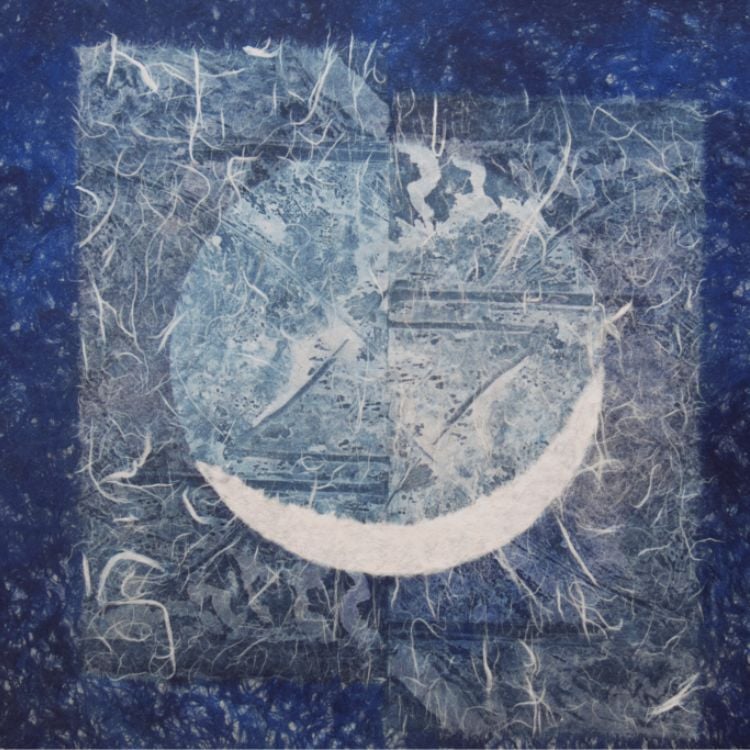
Take Two learned more about Sarah Brayer's traditional paper art and stunning phosphorescence - read about and watch this artist interview here.
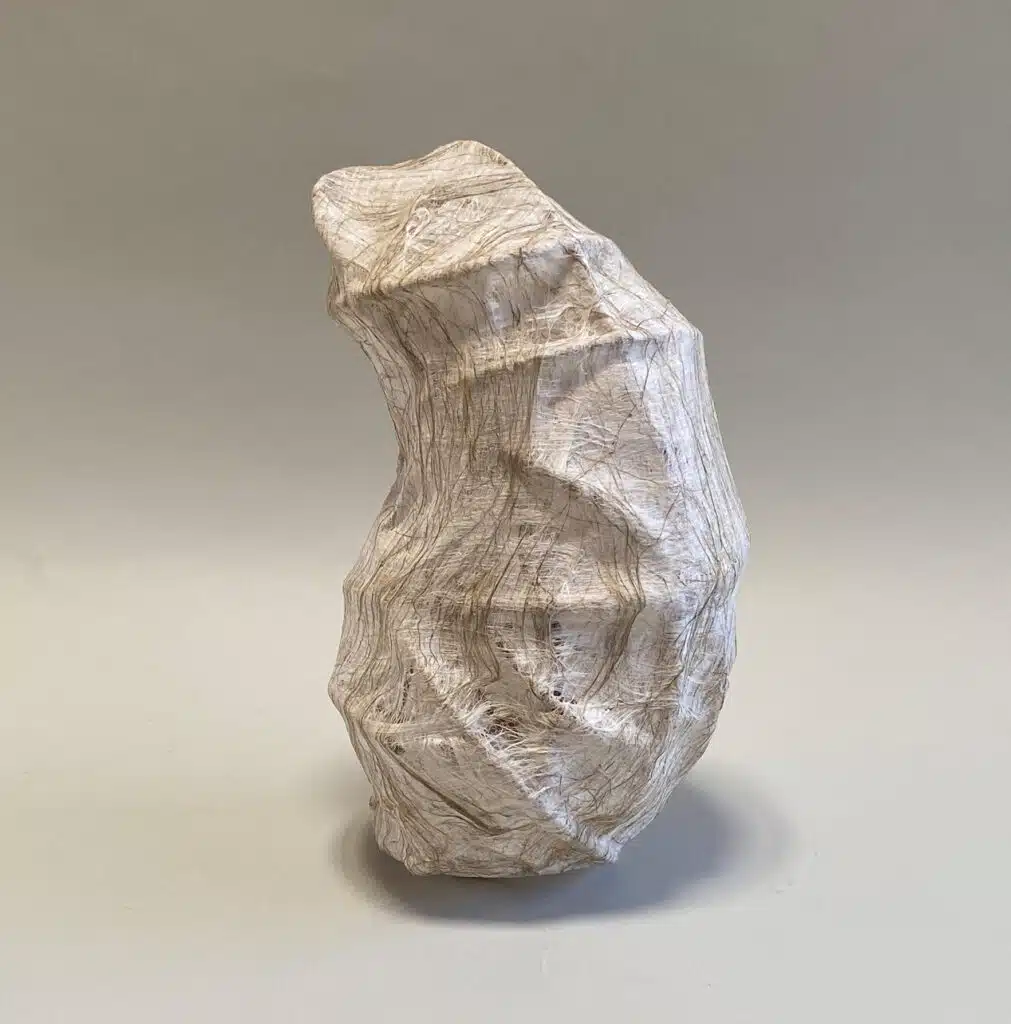
Jacqueline Mallegni makes paper and naked paper into art. Jacqueline allowed Take Two a peek into her unique world.
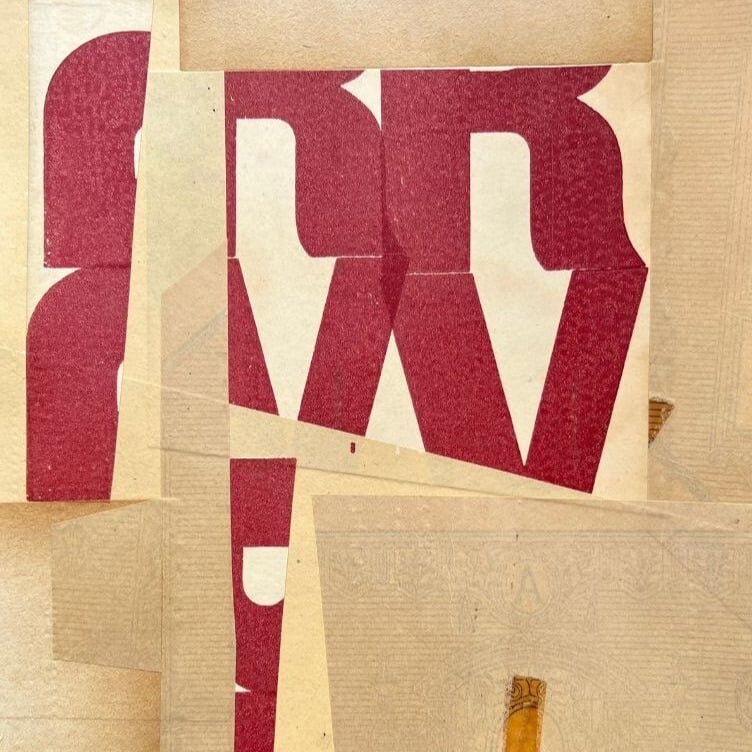
Read and watch our Friday Featured Artist interview with collage artist Sarah Z. Short. Get to know her love of collage, paper, composition and books!
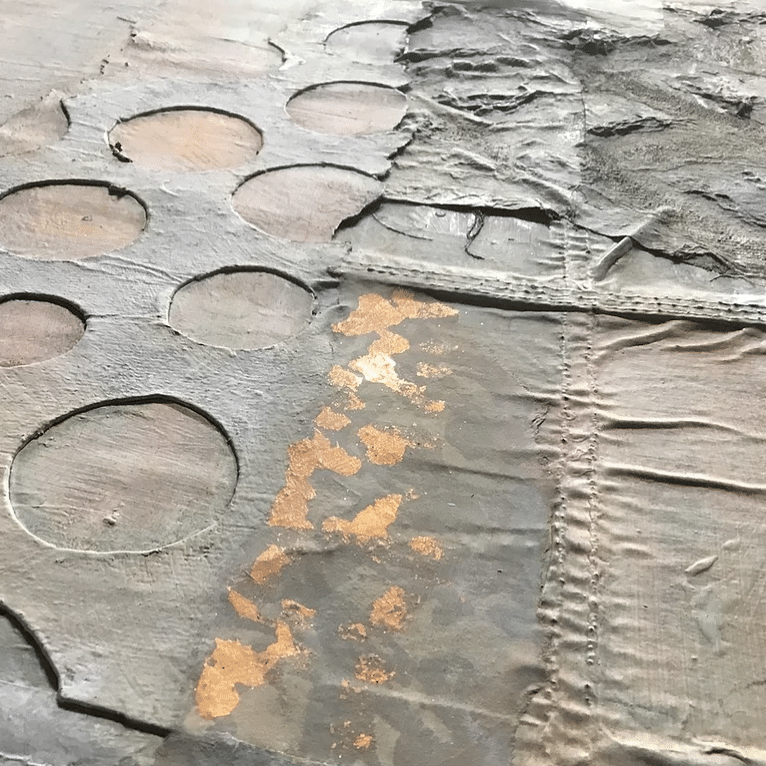
In this Friday Feature Artist interview, German artist Cordula Kagemann talks about combining paper and textiles to create stunning collages.