Toni Hartill: Different Directions
Join Take Two to learn how fibre artist Toni Hartill takes different directions and ends up at the right destination | Friday Feature Artist interview
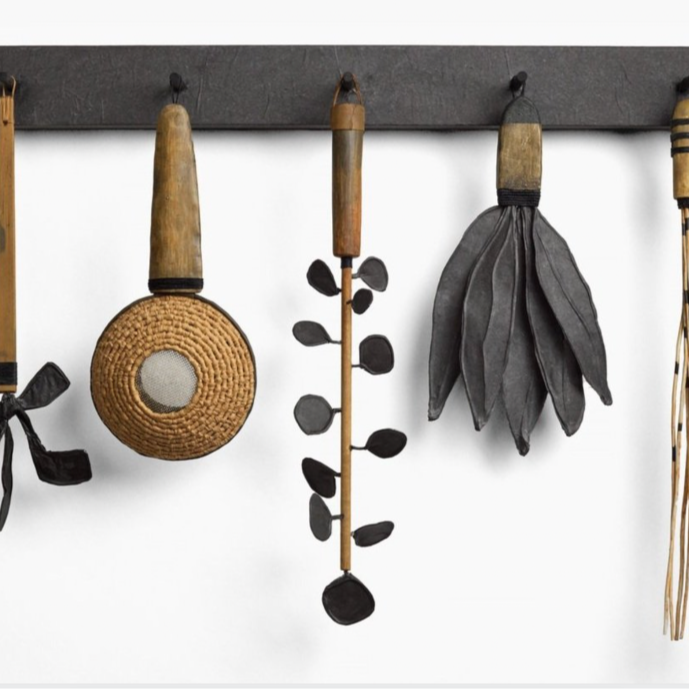
Take Two is thrilled to introduce you to an artistic luminary whose journey is an exquisite symphony of innovation and imagination. Lissa Hunter is a remarkable studio artist whose life story weaves a captivating tapestry rich with fate, passion and an unbreakable bond with the arts emerging into the world.
Take Two loved learning about Lissa’s journey to basket making and her advice for aspiring artists.
Lissa took a hard right turn to begin her art career, “I had a 10-year teaching job,” she says, “And I woke up one morning and said, ‘You know, I don’t want to do this anymore. I want to see if I really can be an artist. I always said that if I were filling out an application, and it said ‘occupation’, I would write ‘teacher’ because I was teaching college, and I wanted to be able to put in ‘artist’ and mean it. I really thought this was a sign that I wanted to do something else, so I quit my teaching job, took out my retirement fund, which wasn’t all that much, but it was enough to get me going, moved to Maine and, 50 years later, this is what I’m doing.”
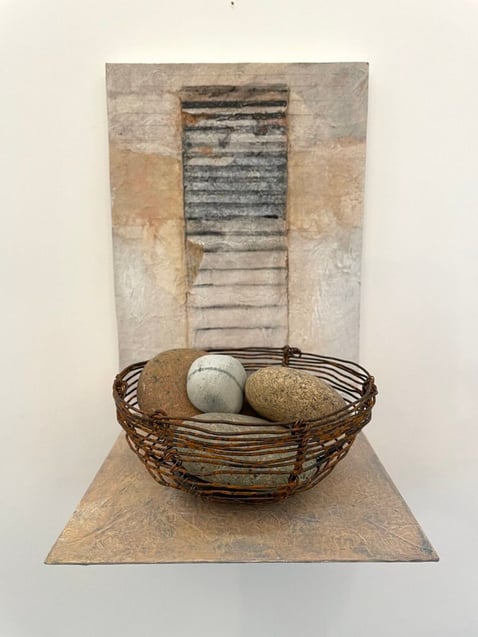
“The hardest thing, I think, was my mom,” Lissa says about the impact of her life change, “She used to be able to say,’ My daughter, the professor.’ And now she had to say, ‘My daughter, the artist. Kind of.’
I was making baskets. What is that about? I think the definition was complex. But my parents always supported anything I wanted to do and always supported my artistic interests. And then things caught on, and I had some recognition, enough that it made them know that this was legitimate, then they were happy for me.”
Lissa was happy, too. “When you’re following what you are meant to do,” she says, “or what you think you’re meant to do, as opposed to just keeping time or making a living, you bring so much more value to the world. And in some ways, that’s what we’re put here to do is to create value.”
When Lissa began her art career, she not only made a huge life change, but she selected a more obscure art form to pursue, “I had been tapestry weaving for a long time,” she says, “and then when I left teaching and moved to Maine and wanted to make my living doing artwork, basketry was just beginning being a recognised art form, and it was very exciting. Wonderful people, lots of support galleries were having basketry shows and such, so I thought I wanted to make baskets and related very closely in an odd way with weaving and textiles.”
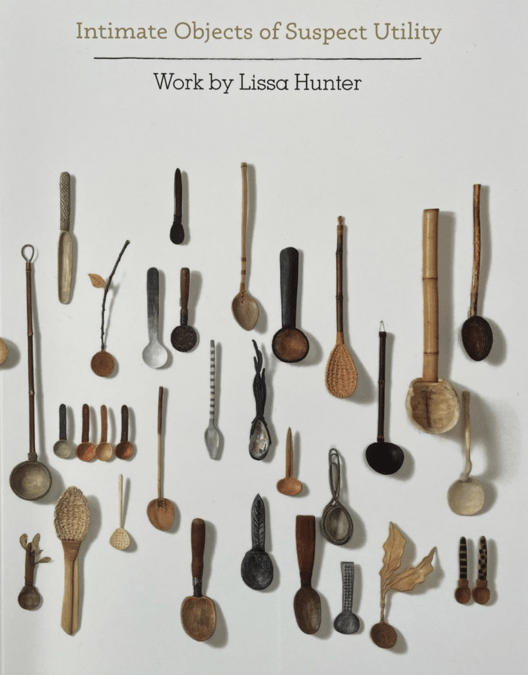
Lissa has found many ways to make basketry of her own, “I liked being able to look inside and see that it really is a basket,” she says of one of her pieces, “It’s coiled with raffia around a paper cord. This was something I made up, although I’m sure there are traditions elsewhere. And then on that paper, it’s applied with glue as if it was tiled, as if we’re putting on shingles, so they overlap slightly, and then when they get painted, it creates this solid surface of paper. In this case, I used a needle and a thread to put a little bit of a warp on this basket. So going into the basket, coming back out a little bit, over, down, in, over, down, up, so that there became a warp in the areas that you see that are woven, and then used a needle and thread, needle-weaving, working back and forth in tapestry to create the pattern as if it were falling off the basket.
My grandmother used to say that her favourite things – were things that looked as if they were dug up, and I think I took that into my bones somehow because a lot of my work looks as if it were dug up.”
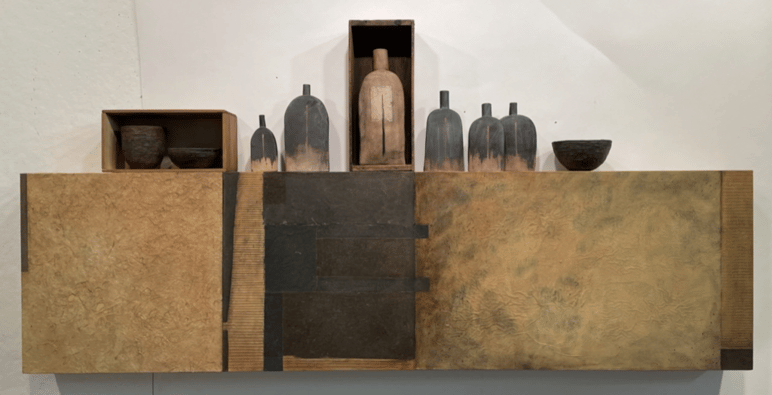
That ‘dug-up’ look translates in many ways into Lissa’s art, “I have a very limited colour palette,” she says, “I’ve come to understand. I don’t do pink. I don’t know if that’s my grandmother, but I tend to stay within a minimal range. Again, not by choice per se, but because that’s what comes out.”
Lisa has sage advice for aspiring artists, “Don’t plan too much,” she says, “There’s always this sense that if I do this, and that and that, then I’m going to be that person, and that’s going to happen. Literally, all of the biggest things in my life have happened: how I met my husband and how I got my first gallery in Santa Fe, New Mexico, by accident. By chance. I was out there ready for them to happen to me and be able to take advantage, but I could never have planned for what had happened. Stay involved and be ready. But don’t get too concerned about going to a workshop about what you’re supposed to do and when. Just be open. Keep doing good work. Be nice to people.”
Lissa Hunter was born in the middle of the 20th century, in the middle of the country, in a middle-class family. Her mother was an artistic, hardworking woman with a strong sense of humour and an ability to organise anything and anyone. Her father was charming and eclectic in his interests, from restoring antique cars to performing magic professionally. She was a secretary, and he was a salesman.
At Indiana University, Lissa earned a BA in painting and an MFA in fibres.
After teaching art at a college in Pennsylvania for eight years, Lissa left a tenured position to give her full attention to making art, just as the contemporary craft movement was coming into its own. Maine was her destination and has been Lissa’s home ever since. Choosing to work both two- and three-dimensionally from the beginning has allowed her to explore numerous materials and techniques and to push her ideas in many directions.
Materials and techniques continue to fascinate Lissa, and the ideas keep on coming.
Lissa is proud to say that her work is in the Renwick Gallery of the Smithsonian Institution, the Museum of Arts and Design (New York), the Museum of Fine Arts (Boston), Racine Art Museum (Wisconsin), as well as other museum and private collections. Teaching, curating, and writing about contemporary basketry, design and creativity have been an important part of her career and continue to give her great pleasure.
Notifications
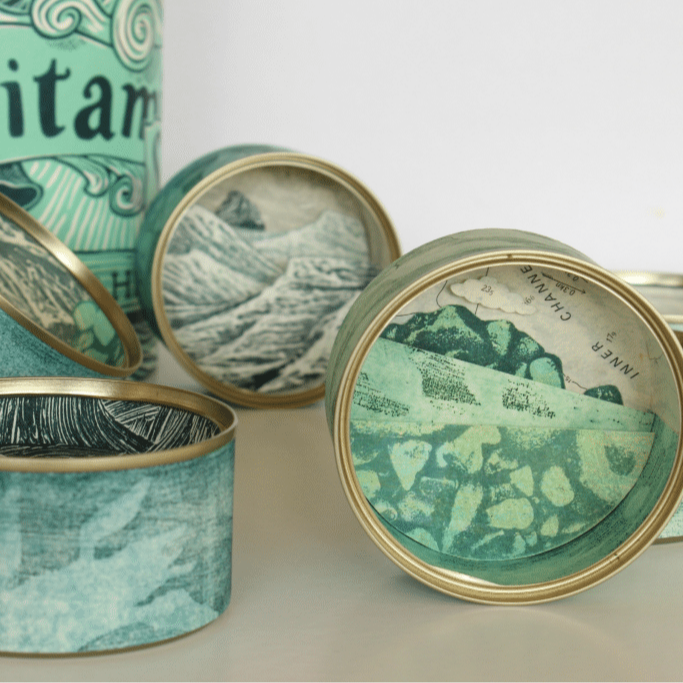
Join Take Two to learn how fibre artist Toni Hartill takes different directions and ends up at the right destination | Friday Feature Artist interview
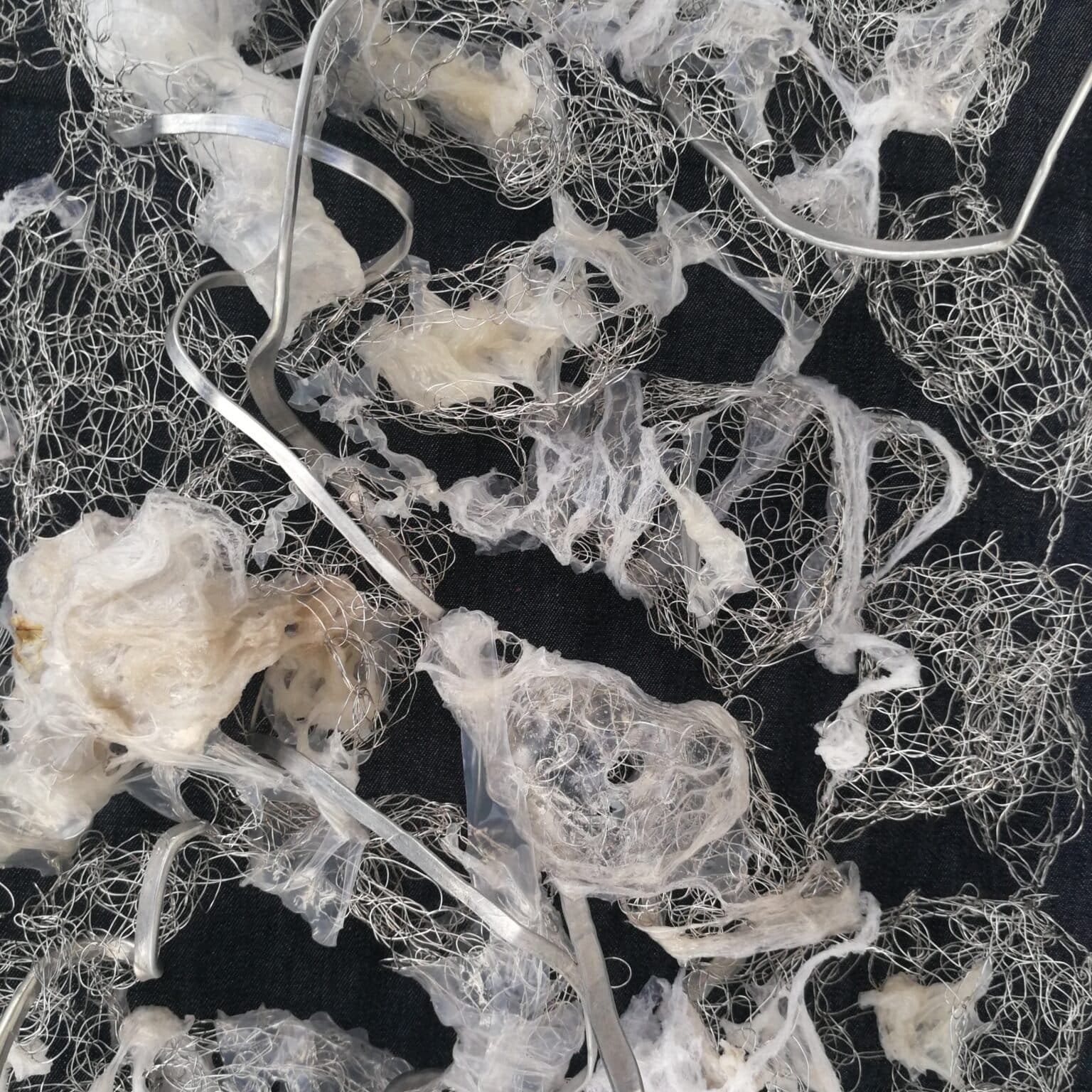
Auckland-based artist Alysn Midgelow-Marsden is a maker of inspiring and visually compelling forms. Take two learned about Alysn’s artistic journey.
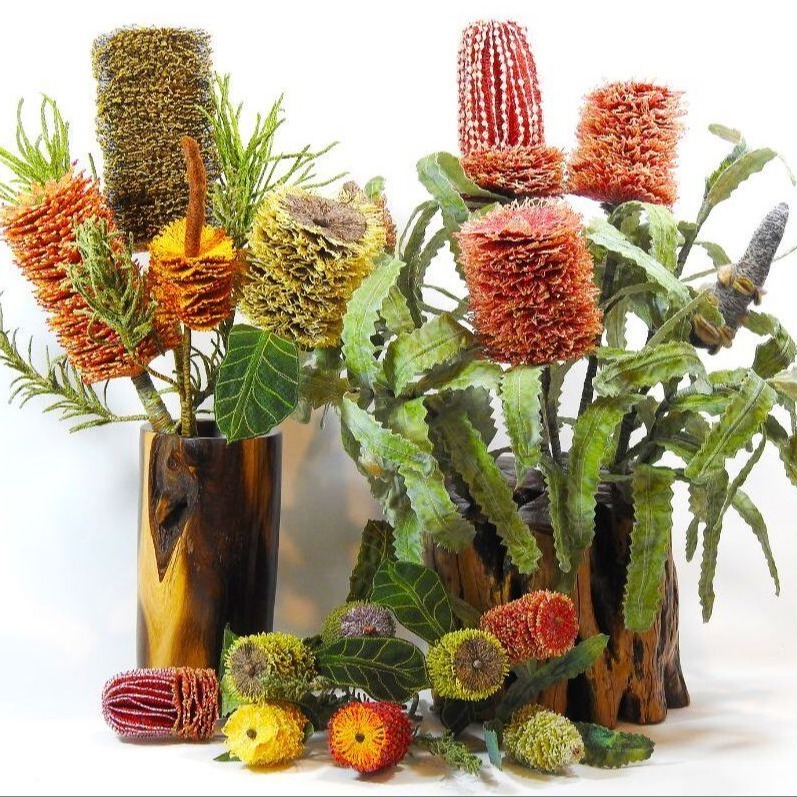
Textile artist Jennie-Maree Tempest creates exquisite fabric flowers and plants. During a Friday Feature Artist interview Take Two learned more about...
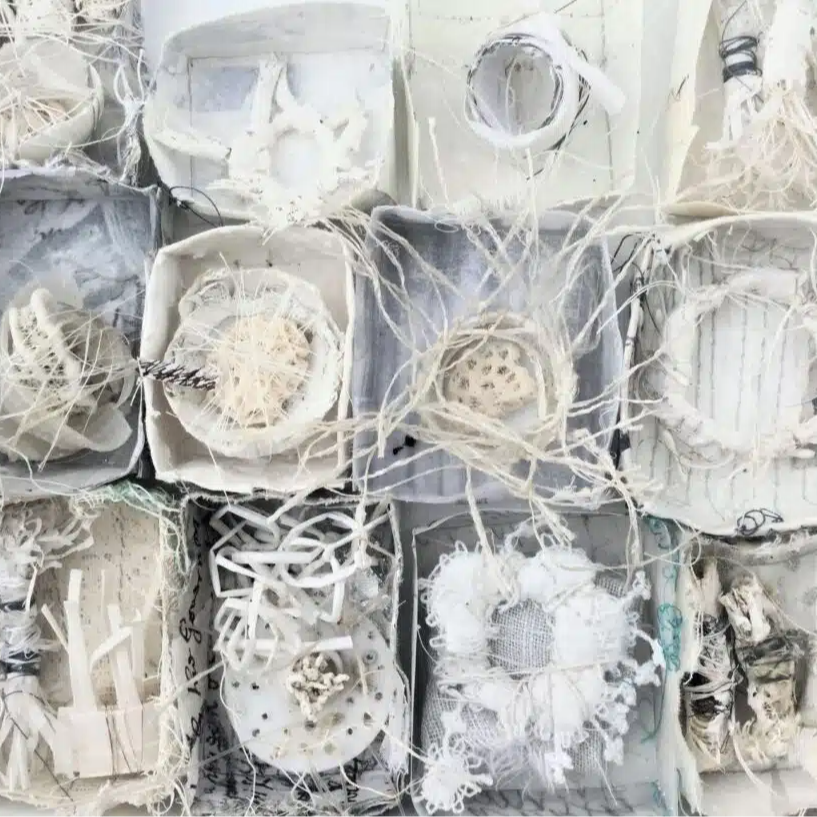
Artist and author Shelley Rhodes lives to take stitching to another level. Shelley shares insight into her artistic choices in this Friday Feature...