


 Angela Truscott
From the archives: Stitching time with Richard McVetis
 Angela Truscott : Jun 25 2025
British artist Richard McVetis uses hand embroidery to explore the elusive nature of time. In our interview, he shares how slowness, structure, and...



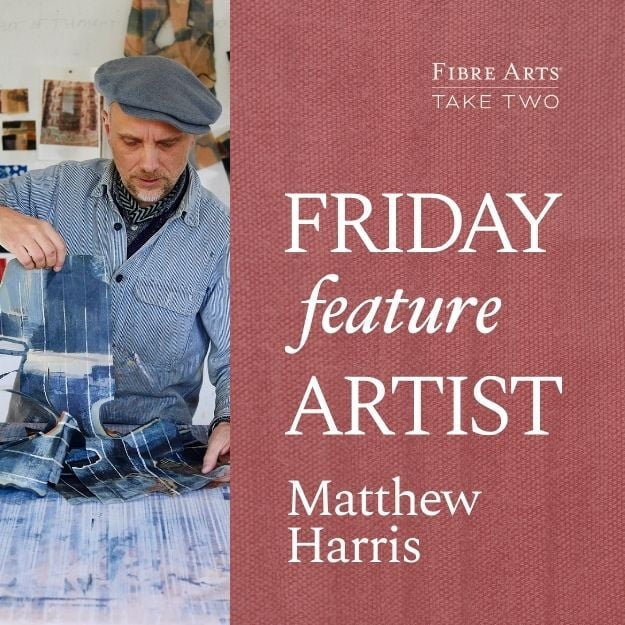
Let the work unfold through process.
Matthew’s practice is rooted in exploration rather than outcome. He doesn’t design his pieces – instead, he builds systems that allow ideas to emerge through action, improvisation, and restraint. What might open up in your own work if you focused on making, not mastering?
Constraint creates clarity.
By limiting his materials to builder’s dust cloth, muslin, and a restrained palette, Matthew pushes deeper into visual language and form. For him, constraint isn’t restrictive – it’s liberating. How might fewer tools bring greater intention?
Chance can be a collaborator.
Inspired by composers like John Cage, Matthew uses randomisation and dice rolls to decide placement, shape, and mark. This allows unexpected configurations to arise, challenging his own instincts and pushing the work into unfamiliar territory.
Drawings and textiles are in conversation. Matthew’s cloth works begin with drawings – not as plans, but as visual starting points. Both mediums inform one another, each evolving in cycles. This rhythm keeps the work dynamic and stops the practice from becoming repetitive or stagnant.
Imperfection has presence.
In Matthew’s studio, stitched layers might hide or reveal earlier marks, compositions may remain unresolved, and decisions are final once stitched. His philosophy invites us to accept imperfection as part of the piece – and to keep moving, like music does, even after a wrong note.
What inspired you this episode? Share your biggest insight or favourite moment by tagging @TakeTwoArtCourses on social media or using #FibreArtsPodcast
During the live interview, we shared some images of Matthew’s artwork. Since you’re listening to the podcast version, we’ve made these images available for you below.
1 min read
 Angela Truscott : Jun 25 2025
British artist Richard McVetis uses hand embroidery to explore the elusive nature of time. In our interview, he shares how slowness, structure, and...

 Deborah White : Sep 18 2026
Interview: Artist Patrick Bongoy on his family's early resistance to his path, the legacy of Congo's rubber trade, and how ritual and spirituality...
.jpg)
.jpg?width=30&name=TA_BOOK_23%20(1).jpg) Tara Axford : Dec 9 2025
Tara Axford : Dec 9 2025
Painter, printmaker & educator Sally Hirst shares how curiosity, risk & repurposing drive her artistic process. And why the best ideas often start...
 Angela Truscott : Oct 28 2025
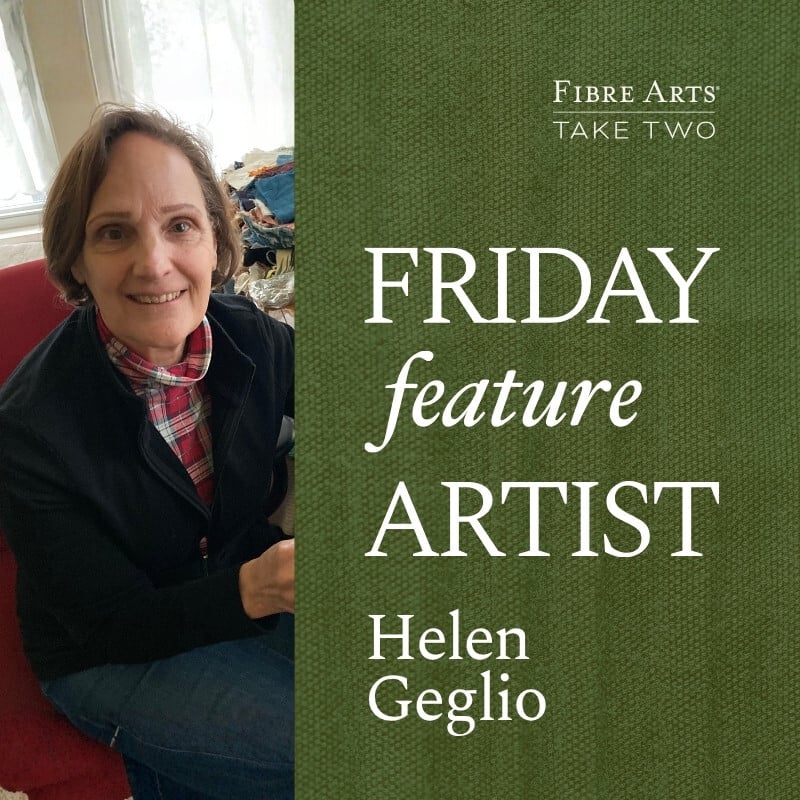
Textile artist Helen Geglio creates layered, hand-stitched works that explore memory & motherhood. She shares how repetition, reflection & risk have...