Student Success Story: Melinda West
Weaver Melinda West shares how the art course Connecting with Lissa Hunter brought clarity, confidence, and renewed energy to her art practice.
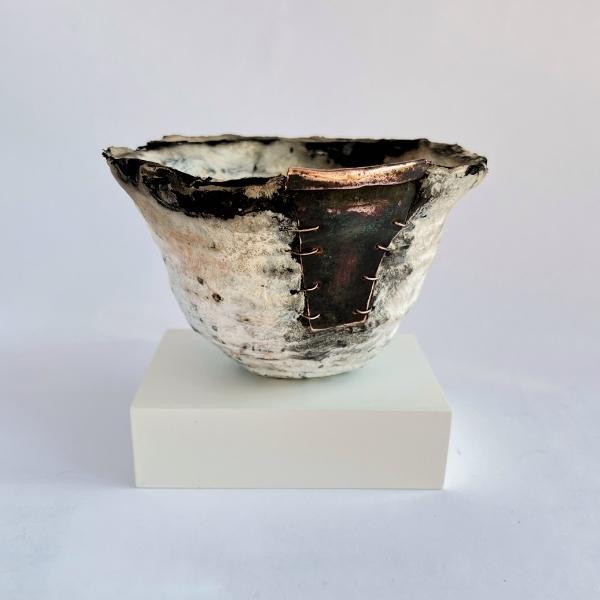
When Liz May sits down to make, she works close to the hand. Tools matter. Materials matter. The quiet relationship between maker and object has shaped her practice for decades.
Trained as a jeweller and silversmith, Liz has always maintained a life of making alongside everything else. Over the years, that practice naturally expanded into ceramics, sewing, costume, vessels and found materials. Jewellery remained at the core, but it was no longer the whole story.
More recently, Liz retired from formal work and set up a studio at home in Kent. She was making regularly, but distractions crept in. Life interrupted her focus. Her practice began to feel slightly stale, and she sensed she needed something to shift. Not a complete change of direction, but a way of re-seeing what she already did.
She had always made. What she needed was reconnection.
Before joining Connecting: A Philosophy of Making with Lissa Hunter, Liz felt her jewellery practice needed fresh energy. She was still working and still experimenting, but she knew she had reached a point where repetition was setting in.
“I probably really needed something to come in and invigorate me and let me look at my work in a different way.”
Rather than adding more technical skill, Liz was seeking perspective. She wanted permission to move sideways, to question materials, scale and intention. She also wanted space to reflect on what truly mattered to her in her work, now that time was finally hers.
A key turning point came early in the course, when Lissa spoke about work being close to the hand.
That idea landed immediately.
For Liz, tools have always been central. As a jeweller, she was trained to understand materials through touch and to work within the hand rather than at a distance. The prompts that followed encouraged her to slow down and listen more closely to that relationship.
She deliberately stepped away from metal. Instead, she worked with plastic, cotton, flax and found materials. It was uncomfortable at first, but deeply valuable. By stepping away from the familiarity of precious materials, she discovered new freedom and curiosity.
“It really helped me push myself into some new territory.”
During this period, Liz's personal and creative lives overlapped in profound ways. When her youngest daughter was diagnosed with a brain tumour, making became a daily anchor.
That summer, before the operation, Liz went into her studio each day and made a small silver spoon. One spoon a day. The repetition was soothing. Finishing each piece mattered.
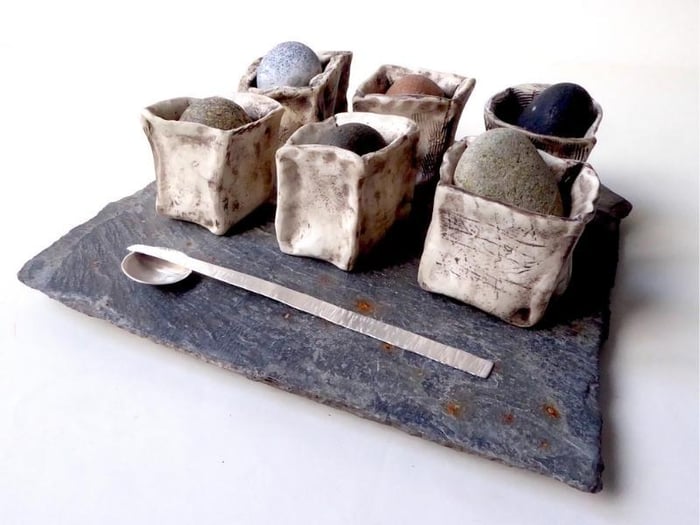
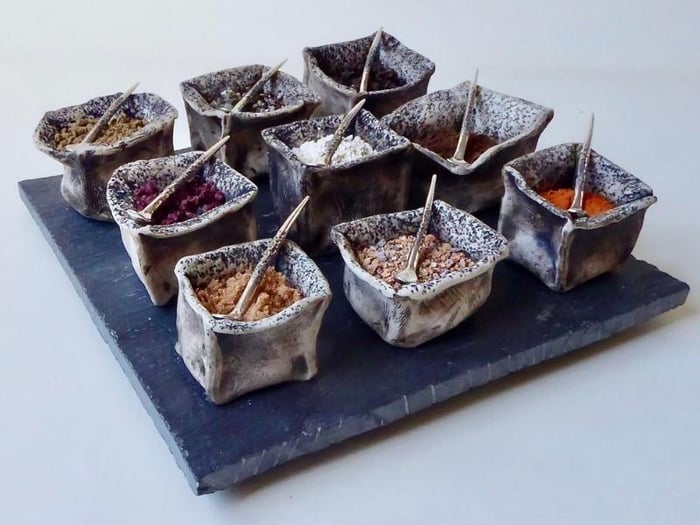
Later, seeing Lissa's own work with spoons opened up new layers of meaning. The spoon became a measure of care, of medicine, of how much is enough. Liz began creating small containers and porcelain forms filled with earth, salts and grit gathered from her garden. She started thinking about remedies, balms and tinctures, objects that hold, protect and heal.
Making was no longer just about output. It was about presence.
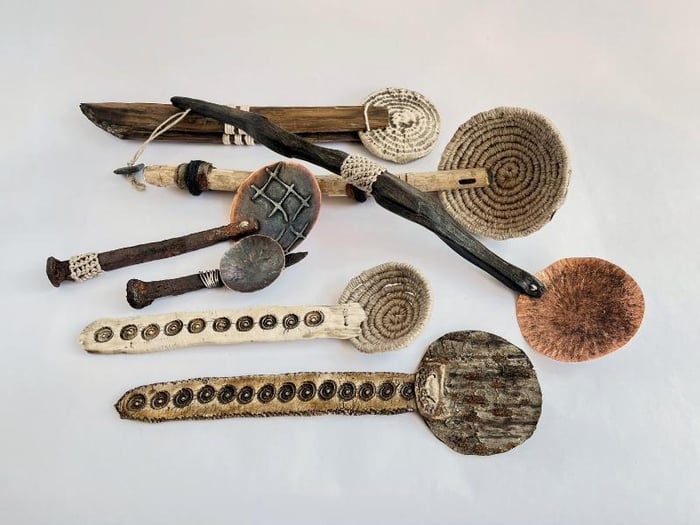
From the original spoon work, Liz allowed ideas to lead naturally into new forms. Brushes followed. Then larger spoons. Then bowls bound, wrapped and layered with paper, fibre and metal. Some pieces were burned, repaired and reworked. Others were deliberately unresolved.
“I like the way it feels quite destroyed in some of the areas.”
The course encouraged play without pressure. Liz described it as feeling like being back on the foundation. Making for the enjoyment of making and trusting that a body of work would gradually emerge. Over time, she noticed that her practice no longer felt fragmented. Jewellery, ceramics and mixed media began to sit together rather than in separate boxes.
One aspect Liz took away strongly was the importance of finishing and attention to detail. The back is as good as the front. The inside is as resolved as the outside. That discipline carried through into everything she made.
Just as importantly, her confidence shifted.
Since completing Lissa Hunter's online course, Liz curated a five-person exhibition in Whitstable, Kent, positioning her own work firmly within a fine art context. The show was so well received, and the experience confirmed something she had been moving towards for some time.
“I’ve now got that confidence to go out as an artist and show my work where I’m proud of what I’ve done.”
She now introduces herself simply as an artist. A small change that carries real weight.
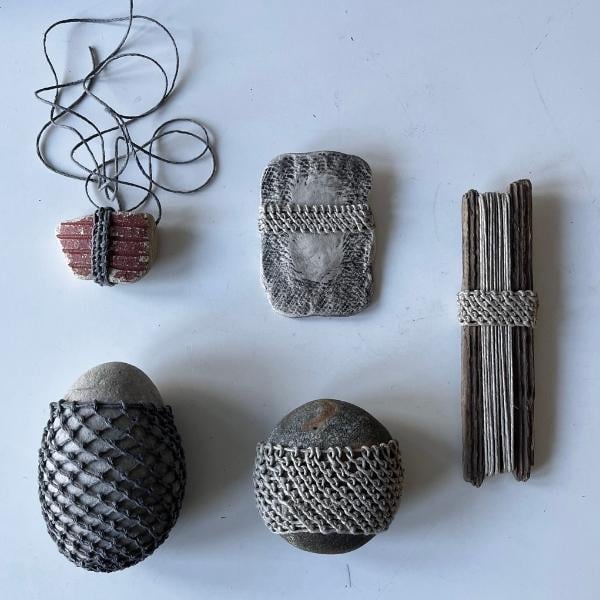
Liz continues to revisit the course materials, often discovering new ideas each time she listens. Lifetime access means the learning remains active, responsive and ongoing.
What she values most is the generosity of the prompts, references, shared artists and thoughtful language. The structure supports depth without rigidity, and the community offers encouragement without judgement.
Looking ahead, Liz is interested in scale, mixed media, and further expanding beyond jewellery. She feels her work is coming together, with one idea naturally leading into the next.
“It's sort of all coming together now."
%202025%20-%20Student%20Success%20Story%20-%20Connecting.jpg?width=600&height=600&name=Liz%20May%20-%20Finds%20(lace%20edges)%202025%20-%20Student%20Success%20Story%20-%20Connecting.jpg)
Connecting: A Philosophy of Making with Lissa Hunter brings together makers from a wide range of disciplines, including jewellery, ceramics, basketry, textiles and mixed media.
Designed for people who enjoy working with their hands and tools, the course offers structured prompts, thoughtful demonstrations and a supportive online community. Students are encouraged to explore materials, scale and process, building confidence in their creative voice.
With lifetime access to course content, participants can return, reflect and continue developing their practice over time, wherever it leads.
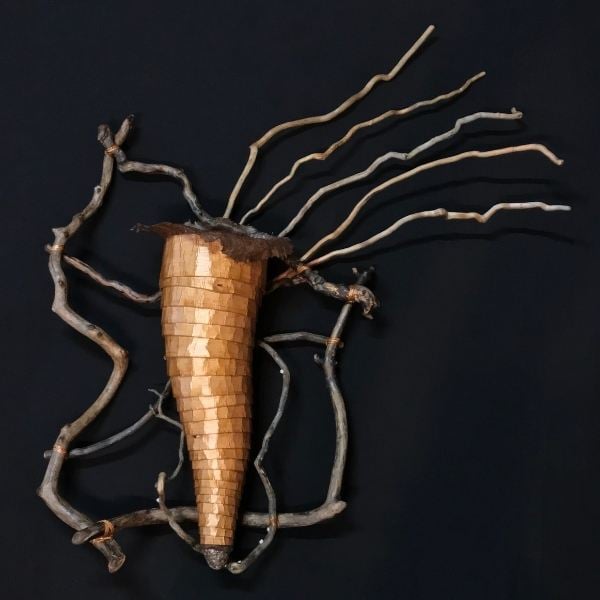
Weaver Melinda West shares how the art course Connecting with Lissa Hunter brought clarity, confidence, and renewed energy to her art practice.
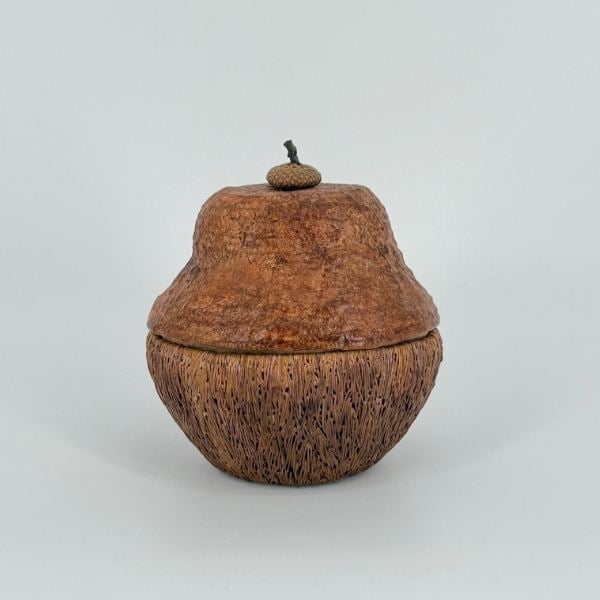
During Connecting with Lissa Hunter, artist Lucy Dundon had a mindset shift. New materials, ideas, and a philosophical understanding of art opened up...
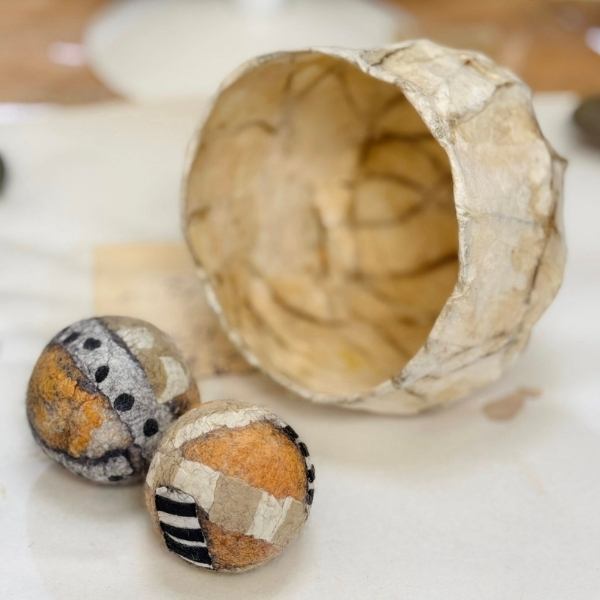
Connecting with Lissa Hunter enhanced Tanja Gawin's art practice, with new techniques combined with existing skills and a new emphasis on joy in the...
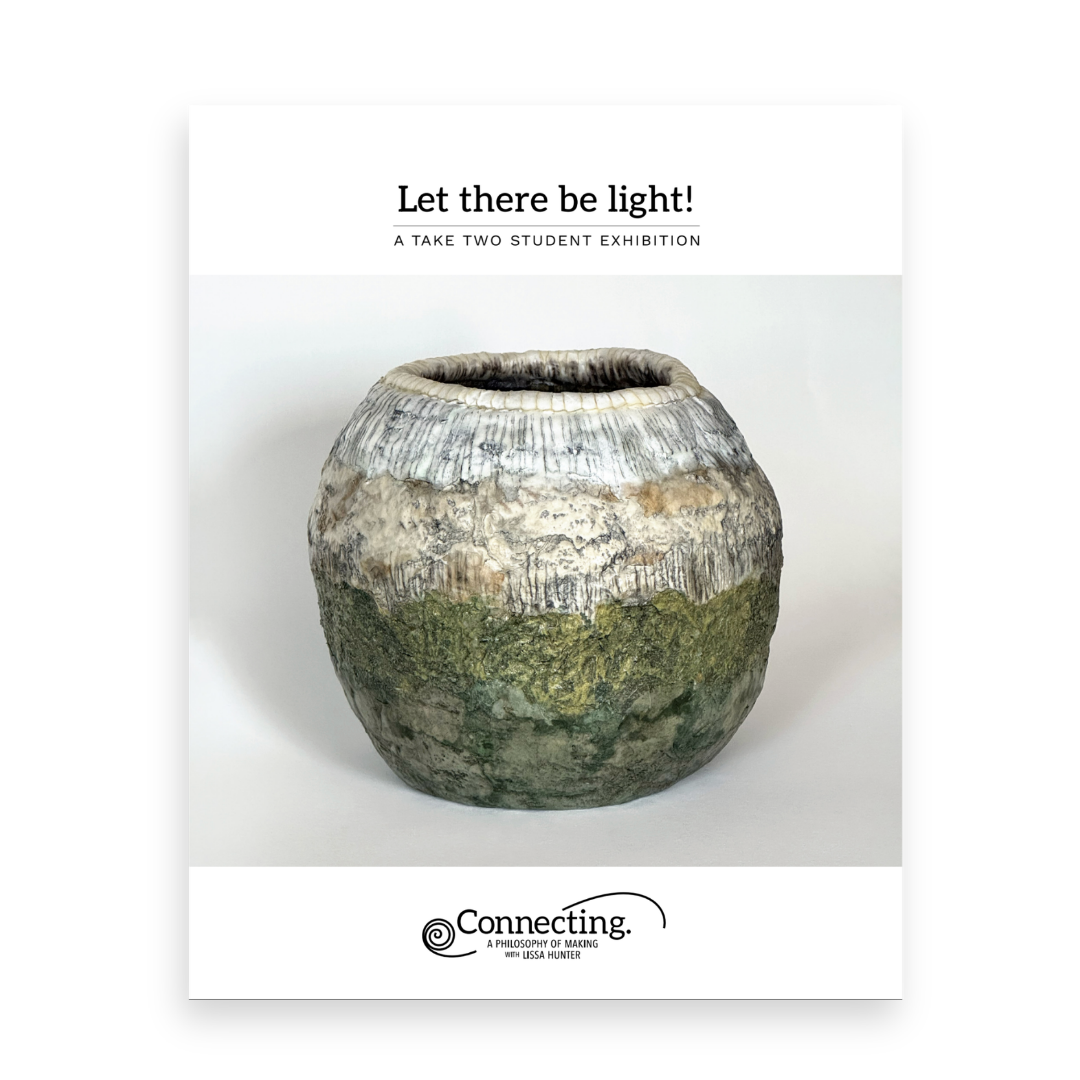
Let there be Light! is the 2026 online exhibition of students who participated in Lissa Hunter's online course, Connecting – A Philosophy of Making...