Student Success Story: Deborah Bygrave
Deborah Bygrave experienced a lasting change in how she approaches her creativity thanks to Finding Fragments with Shelley Rhodes.
.jpg)
Sandy Densem Winter had spent a lifetime committed to making art. Based in Shropshire, UK, and originally from Zimbabwe, Sandy trained in fine art many years ago, majoring in painting. Alongside painting, however, fabric had always been present in her life, running quietly beside her studio practice like a second language.
When Sandy joined Finding Fragments with Shelley Rhodes through Take Two, she arrived at a point of real creative uncertainty. After many years of painting, she had reached a stage where her relationship with the work felt strained, and her studio no longer felt like a place of possibility. What followed was not a dramatic reinvention, but something quieter and more lasting: a return to curiosity, process, and the pleasure of making.
Before taking Shelley Rhodes' course, Sandy had been painting for many years and had moved from oils to acrylics. That shift had not been easy, and over time the frustration had built. She reached a point where she looked at her studio, a conservatory space, and imagined giving it up entirely.
She began clearing things out. Paints, brushes and materials were removed, and what had once been a working studio became clean, tidy and almost empty. Then Sandy saw Shelley Rhodes’ course advertised through Take Two, and something about it caught her attention at exactly the right time. As she reflected, “It was transformative in that I honestly was at the point of just giving up.”
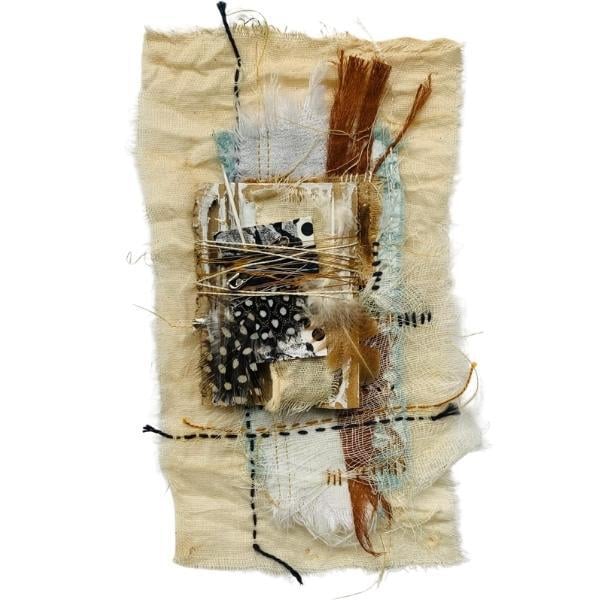
One of the first shifts Sandy noticed in Finding Fragments was the move towards working smaller. In the past, she had often worked on larger pieces of fabric, including tablecloths, curtains, and homeware. The scale of Shelley’s approach asked Sandy to slow down and enter a more intimate way of making.
This smaller scale opened up a different kind of attention. Layering became a way of building meaning, not just surface. Fabric could hold history, marks, memory and time, and Sandy found herself drawn into the quiet depth that came through combining and assembling fragments.
.jpg?width=800&height=500&name=Sandy%20Densem%20artwork%20-%20Student%20Success%20Story%20-%20Finding%20Fragments%20(12).jpg)
One of Sandy’s starting points for the course was a collection of old lace and cotton from her mother’s chest. These pieces carried family history, including the story of women in her South African family line who had made their own clothes and lace. Some of the fabrics had deteriorated over time, and Sandy knew they were unlikely to be kept by the next generation in their original form.
Through the course, these inherited materials came back to life. Sandy found a way to rework them, respond to them, and place her own mark alongside their history. She described it as “a wonderful way for me to be able to rework things and put my stamp on it, but with the history.”
.jpg?width=650&height=650&name=Sandy%20Densem%20artwork%20-%20Student%20Success%20Story%20-%20Finding%20Fragments%20(5).jpg)
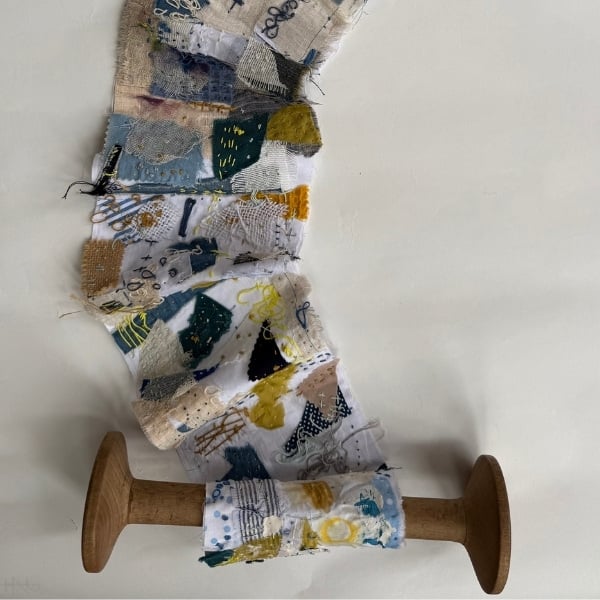
Although Sandy had always sewn, she had not expected to love hand stitching. Her mother had been a skilled seamstress, and Sandy had made clothes over the years, but she had usually chosen the sewing machine because it was faster. When Shelley introduced hand stitching in the course, Sandy initially thought she might skip that part.
Instead, she picked up a needle and thread and began. What surprised her was not only that she enjoyed it, but that it became meaningful. The slow, contemplative quality of stitching gave her a different rhythm within the work.
“The slow stitching was a breakthrough for me, an absolute breakthrough,” she said.
Finding Fragments also encouraged Sandy to take more risks with her materials. Rather than stopping when something felt comfortable or seemed to be working, the course invited her to cut, tear, shred, distress, burn, bury and reassemble. This was not destruction for its own sake, but a way of opening the work up again.
That lesson has stayed with her beyond textiles. Sandy now recognises that when a painting or textile piece feels stuck, the answer may not be to keep pushing in the same direction or abandon it altogether. It may be to change it, disrupt it, and look again.
Sandy had taken online courses before, but still described herself as someone who does not find technology especially natural. Even so, she found the Take Two online course easy to follow. The ability to pause, return, revisit and work at her own pace was part of what made the experience accessible.
She appreciated the quality of the filming and the sense of being close to Shelley’s process. Watching the demonstrations, with Shelley's work visible in the studio behind her, gave Sandy a sense of being present in the space.
As part of the course, Sandy also took part in the online student exhibition, with her work featured on the front cover of the exhibition publication. For her, the exhibition provided focus and a meaningful goal to work towards.
Sandy bought the printed book after the exhibition, and it now sits in her library as a record of that time. It also includes the work of other artists she connected with through the course, many of whom she continues to follow.
Looking ahead, Sandy is exploring how to bring together the two strands that have always run through her creative life: painting and textiles. For many years, they have existed side by side, each important in its own way. Now she is beginning to imagine how they might meet more fully within the same body of work.
Her newer pieces include fabric fragments, old lace, stitched marks and painted surfaces. Some are built on canvases that began as mixed-media paintings, allowing previous layers to remain part of the finished work.
.jpg?width=600&height=600&name=Sandy%20Densem%20artwork%20-%20Student%20Success%20Story%20-%20Finding%20Fragments%20(6).jpg)
What Sandy found in Finding Fragments was more than a collection of techniques. It was a way to return to her studio with fresh energy after a period when she had considered walking away.
The course helped her reconnect with material curiosity, small-scale making, inherited fabric, stitch, and the importance of taking risks. In many ways, the fragments did exactly what fragments can do: they opened a new way back in.
For anyone considering a course like Finding Fragments, Sandy advises arriving with openness rather than a fixed outcome in mind. She believes the richest learning comes when students allow themselves to experiment, make a mess, ruin things, lose things, and discover through doing.
Sandy encourages future students to set aside the pressure to know what the work should look like before they begin. For her, the course was most powerful because it encouraged risk, curiosity, and a willingness to see materials differently.
If an artist feels stuck, frustrated, or simply curious about a new way of working, she sees this kind of course as a way to move forward. Sometimes being pushed out of a comfort zone is exactly what the work needs.
Deborah Bygrave experienced a lasting change in how she approaches her creativity thanks to Finding Fragments with Shelley Rhodes.
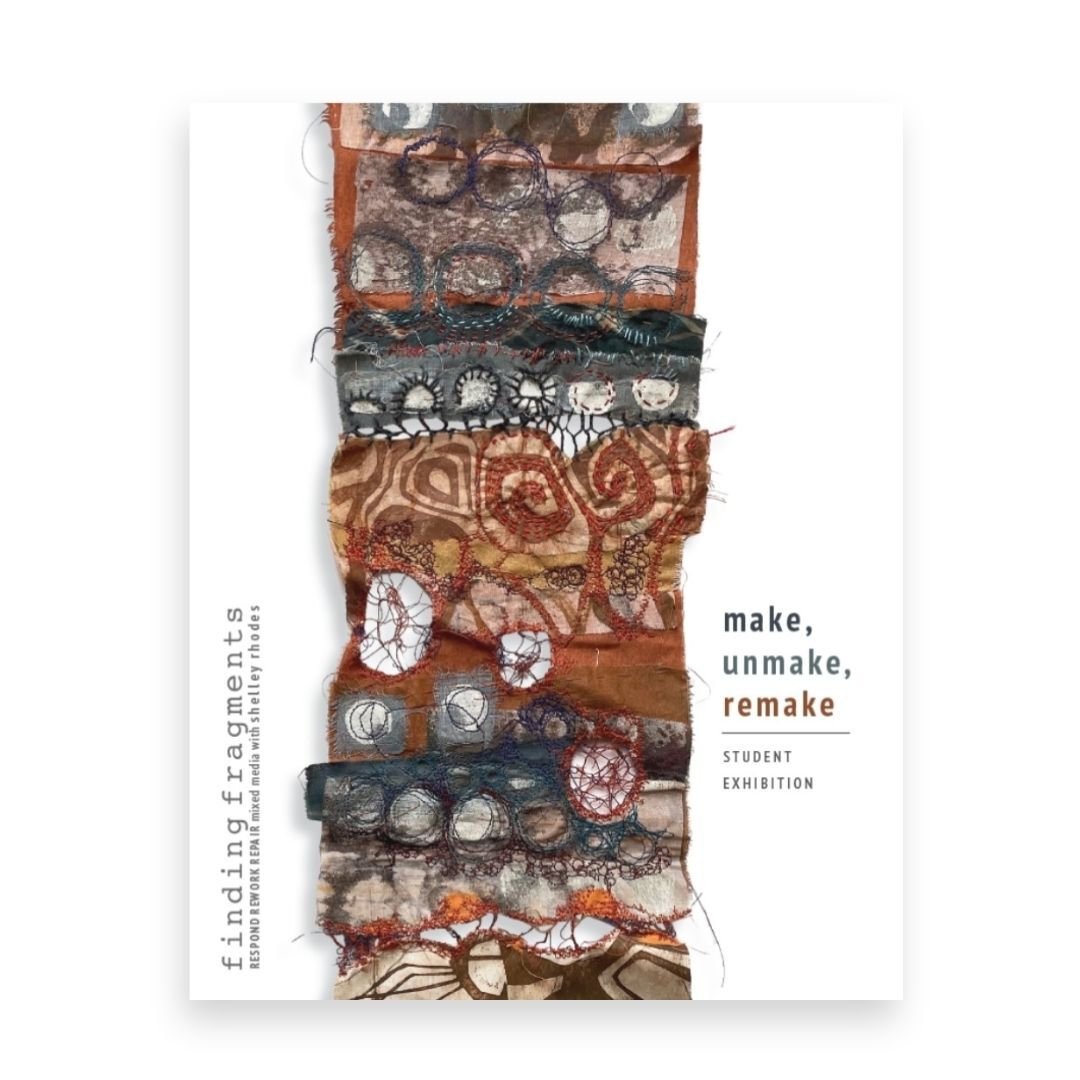
Make, Unmake, Remake is the 2024 online exhibition of students who participated in Shelley Rhodes' online course Finding Fragments with Take Two.
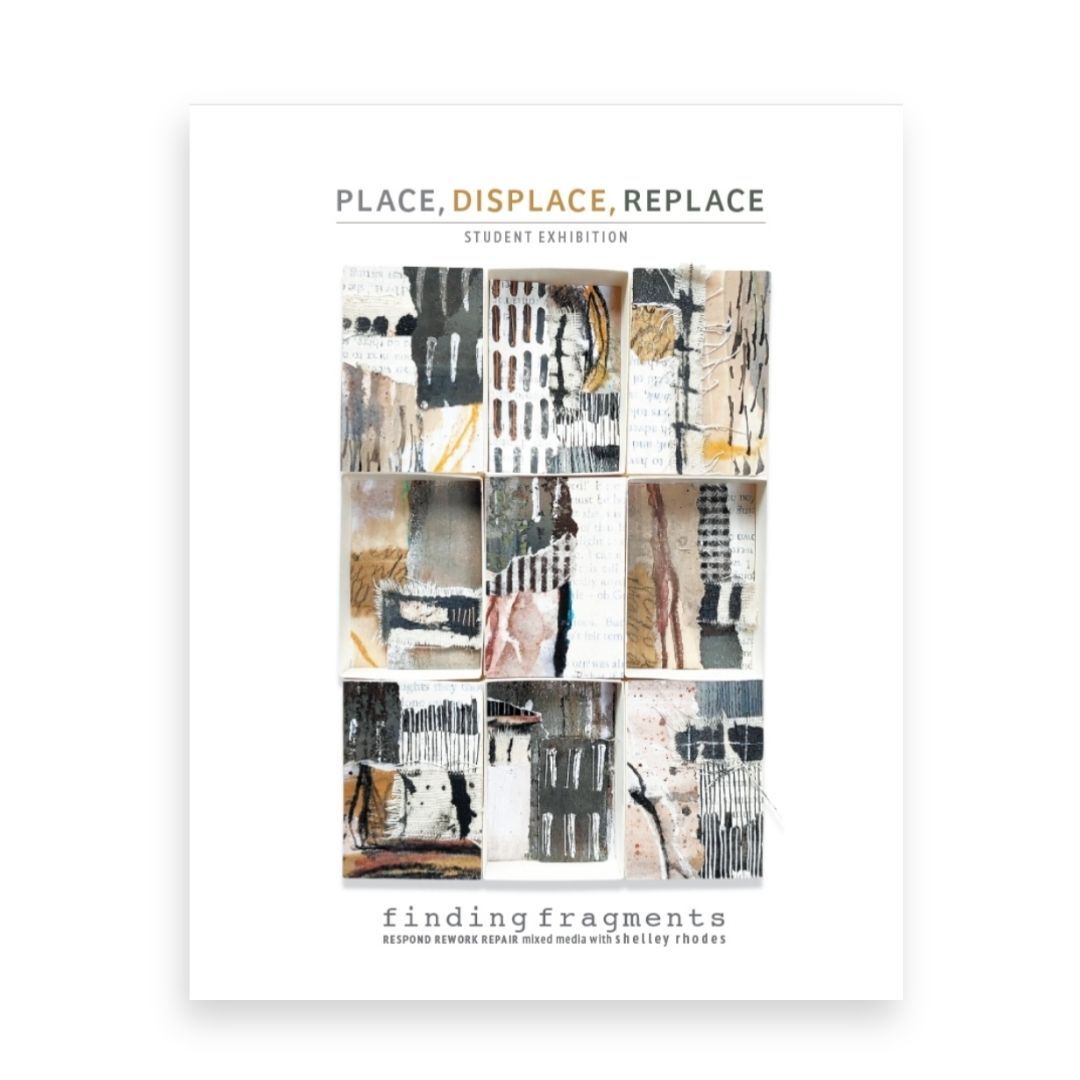
Place, Displace, Replace is the 2023 online exhibition for students who participated in Shelley Rhodes' online course Finding Fragments with Take Two.
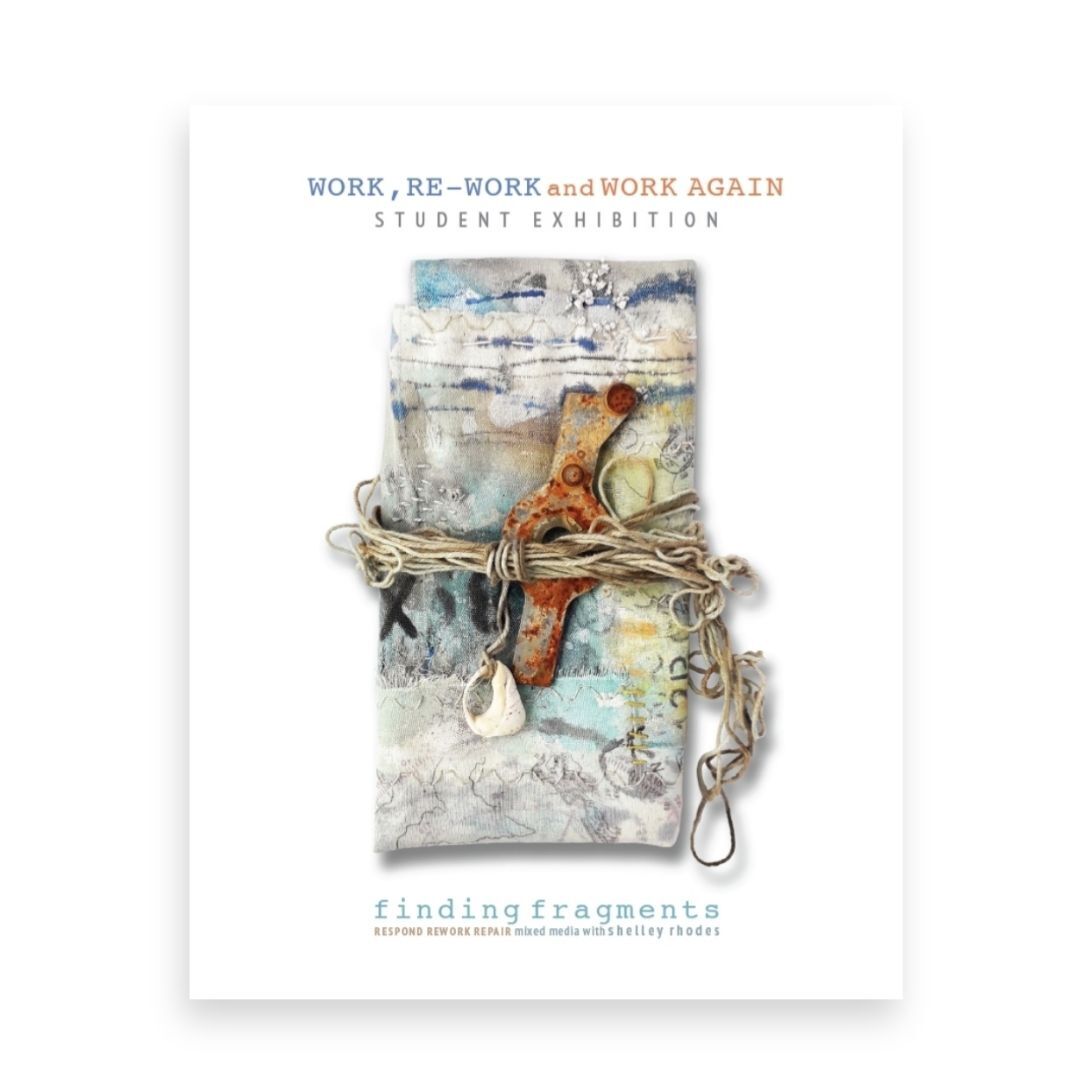
Work, Re-work & Work Again is the 2022 online exhibition for students who participated in Shelley Rhodes' online course Finding Fragments with Take...