1 min read
Student Success Story: Carla Vermeend
A photographer seeking more than the frame When Carla Vermeend enrolled in Focus & Flow with Karen Olson through Take Two, she wasn’t seeking...
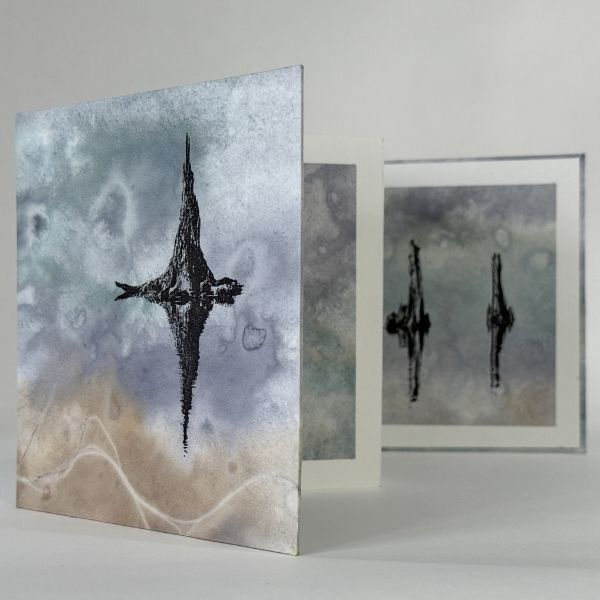
Annegret Fauser is a fibre artist whose practice has been shaped by deep study, critical thinking and a lifelong commitment to learning. She began with a love of sewing, moved into quilting, and advanced to stitching textiles at an advanced level, and holds a degree in art history. That combination of making and reflection has always pushed her to ask deeper questions about material, meaning and process.
Alongside her creative life, Annegret also navigates significant health considerations. Many commonly used materials in textile art, particularly acrylics and heated media, trigger severe reactions for her. That reality has profoundly shaped how she works, requiring her to find processes that are not only expressive but also physically sustainable.
Her journey with Take Two began through Claire Benn's course Out of this Earth, which opened up a new way of working with pigment on cloth. But it was Focus and Flow: Restorative Art with Karen Olson that brought everything together in an unexpected and transformative way.
Before joining Karen Olson's course, Annegret had fallen deeply in love with photography. She was taking classes, working regularly with the camera, and building confidence with lens-based imagery. The challenge was integration.
She tried hard to bring photography and fibre art together in a way that felt resolved and authentic. While she admired artists who combined the two successfully, many of the processes she encountered relied on materials she could not safely use.
She was drawn to certain things but struggled to find a truly effective approach, leaving her feeling creatively blocked and uncertain about how to move forward across different media.
Then she saw an image advertising Karen's course. One image was enough.
"Yes, that's it."
She enrolled with a clear intention: to find a way to bring photography into her art practice that aligned with her values, her body, and her materials.
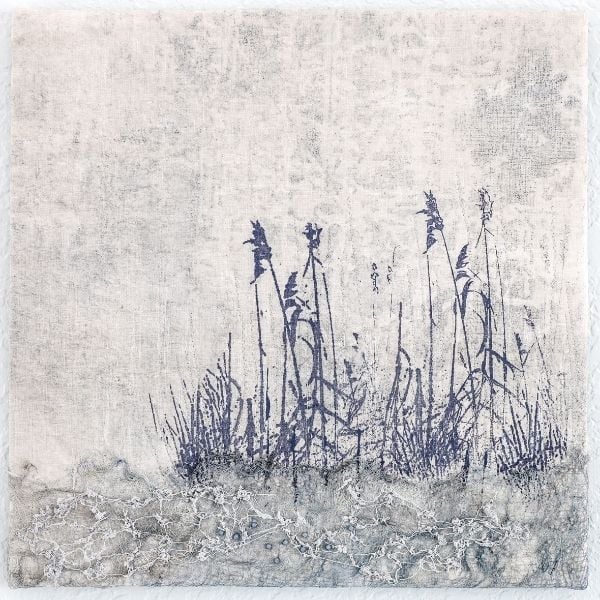
Annegret expected Focus and Flow to be a technical course. She was interested in learning more about photography as an artistic expression and assumed she would continue working primarily with fibre and fabric.
When she first read about forest bathing and restorative practices in the course description, she admits she was sceptical. She wanted a method, not mindfulness.
What unfolded surprised her.
Two moments became particularly influential. In the opening module, Karen introduced forest bathing not as self-care in a superficial sense, but as a way to engage fully with place through all the senses. In a later module, Karen spoke about photography as a form of mindfulness, using the lens slowly and deliberately rather than hunting for an image.
Together, these ideas transformed the way Annegret saw and worked.
One of the most lasting shifts came from applying the course practices to everyday life. During daily walks with her dog, Annegret began moving differently through the environment. She listened more closely. She noticed scent, texture, birdsong, light and movement.
She was not always taking photographs. Instead, she was training her attention.
This practice became embedded. It did not fade once the course ended. The awareness Annegret developed outdoors began flowing naturally into her studio work.
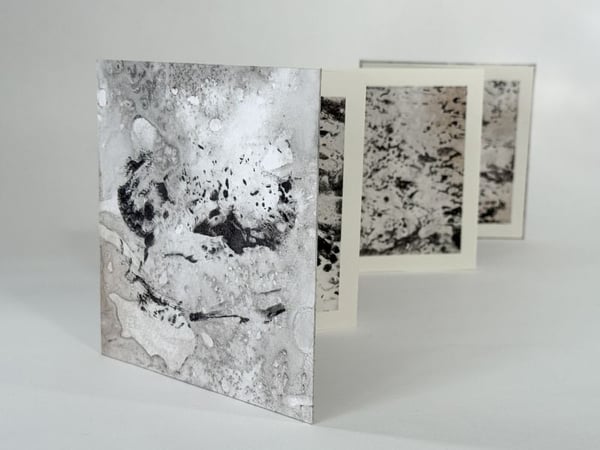
Rather than translating environments literally, Annegret began working with what she describes as the aura or essence of a place. Her engagement with the local landscape was particularly potent, often reflected in the subtle, muted tones of Albemarle Sound near her home.
Through Karen's teaching, she learned to trust abstraction. She no longer felt compelled to force photography directly into fibre. Instead, she allowed colour, atmosphere and sensation to guide the work.
This shift freed her practice.
The most significant turning point came when Karen demonstrated papermaking in the course. Watching plant fibres being beaten and transformed into paper sparked an immediate realisation.
Paper is fibre.
For years, Annegret had limited herself to fabric, equating fibre art exclusively with cloth and stitch. She had resisted paper because she values depth and mastery and feared becoming scattered across materials.
That moment reframed everything.
She recognised that she had been forcing fabric to behave like paper, especially in book forms. Once she allowed paper to be paper and fabric to be fabric, her work opened up.
Focus and Flow also clarified something essential about learning. A course can introduce many techniques, but mastery takes time.
Annegret experimented with papermaking and enjoyed it, but she recognised that reaching Karen's level would require years of dedicated practice. Instead of feeling pressure to do everything, she made a conscious choice.
She now works with high-quality, bought papers and focuses her energy on image, transfer and book form. This decision was not a compromise. It was a focus.
Paper became a material she could treat with the same respect and intention as cloth.
The course helped Annegret resolve her initial challenge, but not by forcing photography into every aspect of her work.
She still uses photography in fibre pieces, but more sparingly and with greater clarity. At the same time, she discovered that photography and paper worked beautifully together, especially through artist books.
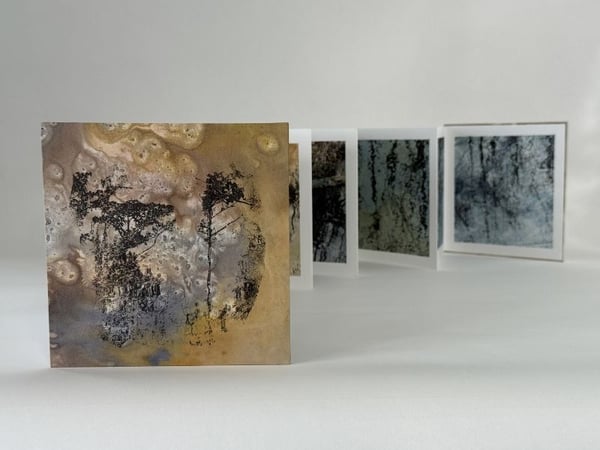
Karen's teaching on painted papers, particularly using inks and watercolour on tea bag paper, became a key entry point. The natural crinkle and texture created surfaces that supported imagery without heavy or hazardous materials.
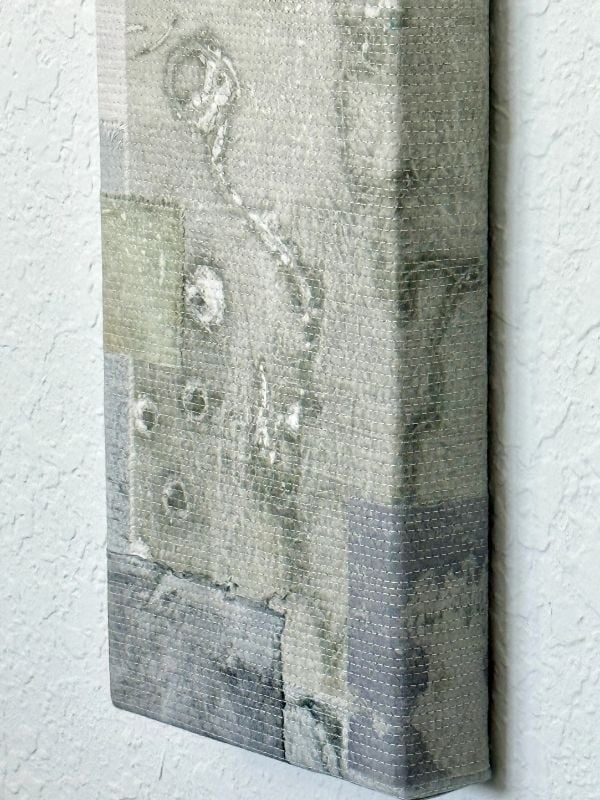
From there, Annegret developed her own transfer processes, including toner-based transfers using essential oils such as eucalyptus and lavender, and later exploring paper lithography with inks she could safely tolerate.
The course community played an important role here. Through shared discussion, experimentation and support, Annegret found alternatives that allowed her to develop techniques uniquely her own.
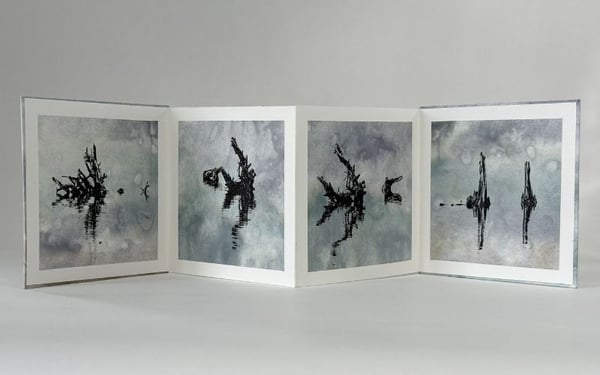
After Focus and Flow, Annegret moved naturally into artists' books, supported by Karen's accordion and concertina structures. The book shifted from being a container to being the artwork itself. This was deeply significant, as Annegret is also a writer, with decades of experience shaping books through words. Artists' books became the place where her identities met. Making books with her hands felt like a natural extension of making books with her mind.
She now works slowly, deliberately and without pressure. She no longer feels the need to produce endlessly. A small number of works, made with care, feel right.
One of the most important outcomes of the course was the development of confidence. Particularly confident in working with lens-based imagery.
Growing up with a strong cultural suspicion of representational work, Annegret had long felt tension between what she loved to see through the camera and what she felt she was "allowed" to make. Karen's work and teaching helped dissolve that conflict.
She now trusts her visual language.
She is also less interested in chasing the "Instagrammable moment". Instead, she prioritises real engagement with place, then allows images to emerge from that experience.
Her practice now blends digital tools with tactile, handmade processes. Digital technology supports the work, but the hand, the material and the object remain central.
Annegret encourages people to choose a course that genuinely excites them, then commit fully. Try everything. Engage with the community. Make time.
Learning does not happen by osmosis. The tutors are at the top of their field, with decades of practice behind them. A course offers the pathway, but the transformation comes through doing the work.
If you put in the work, she believes you will come away not just with techniques, but with clarity, focus, and a practice that continues to unfold long after the course ends.
1 min read
A photographer seeking more than the frame When Carla Vermeend enrolled in Focus & Flow with Karen Olson through Take Two, she wasn’t seeking...
1 min read
Donna Towers is an artist based in Edmonton, Alberta, Canada, who came to art later than most. After retiring from an executive career in...
1 min read
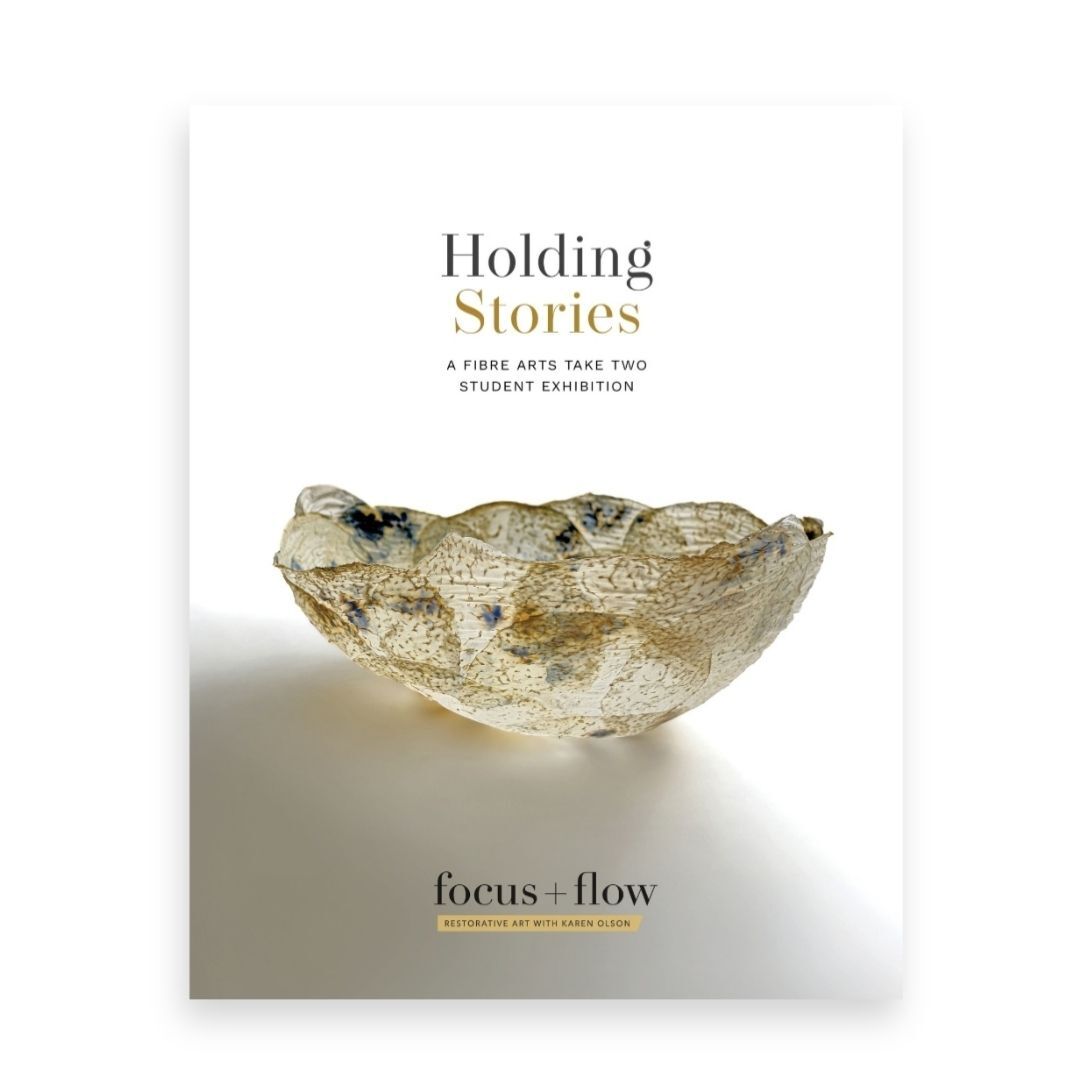
Student exhibition: Focus and Flow with Karen Olson "Please join us in celebrating this beautiful and inspiring student exhibition. Our theme,...
.jpg)
1 min read
 Angela Truscott : Mar 11 2026
There are many reasons the Japanese honour Shinrin-yoku, or forest bathing. In a world that rarely gives us permission to pause, the simple act of...