Sally Blake: Stories Within Nature
From nurse to visual artist, Sally Blake translates the subtle languages of nature into stunning visual narratives, bridging the human experience...
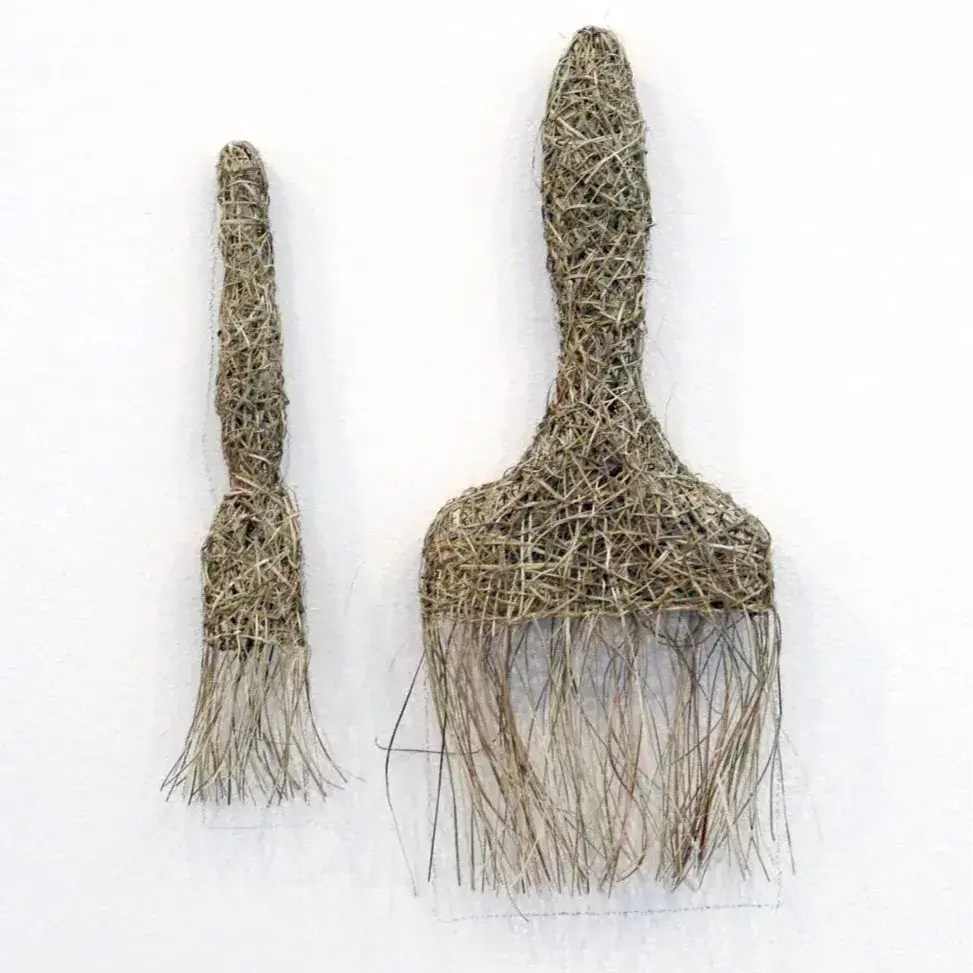
“I came to art through a passion for sustainability and the environment. I create work with nature, about nature and in nature.”
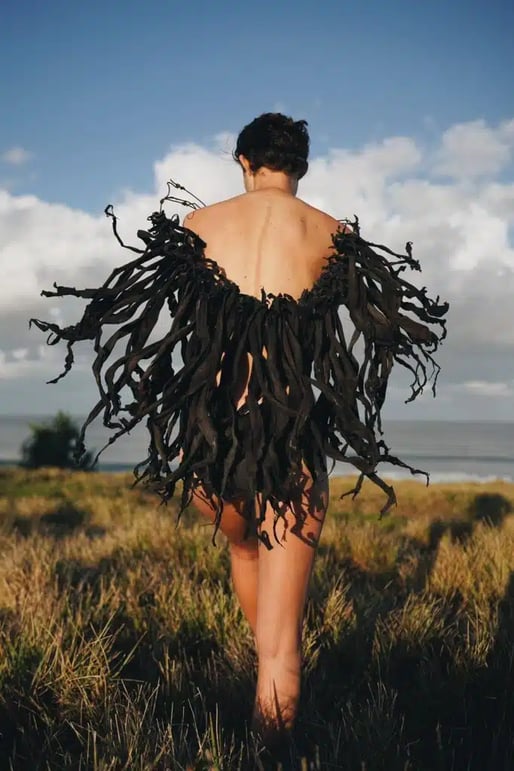
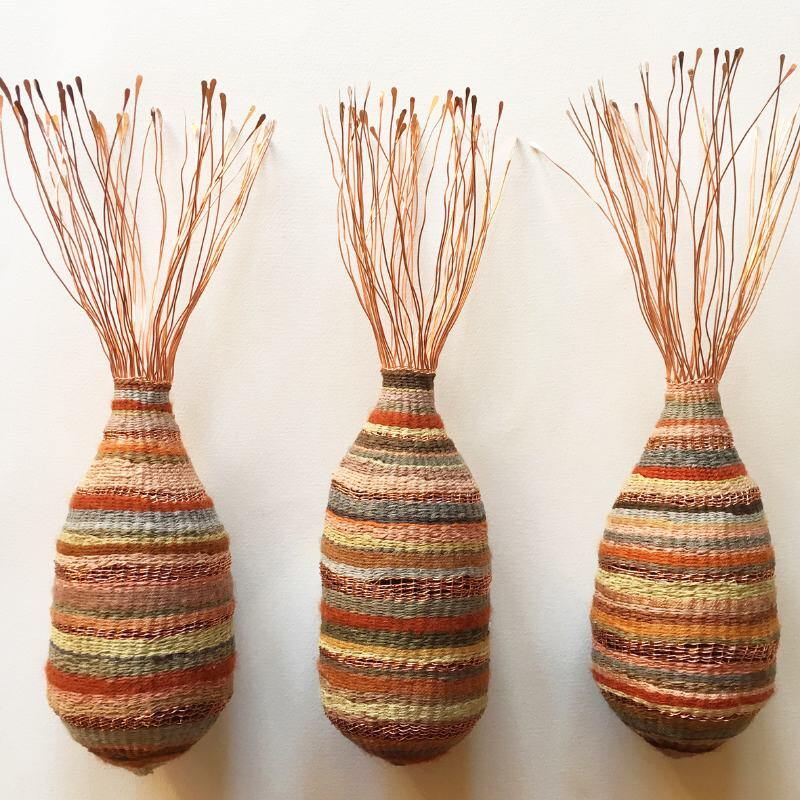
This is the statement from fibre artist Zimmi Forest’s website because Zimmi collects, processes, weaves and constructs work that is often intricate but ranges from simple to complex, where nature’s beauty is showcased in a new form.
Either way, her works command a striking visual presence, often enhanced by shadow-play, negative space and movement. Discovering a passion for basketry in the early 80s and realising that she had to consume baskets or they would consume her, it wasn’t until years later that Zimmi began exploring and working with plant fibres.
Take Two spoke to Zimmi about her art, life, and ethics.
When Zimmi started her career as a fibre artist, she considered herself an artist because she was on the cutting edge, “I was at the forefront of what I was doing,” she says, “and I was always pushing the medium.”
This was not a position that Zimmi has maintained, “After several years of burning out and just not wanting to be part of the art world, I stepped aside, and I found myself making more, and I teach more. I’m still part of the creative industry; there’s no doubt about it. Occasionally I’ll have an exhibition; if I’m pushing the boundaries with that exhibition, I call it creating art. But the rest of the time, I would say I’m a maker, basket maker, or fibre artist but not a full-blown artist at those moments.”
Despite her success, or perhaps because of it, burnout became a real issue for Zimmi.
“I love my work being appreciated,” she says, “I know that my work is beautiful, and I hear and get that kind of feedback that it’s beautiful, and I love that. I love producing something that touches people’s hearts, and people are prepared to engage with me. I had so many commissioned works. I would get commissions consistently. But I burnt out.”
Zimmi puts part of the blame for her burnout at the feet of the art world, “In those days, I was doing a lot of art and dealing with the art world,” she says, “It was not a place that I liked to be. It reached the point that people would come to me because they’d hear my name, which was too much for me. I’m not into having my ego stroked. I understand that people want to gush, and they want to tell me, ‘Love your work. You’re so amazing. You’re so talented,’ but it’s my work; it’s not who I am, and having my ego stroked so many times was not healthy for me, and I had to step away from that. I had to just shut down totally. I couldn’t deal with it.”
Nature is an enormous part of Zimmi’s art and life, “I grew up very much in a normal first-world community,” she says, “and I was lucky enough that my parents had a property. We often went to a number of different properties and a number of different national parks and wild places. But yeah, for several years, my general life was very much first-world, regular Australian, white middle-class.”
All the same, nature became a part of Zimmi, “Because it’s so much part of my life”, she says, “I don’t even think about it much anymore. My life revolves around nature. It’s like everything I do. It’s my first consideration. Before I use any resources from the planet that I can’t naturally forage or bring to myself, I ask, ‘Am I using more resources than is fair? Am I creating any impact on the resources and the planet?’ They’re the questions I always ask: if I take my car out, am I taking it out to do 101 different things? Or am I taking it out for a bit of joy? I rarely would go for joy. I’d make sure I use the resource to its fullest if I’m going to use a resource.”
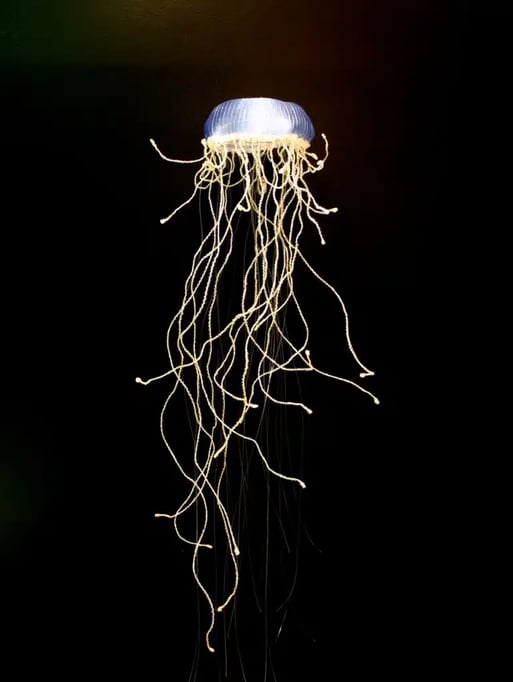
Zimmi predominantly uses foraged materials for her work. However, she broke that rule with her piece, Precious Ocean, “That was material-based with an environmental statement,” she says, “Back in 2003, the local area where I live was going to be turned into a marine park. There was a lot of controversy from the fishermen, in particular, that they wouldn’t be allowed to fish, so I wanted to make a statement. It had to be a fishing line because it was all about the ocean and all about fishing. And my statement was that if you don’t harvest sustainably, you won’t have anything left. The only places you’ll find it is in museums or zoos. So I made that exhibition look like a museum exhibition.”
All this meant that it was not possible for Zimmi to use purely foraged materials, “It was very beautiful,” she says, “but that was the first time I’d stepped into working with a non-foraged material. I’m constantly foraging, from six o’clock in the morning when I’m on the beach to whenever. We sometimes do a night walk at nine o’clock. So if I see something, I’m just always picking it up. So the fishing line I did not pick up. We don’t have that much fishing line on our beaches. Some beaches do, but not in this area. And partly because it was called Precious Ocean, everything looked like a jewel. So it was important to also work with new material, bought material. It was heartbreaking to step away from working with natural material, but I wanted to make a statement, and that’s why I did it.”
Zimmi has a firm belief in maintaining your ethics as an artist, “I think, especially if you’re moving into the art world,” she says, “but also, if you’re going public with your work, and if you’re putting it out there, it’s imperative to add to the community, that you add a voice that doesn’t already exist, and that is not a copy of somebody else’s work.”
Ethics are also involved in how Zimmi forages, “Like here, on the north coast,” she says, “we have thousands of Bangalow palms, but it’s essential not to collect from the same plant repeatedly and stress it out. So know when you’ve collected from it, especially if I’m taking it while it’s alive. Whereas other plants that I forage from are dead by the time I’ve come and collected, you’re helping the plant and helping the property owner remove that material because you’re going to use it for something else. So that’s not such a problem.”
Zimmi has some powerful words for aspiring artists, “As far as having a voice, I say, copy as much as you want, but don’t put it publicly,” she says, “Don’t teach it. Don’t sell it. Don’t call it your own. Don’t post it unless you’ve got permission from the person you’ve copied. The missing thing is ethical and moral boundaries and respect for others who’ve put so much time into developing work. That is one of the things that I think is incredibly important.”
Zimmi Forest discovered a passion for basketry in the early 80s, but it wasn’t until 1994 that she began exploring and working with plant fibres.
She taught herself skills that allowed her to use discarded natural materials to make utilitarian objects.
Zimmi enrolled to study fine art after a few small successes with exhibitions, making mainly baskets. From here, her practice expanded to include painting, metal, fishing line and glass.
Zimmi also has a personal practice / daily ritual, creating at least one ephemeral work daily... this has been a continuous practice since 2008.
Her work has been in many nationally recognised exhibitions, including; Sculpture by the Sea, Conrad Jupiters, The Blake Prize and Jacaranda Acquisitive Drawing Award.
Notifications
From nurse to visual artist, Sally Blake translates the subtle languages of nature into stunning visual narratives, bridging the human experience...
Roxanne Evans Stout visited Australia to teach and she shared her experience with Take Two in this Friday Feature Artist interview.
In this interview, textile artist Lorna Crane shares tips for beginner artists and talks about the importance of sharing your experience with others.
Kerri Hollingsworth’s sculptural ‘upholstery art’ is designed to be touched, felt & experienced. See her Friday Feature Artist interview where she...