 Angela Truscott
1 min read
Threads of connection: Haystack Mountain School of Crafts
 Angela Truscott : Mar 7 2025
This is a story of connection, of trusting the threads that tug at your heart, and of setting an intention - because sometimes all it takes...
I flew to Venice, mainly to attend the La Biennale di Venezia; I knew it would be good as I’ve been lucky enough to attend before. But what I didn’t expect while in Venice was to see one of the most captivating experiences if my life.
Homo Faber. Every two years, a 16th-century monastery on its own island - San Giorgio Maggiore, a short free vaporetto ride from St Mark’s - becomes home to over 500 artisans from 70 countries. This year’s edition, the fourth since 2018, was called An Island of Light, staged by artistic director Es Devlin, the British stage designer behind installations at the V&A, Tate Modern and the Metropolitan Opera - not to forget working with Beyoncé and the Super Bowl to name just a few of her accomplishments. Over 700 objects, 15 installations. I knew almost none of that before I went. I only knew one of our Take Two tutors, ceramic artist Juz Kitson, had a piece in there - and I wanted to see it, in person to support her.
I was not prepared for what the rest of the day would do to me.
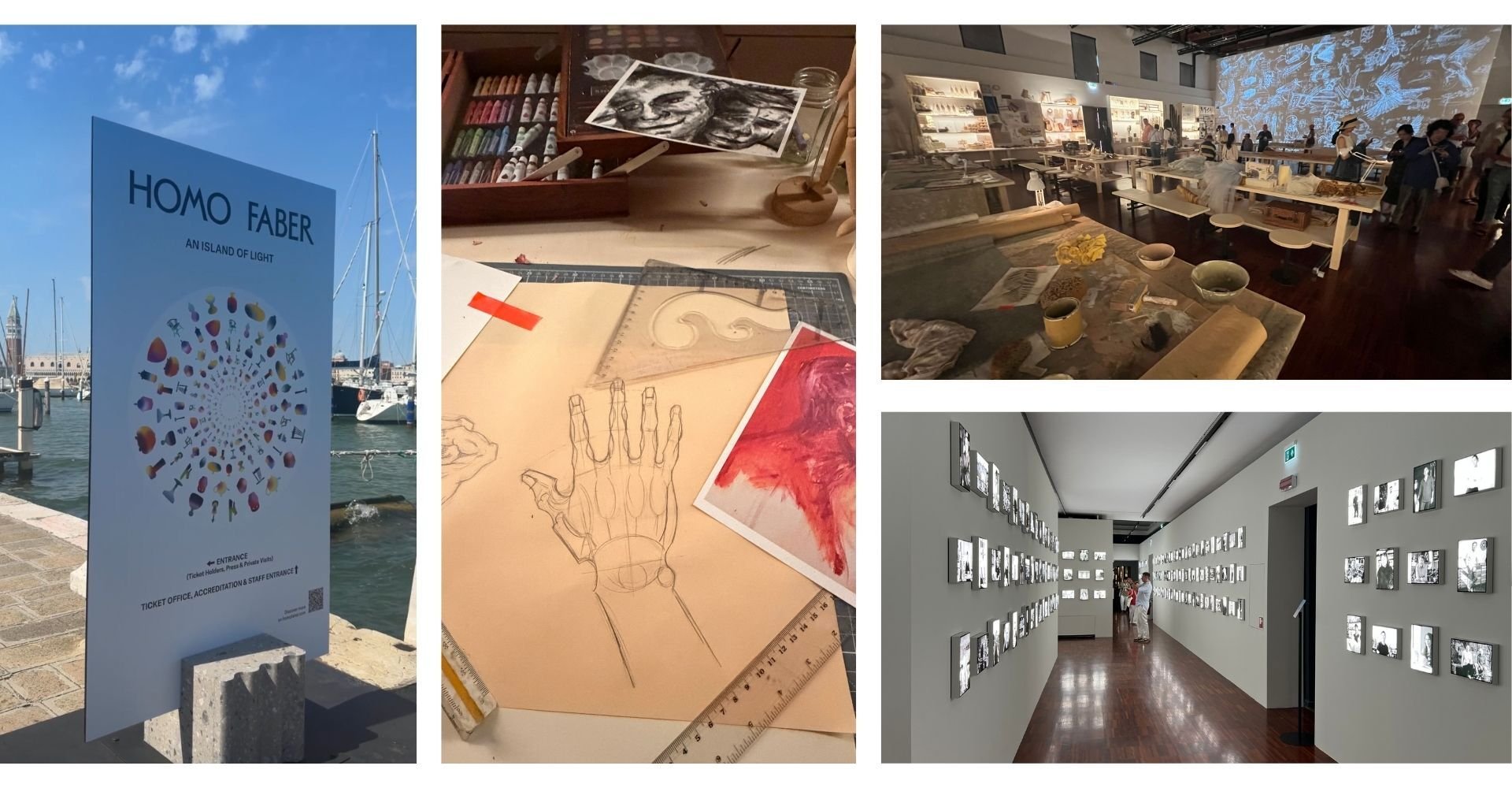
Entry is timed. You walk in on your own group, straight into a room of empty studios - tools down, materials mid-use, as the makers had just stepped away. It’s dim, reverent. You’re invited to sit, and a film plays - A Language of Hands - celebrating the hands behind every piece. Then a shaft of light opens a door, and you walk through a tunnel of black-and-white portraits. Every maker’s face, lit from behind.
That’s what I loved most. Before you see one artwork, you’ve already met the people who made it.
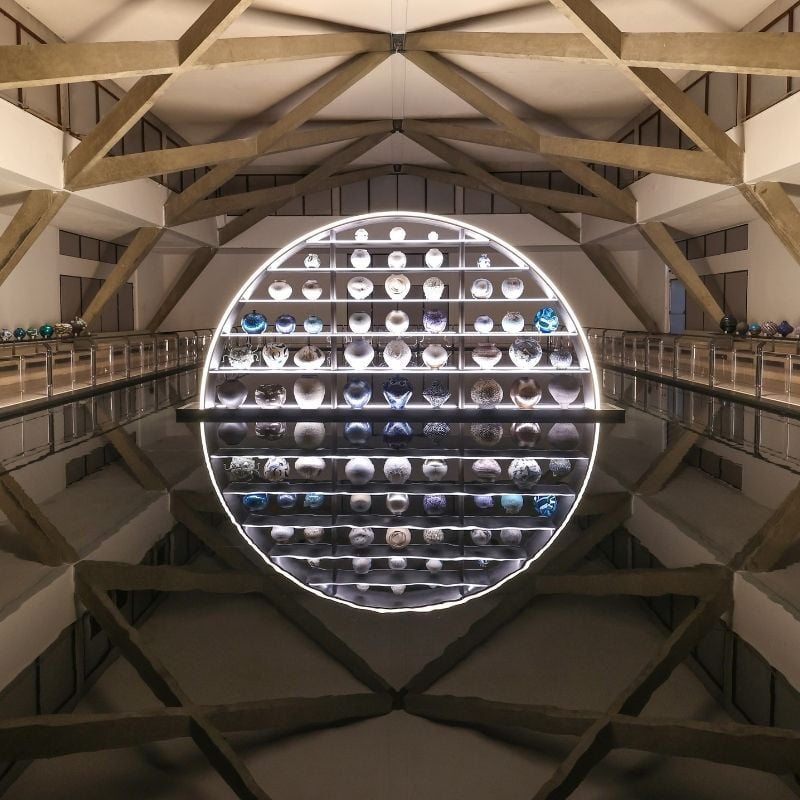
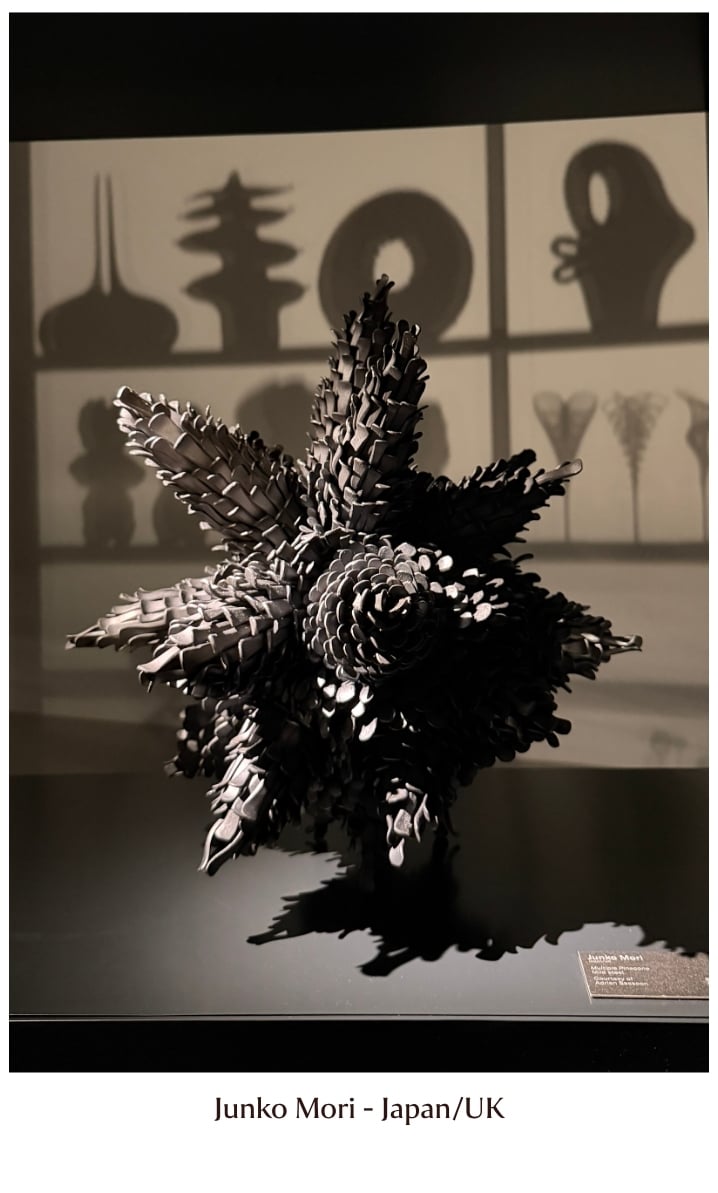
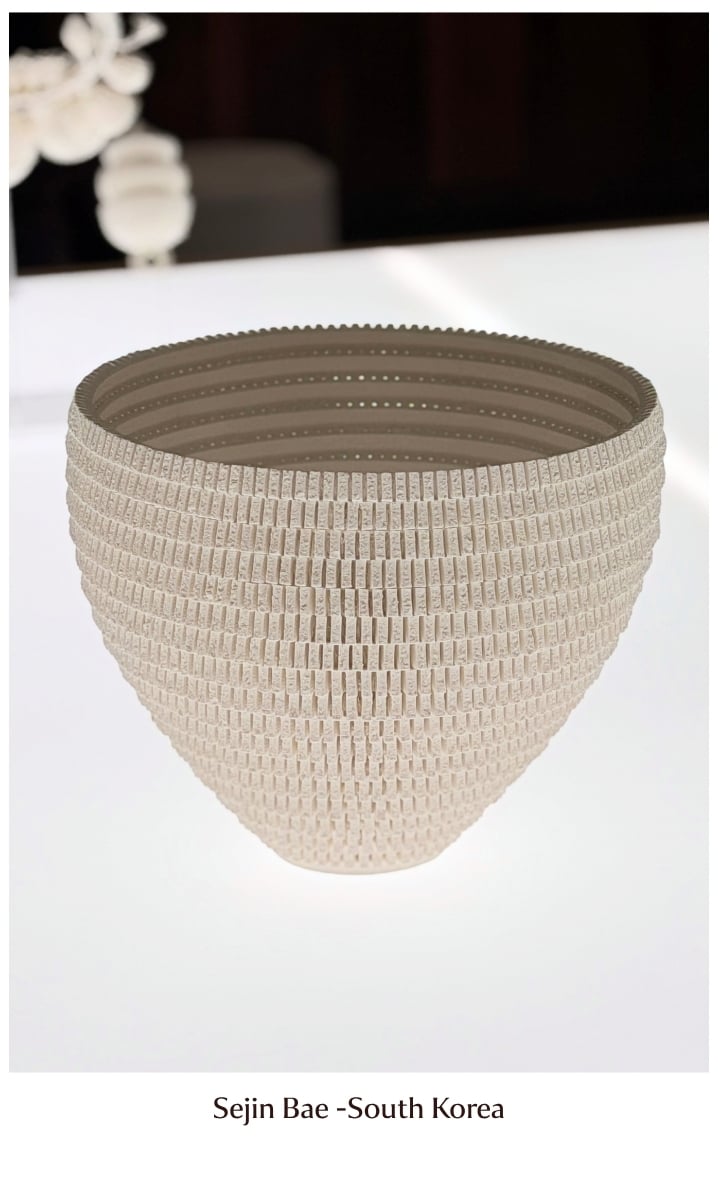
The first room stops you in your tracks. A round, tiered shelf of vessels and 200 works, spinning slowly, lit from inside, casting shadows around the walls like ancient hieroglyphs. This room is rightly called: An Alphabet of Objects.
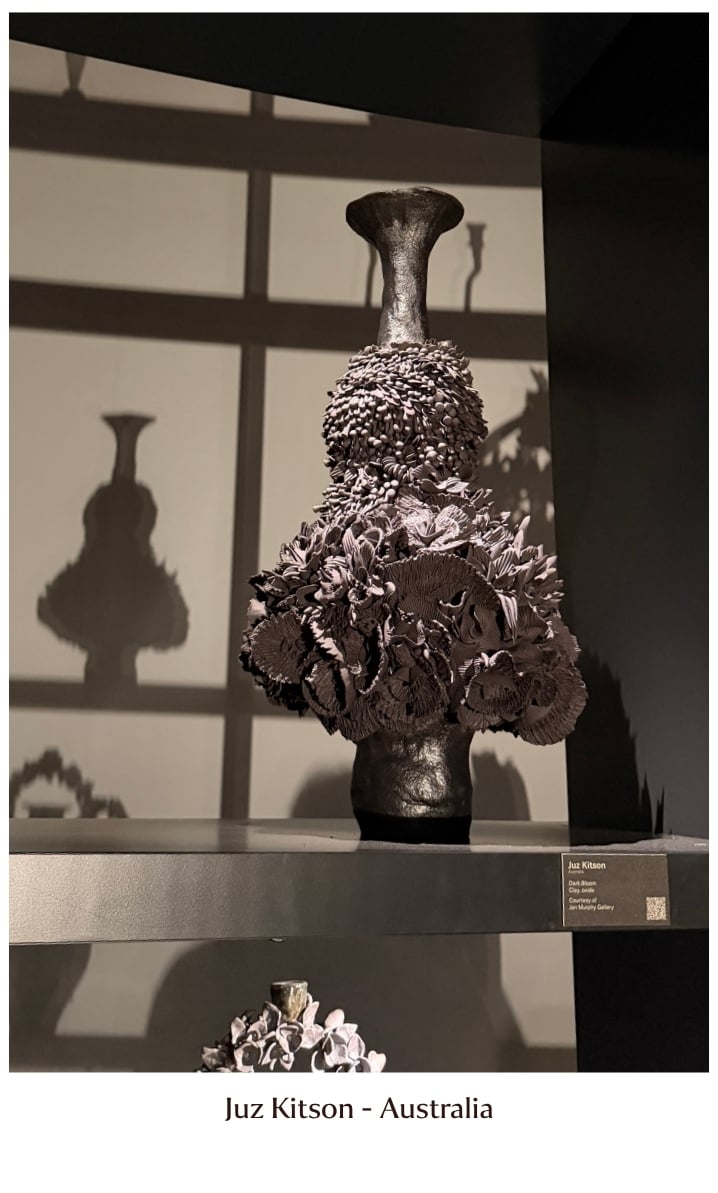
And there she was. One of our own Take Two tutors, Juz Kitson - her ceramic vessel, among the first pieces I saw. I cried. Standing there, so proud to be Australian, so happy for Juz. Two other Australians were represented in that same room, Marian Hosking and Shireen Taweel, which made it even more special.
%20Jaroclav%20Prosek%20-%20Czech%20Republic%20(lower)%20-%20Homo%20Faber%202026.jpg?width=718&height=1193&name=Donald%20Baugh%20-UK%20(upper%20middle)%20Jaroclav%20Prosek%20-%20Czech%20Republic%20(lower)%20-%20Homo%20Faber%202026.jpg)
.jpg?width=718&height=1193&name=Junko%20Mori%20-%20Japan_UK%20-%20Homo%20Faber%202026%20(2).jpg)
I would have told you nothing could top that room. I was wrong.
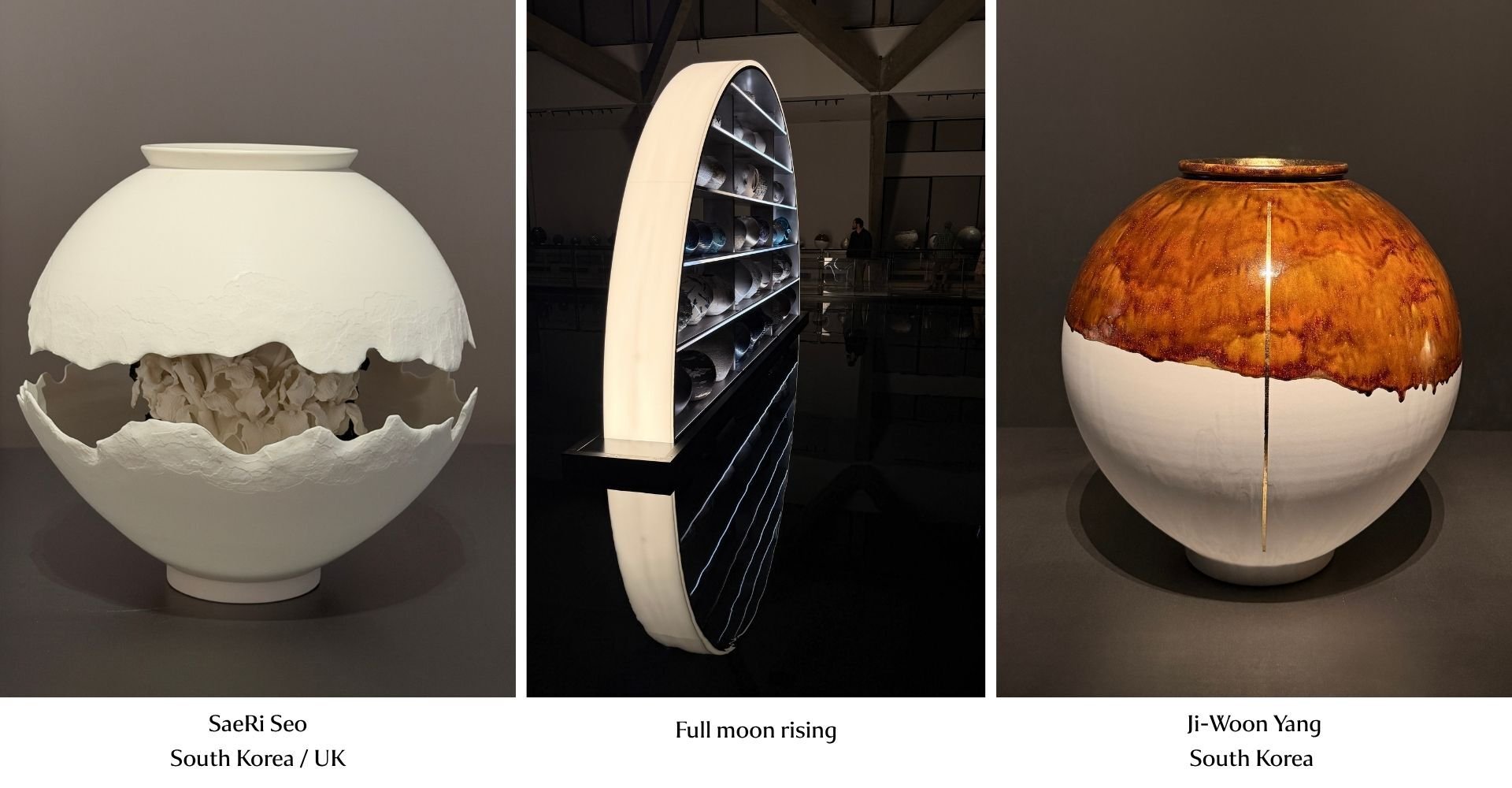
Through a covered boardwalk is the old Gandini pool - Venice’s first indoor swimming pool, built in 1962, now dark and silent inside the monastery. And a moon made of illuminated shelved white and blue vessels rises out of the water, sinks back down, disappears, and rises again. The vessels on the shelf were mirrored by identical pieces displayed poolside, close enough to touch with your eyes, which means every maker in that room made two of everything. I also cried twice that day.
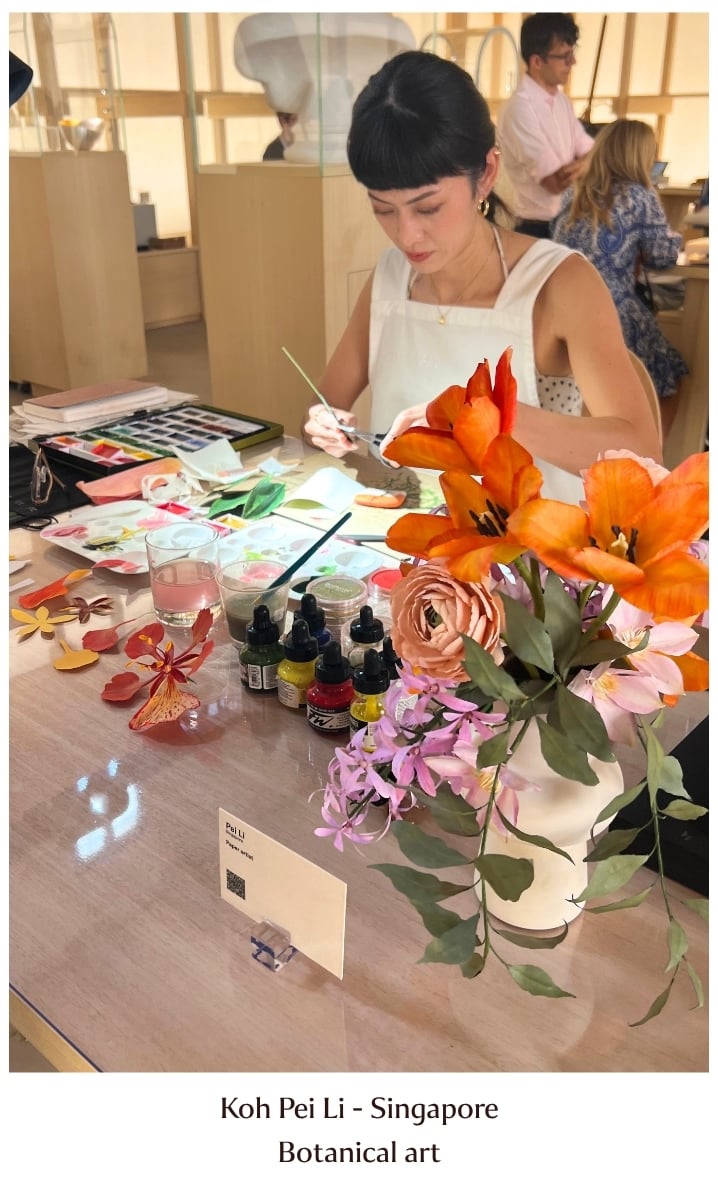
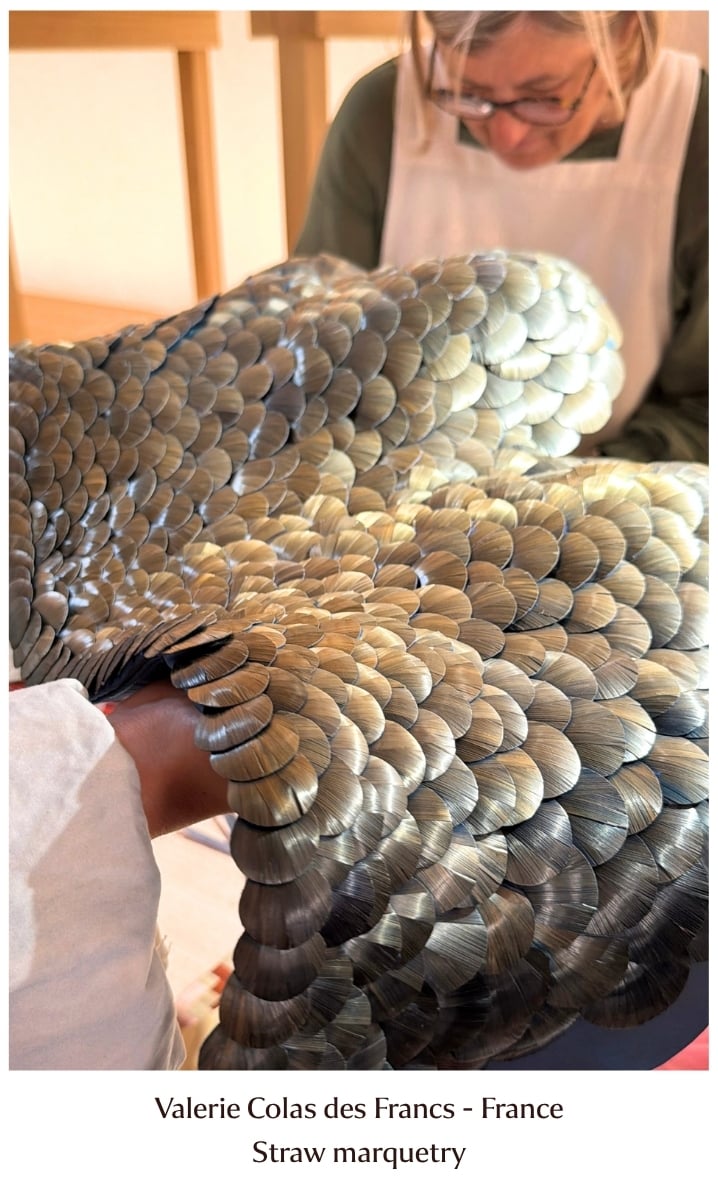
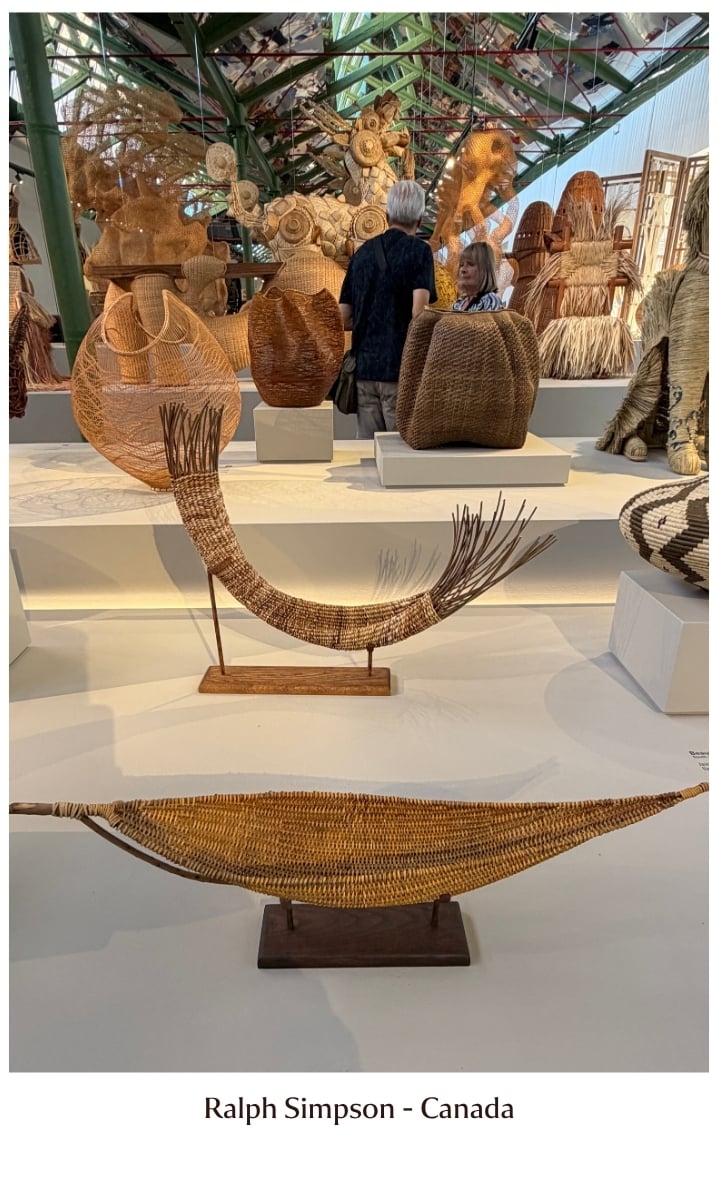
Past the pool, you walk into working studios - fibre and basketry on one side, woodworking on the other, artisans making live, in the open, while you walk among the tiers. What struck me here wasn’t just the work. It was the staff. In every room, someone came up and asked what I thought, or pointed out a detail I might have missed. They spoke like people who loved what they were showing you and enthusiastically imparted their knowledge about the art work and the craftspeople involved. This was evident throughout the entire experience and I later learned that they are part of the Homo Faber Next Gen initiative, which invites talented applied arts students from around the world to become cultural mediators. 90 ambassadors were chosen from 23 different countries this year.
Their attention and generosity of knowledge were really a highlight of the entire experience; I can’t help but wonder if my own daughter might be part of this special team one day.
.jpg?width=897&height=1491&name=Studio%20Lei%20-%20Pakistan%20%20Stone%20marquetry%20-%20Homo%20Faber%202026%20(1).jpg)
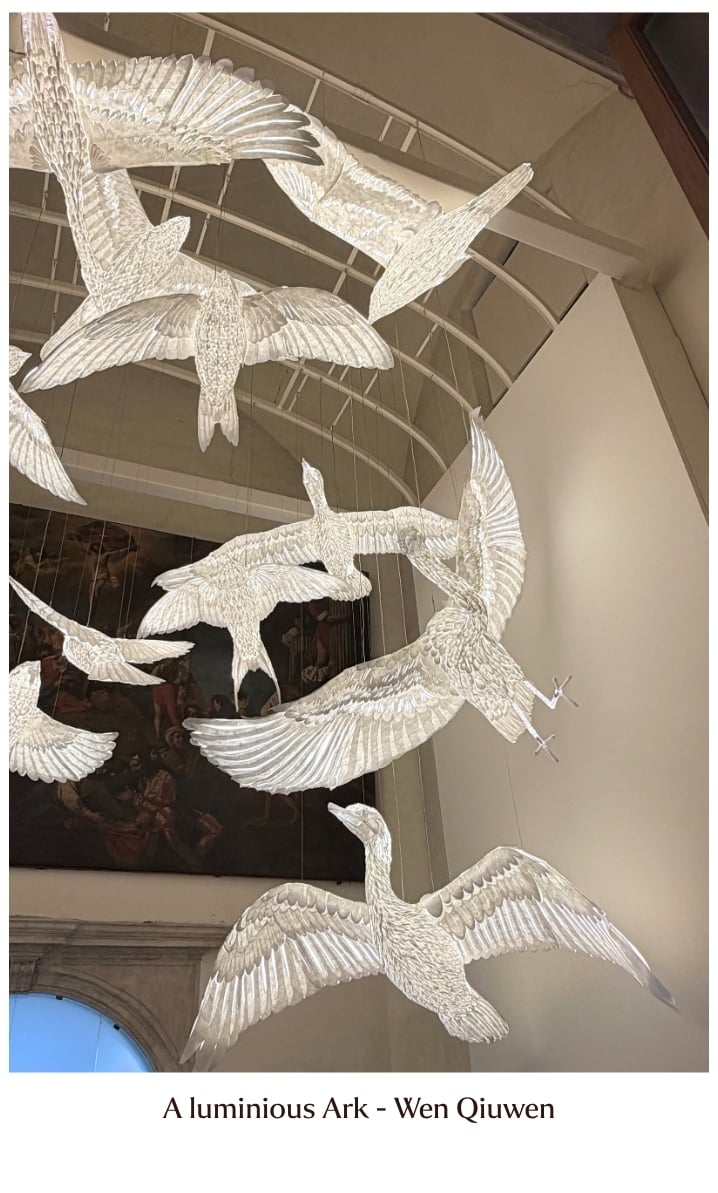
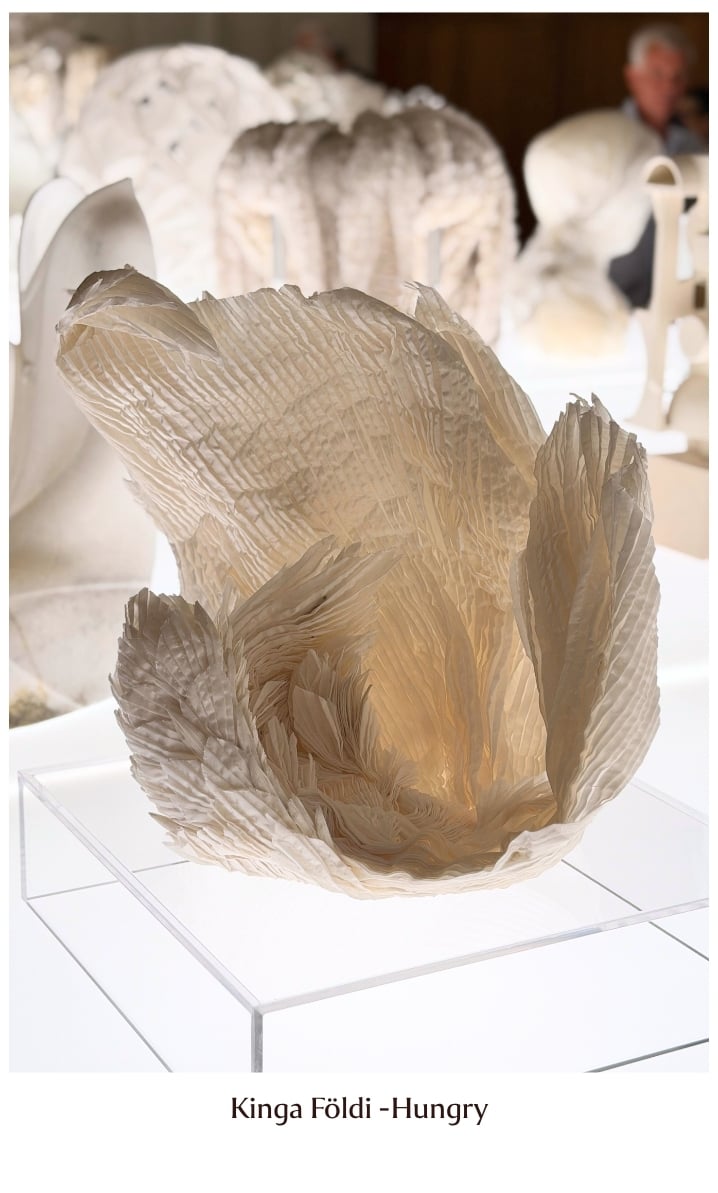
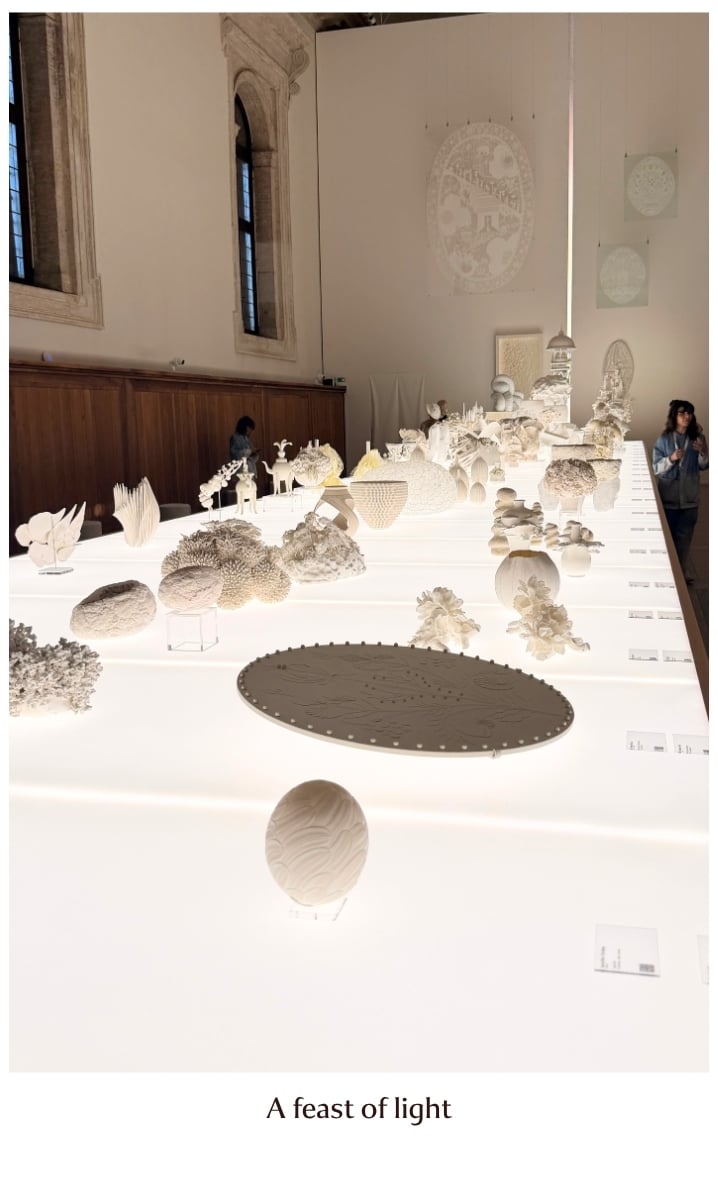
From there, a mirrored room of fine silverware and brooches, then A Luminous Ark - paper birds, hand-cut by a master lantern-maker, hanging mid-flight. If my memory serves me correct a team of 9 craftspeople took 3 months to complete this magnificent flock from the sketches designed by Es Devlin. Then A Feast of Light: was also a feast of scale, from an epic illuminated banquet table that was custom-built for the space in 2024 and reused (rightly so) for this year's exhibition and set entirely in white. Curated sculptures placed from small to large, creating a crescendo to the end of the banquet room with an aperture of light placed perfectly in the centre - a signature of Es Devlin, said to reflect her daily meditation practice, seeking the first light of morning. I was lucky to spot a stunning piece by Kinga Földi and Hungarian Artist that I had the pleasure of interviewing as part of our Friday Feature Artist Series in August 2021.
Then a room exploding in colour, with a mirrored ceiling and a rainbow rug, where you catch your own reflection behind the artwork. I found my reflection distracting from the artwork, but this space was impossible to walk through without feeling the joy of looking through a kaleidoscope as a child.
Outside, in the cloister, a large kinetic mirror suspended over a reflecting pool catches the changing daylight and throws the cloister arches back at the sky. What struck me here and honestly throughout the entire exhibition was the music. Music is not only an emotive tool it’s a very practical way to fill large spaces, that I also experienced at Ann Hamilton’s We Will Sing exhibition in Salts Mill, and in the Island of Light, Artistic Director Es Devlin used it beautifully to give a voice to the 500 makers that took part in this exhibition.
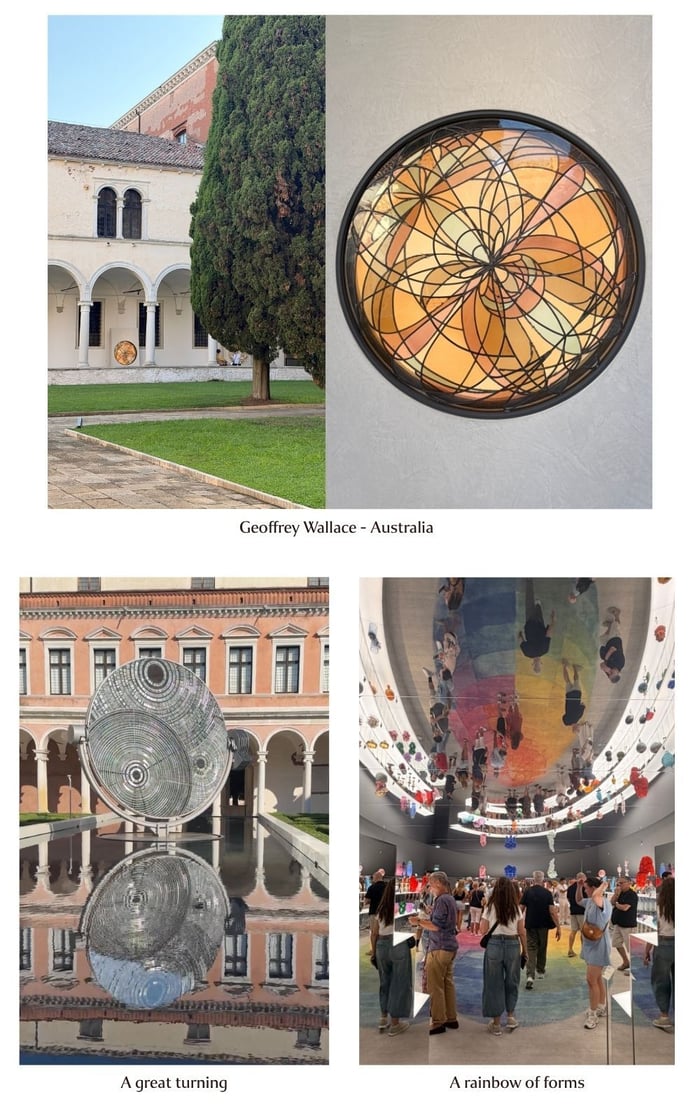
The exhibition closes with Twenty Silent Songs: twenty round works, each by a different maker from a different country and craft tradition - Congolese textile weaving beside Danish straw marquetry beside Saudi wood carving beside a round lead light piece by Australian artist Geoffrey Wallace, every piece made to the same scale, in the same three-month window. Wallace’s piece was one I almost walked past. It only really came alive from the far side of the cloister, where the light caught it and it seemed to glow off the wall rather than sit on it.
I went in knowing nothing, expecting nothing. For me, this wasn’t just a celebration of craft. This is art - in all it’s glory, and for once, the hands that made it are the whole point.
If I had to sum up the whole day in one word, it would be light. And underneath the light, care , and something close to honour. Honouring the hands and the makers that make all this possible.
Thank you, Homo Faber, Es Devlin, the curators, the artisans, the ambassadors and the entire team that made this exhibition possible.
Homo Faber: An Island of Light closes September 30th 2026. My only criticism is that it should be open longer!
If you’re anywhere near Venice - go. If you're planning a trip to Venice in 2028 - don’t miss it!
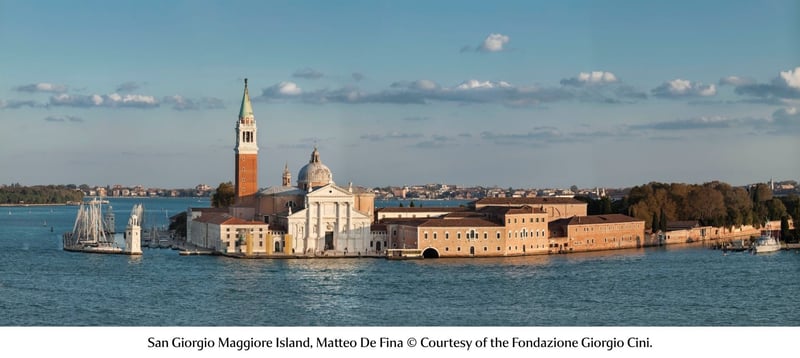
Homo Faber Biennial is an independent international event created and organised by the Michelangelo Foundation for Creativity and Craftsmanship, in partnership with organisations like the Fondazione Giorgio Cini and Fondazione Cologni.
To learn more about Es Devlin, watch the episode about her in the Abstract series on Netflix.
4 min read
1 min read
Angela Truscott : Mar 7 2025
This is a story of connection, of trusting the threads that tug at your heart, and of setting an intention - because sometimes all it takes...
1 min read
After years of crafting functional pottery, in 1991, artist Ann Weber began working with cardboard, wanting to eliminate the cumbersome process...
1 min read
During part one of our Q&A with Helen Terry, she shared details about her collaboration with fibre artist Sally Tyrie. If...
1 min read
Imagine viewing an exhibit at the Brooklyn Museum, Bound and Unbound, showcasing the works of an artist unknown to you. The room is filled with...