Student Success Story: Heather Miller
Through Tara Axford's gel plate printing course, Heather Miller gained a deeper technical understanding and a renewed confidence in her instincts and...
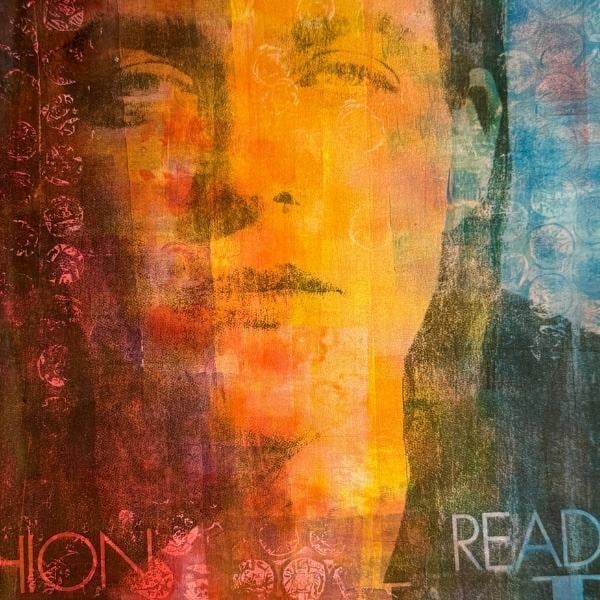
Ella Hayward is a multidisciplinary artist and art teacher based in the UK, with a creative life long intertwined with teaching, making and experimentation. She teaches teenagers full-time, runs workshops through art societies across London, and has spent years encouraging others to embrace process, curiosity and creative freedom in their own work.
When Ella joined Tara’s online course, Art and Design Through Gel Plate Printing, she expected to learn new techniques in gel printing and collage. What unfolded was something far more personal. Through the course’s structure, the community’s encouragement and the freedom embedded in Tara’s teaching approach, Ella rediscovered a way of making that felt joyful, restorative and deeply connected to herself again.
For much of her life, art had been instinctive for Ella. She describes herself as an artist since childhood, for whom creativity feels entirely natural. Yet over time, life’s responsibilities gradually crowded out the space needed to nurture her creative identity.
Alongside teaching and raising children, Ella also cared for her elderly parents during a particularly demanding period. While she speaks of that responsibility with gratitude, it also left her feeling disconnected from herself and from the slower, more reflective part of her creative practice. Art remained present, but the pressure around time and productivity quietly shifted the experience of making.
“The course was a gift to me, which I gifted myself on behalf of my late mother,” Ella reflected. “It gave me time to kind of contemplate and play and heal and feel gratitude.”
Ella first discovered the course through a Facebook advertisement. Although she had experimented with gel printing in the past, she had never fully explored its possibilities. What immediately caught her attention was not just the techniques demonstrated, but the way Tara connected materials, processes and artist references.
As someone with a strong love of art history, Ella was especially drawn to the inclusion of other artists throughout the course. She sensed early on that Tara approached teaching with genuine respect for artists and their practices, and that feeling continued throughout the learning experience.
The course structure also removed much of the overwhelm Ella had feared. The modules were easy to navigate, the lessons were clearly organised, and students could move through the material at their own pace. Rather than feeling rushed, she felt supported and gently encouraged to explore.
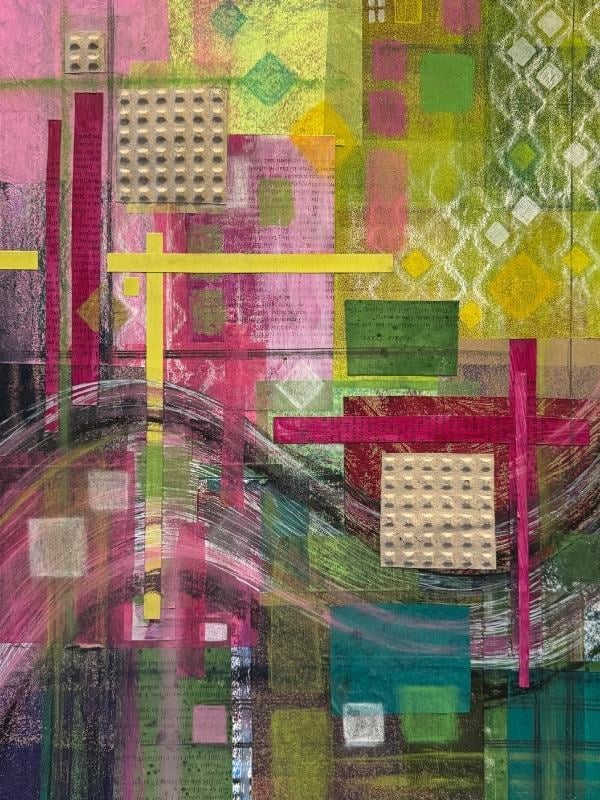
One of the biggest shifts for Ella was learning to approach art through play again. Before the course, she often felt pressure to make every creative session count, particularly because free time was limited. Tara's teaching encouraged a different way of working, one built on experimentation, spontaneity and allowing mistakes to become part of the process.
“It's not about the outcome. It's about the process itself,” Ella said in her interview. That simple shift became transformative.
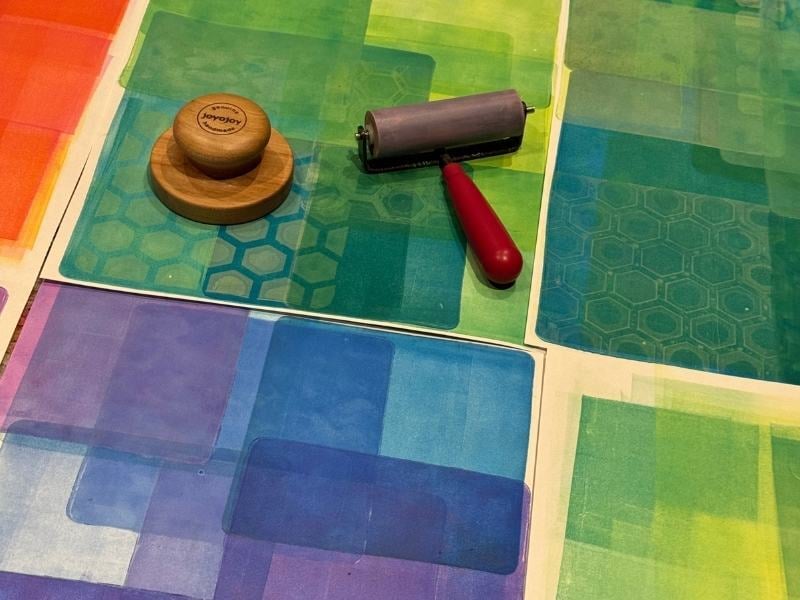
Instead of sitting down expecting to produce a resolved artwork in one session, Ella began allowing herself to create in smaller pockets of time. She could spend one afternoon simply creating gel-print backgrounds, then return another day to cut, layer, draw and collage over them. The process became less about completion and more about engagement.
Before joining the course, Ella largely identified as a watercolourist, oil painter and drawer. She had also trained in stained glass at university, and her work had always had a strong relationship with colour and light. The course introduced her to new ways of combining those skills with collage, image transfer and printmaking.
She became fascinated by the unpredictability of gel printing and the layering possibilities it offered. Techniques such as automatic drawing, continuous line drawing, collage construction and stencil-making opened up a more intuitive way of working, one that felt freer and less analytical than her previous practice.
“What shifted for me during the course was the way I used materials and approached art as play,” she explained. “There were so many materials and techniques offered in the course. Some I was familiar with, and others were brand new.”
That openness to surprise became central to the work she began creating afterwards.
One of the most meaningful changes for Ella was learning to let go of perfection. As both an artist and a teacher, she realised she had spent years encouraging her students to embrace experimentation, while often struggling to extend the same permission to herself.
Reflecting on the experience, she spoke honestly about the irony of needing to relearn something she had long taught others. By removing the pressure to produce polished outcomes, she found the work itself became more expressive and enjoyable.
“I’m someone who is less afraid of making mistakes and more open to seeing where any process takes me,” she said. “And just celebrating whatever it turns into.”
That shift is now evident throughout her newer work, where drawing, painting, gel printing and collage intersect in much more playful and spontaneous ways.
The Take Two community became a key part of Ella’s experience. Instead of feeling competitive or intimidating, the group was friendly and truly supportive. Artists progressed through the course at varying speeds, influenced by work, family, and personal commitments, which eased any pressure to stay ahead.
Ella found enormous value in watching others experiment, solve problems and share discoveries. The group fostered a sense of collective encouragement that extended far beyond technical learning.
She noted that some courses can feel isolating when completed alone at home, but this experience felt different. Students celebrated one another’s successes, offered support during challenges, and inspired each other by being willing to explore and share openly.
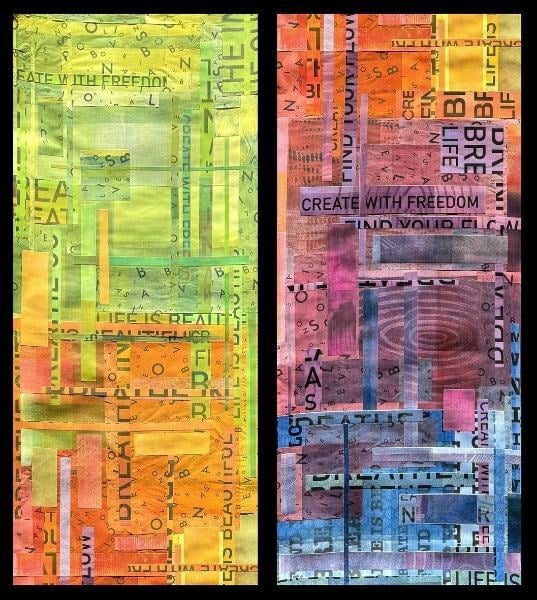
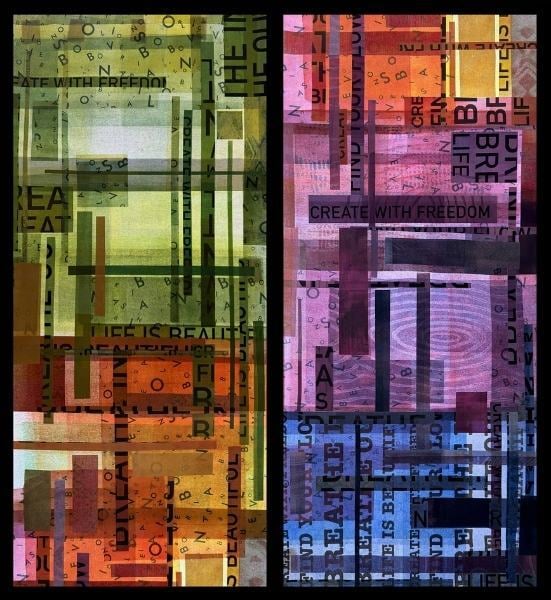
One of the most significant works to emerge from the course was a long geometric panel titled The Only Way Is Up. Inspired in part by the artist Rosalie Gascoigne, the work evolved from a series of smaller experimental studies before gradually coalescing into a single connected piece.
What began as an exploration of geometry and layering slowly became deeply personal. As Ella worked on the piece, memories of her parents and family life surfaced. The act of sitting quietly with materials gave her time to reflect on grief, gratitude and the emotional complexity of caregiving.
The work includes fragmented typography woven throughout the composition, carrying the words: breathe in, breathe out, life is beautiful. Installed against her French windows, the translucent layers allow light to move through the surface, echoing the stained-glass work she created years earlier at university.
“It became an incredibly personal piece,” Ella shared. “A really healing kind of piece that was just filled with gratitude.”
The course not only influenced Ella’s own artwork but also transformed aspects of her teaching practice. Techniques she learned during the course quickly found their way into her classroom, where her GCSE and A-level students began experimenting with gel printing, image transfer and collage in their sketchbooks.
The experience also helped Ella recognise the possibilities of online teaching more broadly. During lockdown, she had spent late nights recording lessons in her kitchen for students learning remotely, but had never fully considered developing her own online creative offerings beyond the classroom.
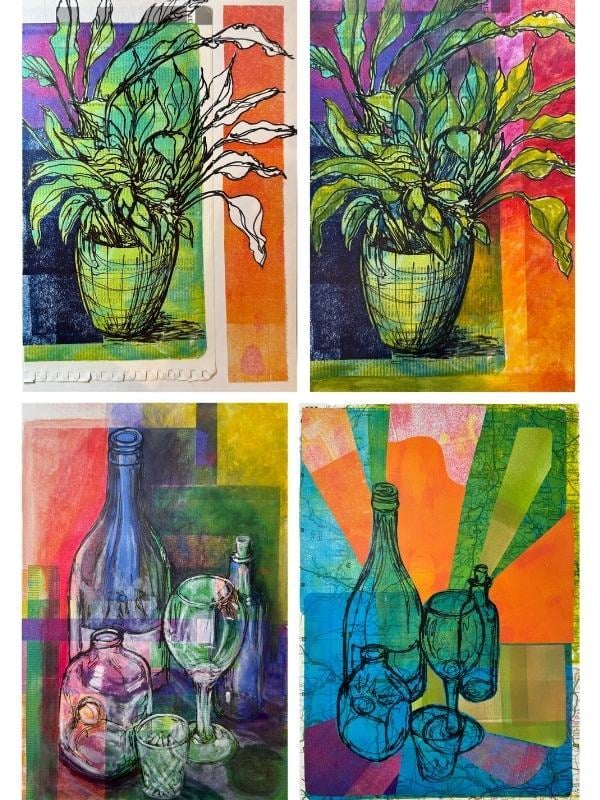
Now, she is creating online lessons focused on still life, collage and creative portraiture, using many of the approaches that emerged through Tara’s course. What started as personal creative renewal has expanded into something she can now share more widely with others.
Ella now describes herself as on an ongoing journey of discovery. Rather than feeling confined by a single medium or way of working, she is increasingly open to combining processes, materials and ideas without worrying too much about where they may lead.
At the moment, she especially enjoys creating gel-print backgrounds, layering collage and drawing back into the surfaces. There is a renewed sense of curiosity in the work, as well as a sense of permission. Permission to explore, to experiment, and to trust the process rather than control every outcome.
That freedom has become one of the most lasting gifts of the course.
For anyone considering the course but feeling uncertain, Ella's advice is simple: trust the instinct that drew you to it in the first place. She believes the course has something for every kind of creative person, whether they are experienced artists, complete beginners, or people returning to art after many years away.
She also encourages future students not to worry about time or pace. The ability to revisit modules and work gradually removed much of the pressure she initially feared, making the process itself therapeutic and restorative.
“Gel printing for me was really therapeutic, and it gave me space and time for personal healing,” Ella said. “And that is something that I will always be grateful for.”
Through Tara Axford's gel plate printing course, Heather Miller gained a deeper technical understanding and a renewed confidence in her instincts and...
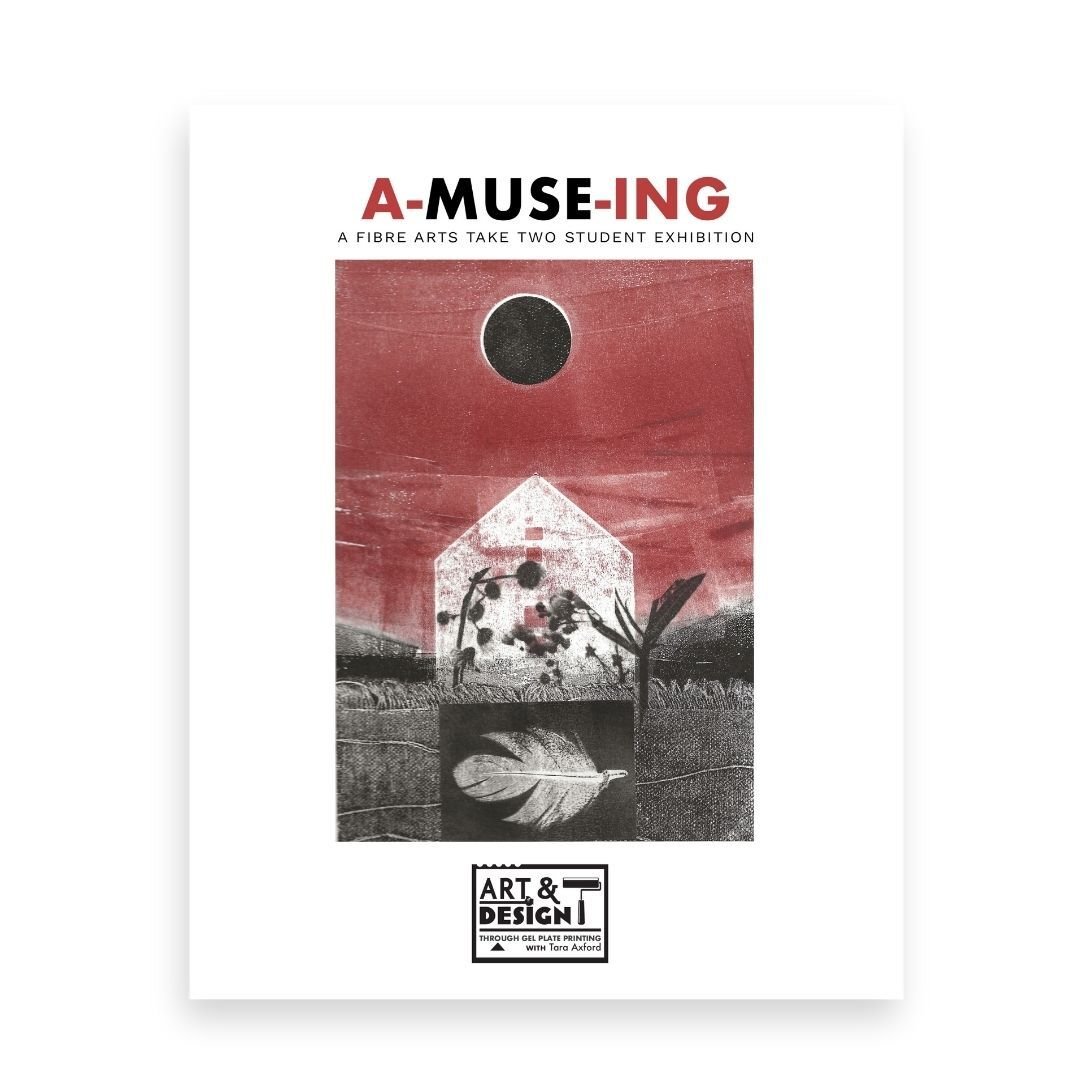
A-muse-ing is the 2025 student exhibition for the online art course Art & Design through gel plate printing with Tara Axford and Take Two.
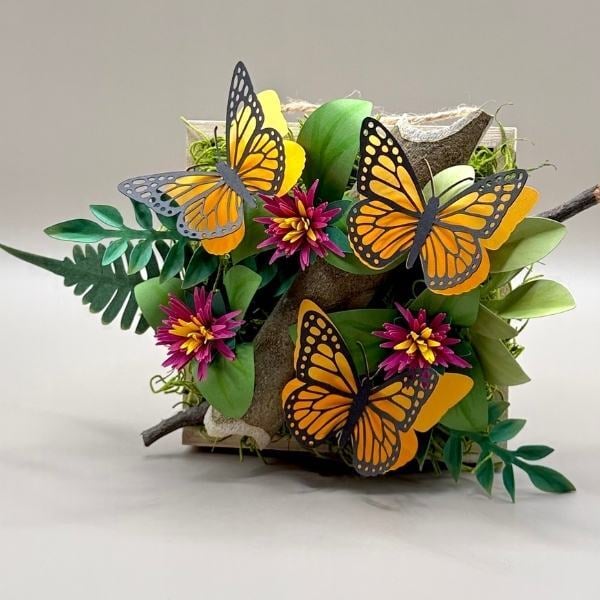
Before enrolling Amy Donovan didn't see herself as an artist. Art & Design, through gel plate printing with Tara Axford dismantled that belief.