What students are making in Sensing Place with Debbie Lyddon
 Debbie Lyddon : Oct 2 2026
See what students are making in Sensing Place with textile artist Debbie Lyddon – sensory walks, mark-making, stitch, and cloth inspired by place.
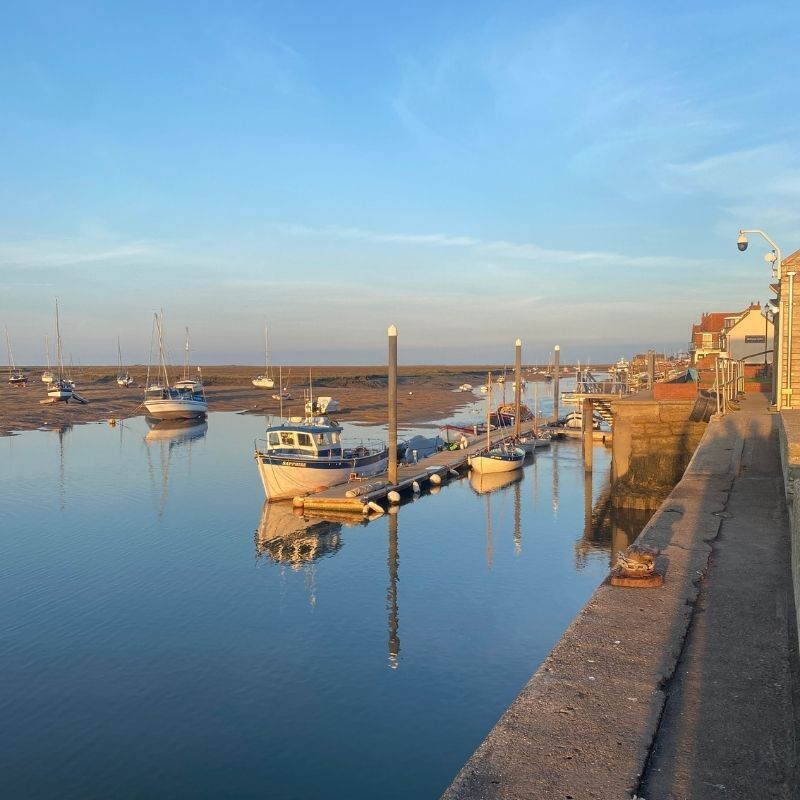
Every place holds more than what you can see. There's the sound of it, the smell of it, the way it feels underfoot or under your hands. That fuller experience is where a real sense of place in art begins.
If you've ever spent time somewhere and felt instantly moved to make something from it, you already understand the pull. The challenge is translating that feeling into your artwork, onto the paper, cloth, or canvas.
A place isn't only its scenery. It's also memory, weather, texture, sounds, and the small details most people walk straight past, whether that place is a stretch of coastline or your own kitchen.
In art, a sense of place asks you to notice what somewhere feels like to be in, not just what it looks like from a distance. That might be the rhythm of waves against a jetty, the crunch of dried foliage while walking in the bush, the hum of traffic outside your window, or the particular quality of light in your favourite corner of a room.
A sense of place is a shortcut to making art that is profoundly more personal.
Two artists standing in the same spot, or sitting at the same table, will make entirely different work, because they're each responding to a different set of details that caught their attention.
.jpg?width=2000&height=400&name=Lyddon%20New%20Waitlist%20Page%20Imagery%20(2).jpg) Close up of artwork by Debbie Lyddon - alongside Debbie walking through a place that gives her inspiration
Close up of artwork by Debbie Lyddon - alongside Debbie walking through a place that gives her inspiration
It's tempting to reach for your phone the moment inspiration strikes. Photos are useful, but they only capture sight.
Try this instead: spend 10 minutes somewhere without taking a single photo. Notice what you hear. Notice what's underfoot, or under your hands. Run your fingers along a wall, a fence post, a worn tabletop. Write down three words for how the place feels, not how it looks.
These notes often become more useful than any photograph. They're the beginning of a personal vocabulary for that place, one you can return to long after you've left it.
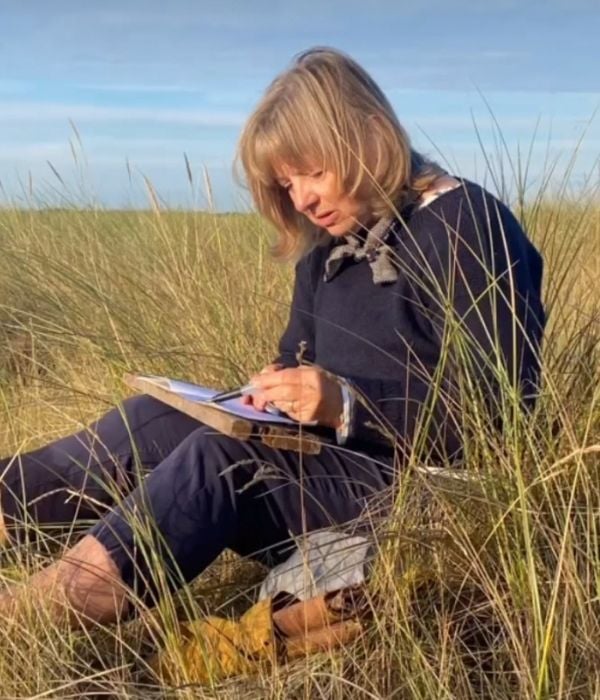 Artist Debbie Lyddon sitting in the grass sketching and taking notes
A sense of place in art often starts with fragments, not full scenes. Many artists working this way gather physical material from wherever they're responding to. Sand. Leaves. Rust marks. Scraps of fabric. A chip of paint from an old doorframe. Even a stone that fits neatly in your palm.
These fragments carry something a photo can't. Working them into your piece, whether through collage, print, or stitch, lets the place become part of the material itself and not just the subject of it.
You don't need to use every fragment you collect. Even one small piece, worked into a corner of a larger composition, can quietly anchor the whole thing.
Sense of place isn't only about what's physically present. It's also shaped by what somewhere reminds you of, and what you bring to it.
A childhood beach might carry the sound of a parent's voice calling you in from the water. A dining table might hold the memory of a conversation you had there years ago. These layers matter as much as the physical details, and often more.
Try working from memory a few days after the fact, rather than immediately. What stays with you once the immediate impression has faded is usually the truest part of your response.
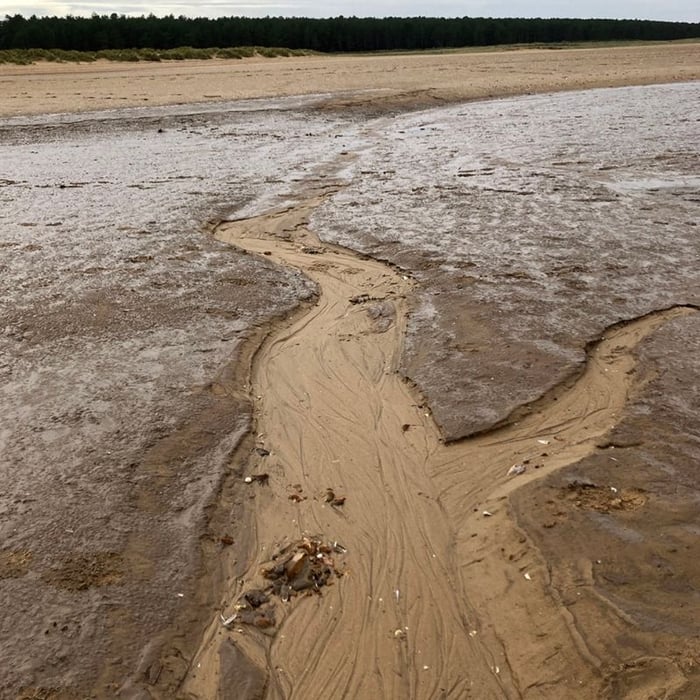 A place that has influenced Debbie Lyddon's artwork
The strongest place-based art rarely looks like a straightforward record of somewhere. It looks like a response to it.
That might mean choosing colours based on how a place made you feel rather than what you observed. It might mean abstracting a skyline or coastline into a single repeated mark, or letting the texture of your materials stand in for the grain of a floorboard.
Give yourself permission to leave things out. A piece doesn't need to include everything you noticed, it only needs to hold onto what mattered most.
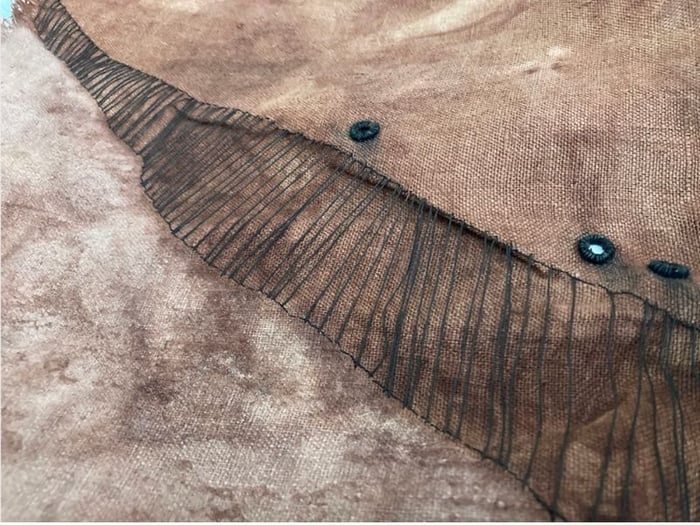 Artwork by Debbie Lyddon
Choose somewhere you already know well: your street, a local park, your own back porch. Spend 10 minutes there without a phone. Write down three sounds, two textures, and one memory the place brings up.
Then make a small piece of work using only those six things as your starting point. Not the view. Just the felt experience.
You might be surprised by how different it looks from anything you'd have made working from a photograph.
Bringing a sense of place into your art isn't about painting a perfect likeness of somewhere. It's about paying closer attention to what a place actually feels like, wherever that place happens to be, and trusting that response enough to let it shape your work.
The next time somewhere catches your attention, whether it's a coastline or your own backyard, try slowing down before you reach for your camera. What does it sound like? What does it feel like? That's usually where the real material begins.
If this article, or the images in it, has sparked something for you, you might enjoy exploring it further with Sensing Place: A Material Response with Debbie Lyddon, one of our online art courses. Debbie works from her coastal home in Norfolk and teaches sight, sound, and touch as tools for translating place into your 2D and 3D mixed media art.
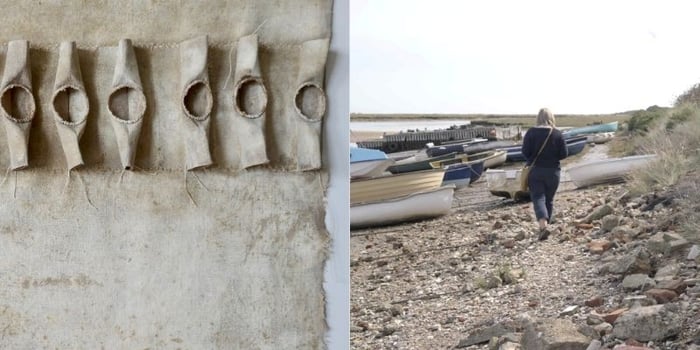 Artwork by Debbie Lyddon and Debbie on a note taking and sketching walk
.jpg) Debbie Lyddon : Oct 2 2026
Debbie Lyddon : Oct 2 2026
See what students are making in Sensing Place with textile artist Debbie Lyddon – sensory walks, mark-making, stitch, and cloth inspired by place.
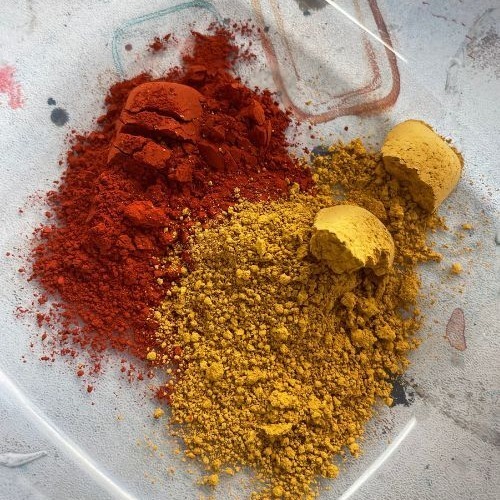
Whether you’re drawn to their historical significance or their raw beauty, incorporating earth pigments into your mixed media art can add depth,...
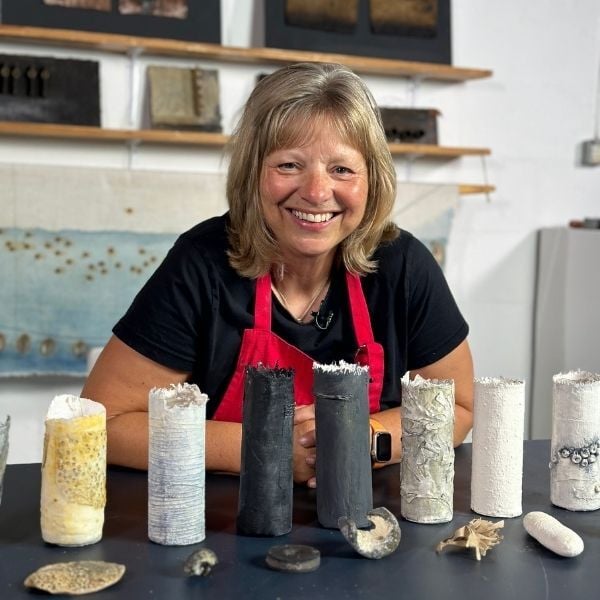
Debbie Lyddon has moved three miles inland and is joining her own students in Sensing Place to explore her new landscape. Watch her latest update.
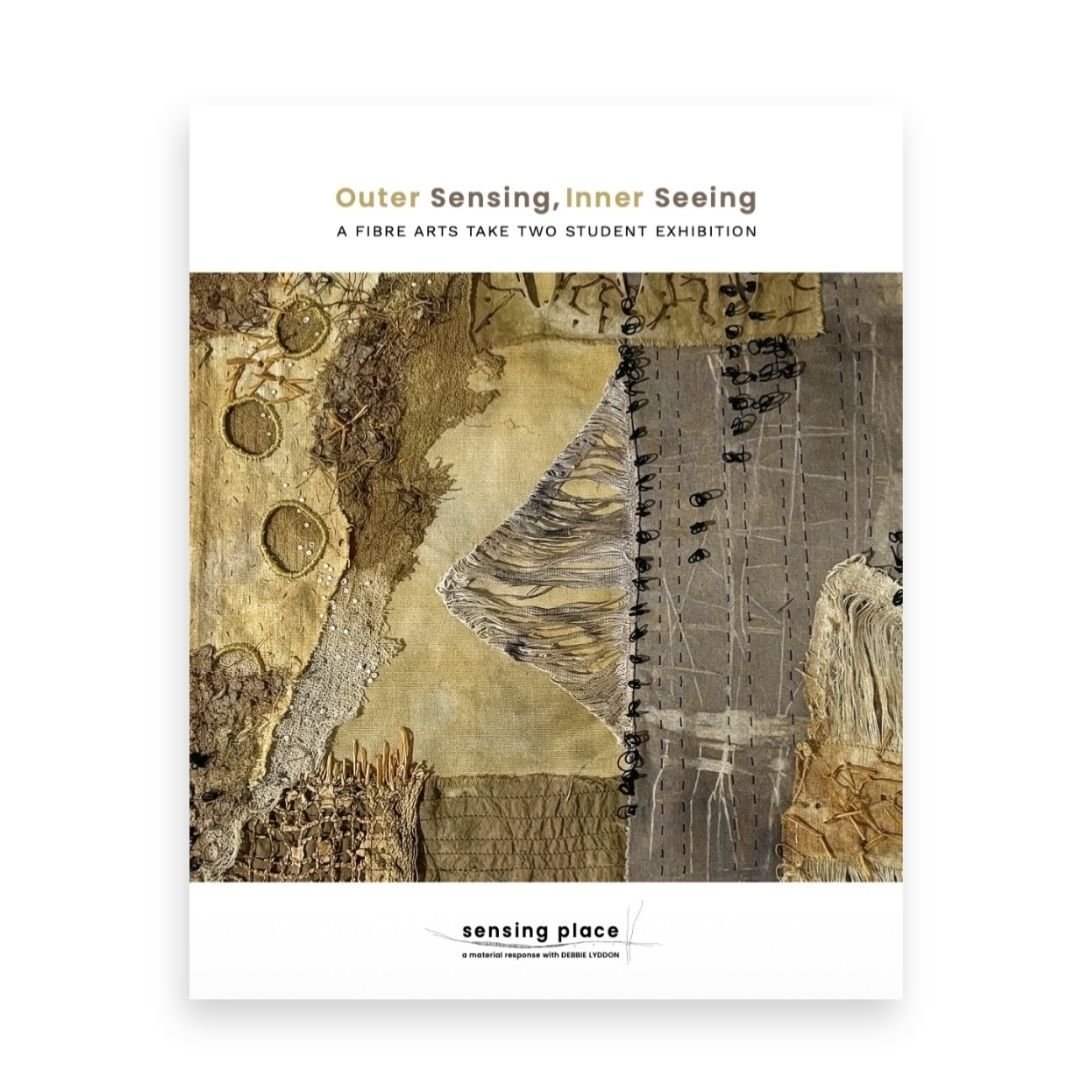
Outer Sensing, Inner Seeing is the online exhibition of work from students who participated in Sensing Place with Debbie Lyddon, an art course by...