1 min read
Student Success Story: Jocelyn Vache
When Jocelyn Vache pressed pause on her art practice, it wasn’t because she lost interest. It was because the materials she loved – acrylic paint and...
Leslie Tomlinson lives in Helotes, Texas, and holds an MFA in fibre art. Yet when she introduced herself during her Student Success Story interview, there was one small sentence that carried considerably more weight than her qualifications.
After 35 years away from exhibiting, Leslie could once again say, with certainty, “I can say that again after many years. I’m a fibre artist.”
Her experience in Out of This Earth with Claire Benn, through Take Two, became an important part of that return. It gave Leslie more than a new collection of materials and techniques to explore. It helped her re-establish the rhythm of making, regain confidence in experimentation and find her way back into a sustained art practice.
Leslie came to the course with significant artistic experience behind her. She had completed an MFA in fibre art and understood textiles deeply, but life had taken precedence over her studio practice for many years. She continued sewing occasionally, but she no longer felt she had what she considered a real art practice.
When the desire to create seriously returned, knowing where to begin was unexpectedly difficult. Leslie took a few smaller courses first, partly to get her fingers and hands working again, but she realised she needed something more.
“I guess it had been so long. I didn’t know how to start again,” she says.
She was looking for a way back in, and particularly for the kind of feedback and conversation that could help her begin thinking like an artist again rather than simply completing exercises.
As Leslie explored Take Two’s signature courses, she found Claire Benn’s Out of This Earth. Claire’s work immediately caught her attention, particularly her use of earth pigments and the considered way she approached her art practice.
Leslie watched Claire’s videos, researched her work and found herself increasingly drawn towards both the materials and Claire’s way of thinking. There was something about the course that felt aligned with the kind of practice Leslie hoped to rediscover.
She entered wanting feedback and an opportunity to work seriously again. What she did not yet realise was how important the structure of the process itself would become.
One of the most important changes happened somewhere between preparing soybeans, organising fabric and waiting for the natural pigments to dry.
Working in this way required planning. Soybeans needed to be soaked the night before. Fabric needed to be ready. Pigments and materials had to be prepared before Leslie could simply walk into the studio and begin.
Those practical requirements gradually rebuilt something she had been missing for decades: rhythm.
Leslie began planning for her art rather than waiting for the opportunity to make it. One day of work naturally led into the next. Preparing materials became part of the creative process, and regularity began replacing the uncertainty she had felt when trying to restart her practice.
The lesson extended far beyond soy binder and natural pigment. Leslie began to understand again that a sustainable practice is created through repeated attention. The work needed a place in her life, and she was beginning to give it one.
The most memorable moments often arrived after Leslie had finished working.
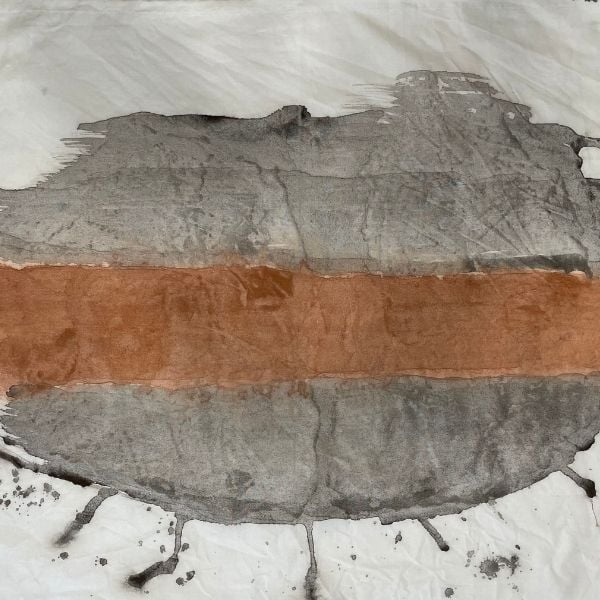
Once the pigment had dried, she would return to the fabric for what she describes as the reveal. Working with thieves and resists meant the final result could never be predicted completely. Pigment travelled differently through different layers, leaves left unexpected traces and each piece revealed something new when it was pulled apart.
Leslie remembers being so curious that she would get up early to see what had happened.
That uncertainty began changing her relationship with outcomes. Rather than trying to make the materials behave exactly as expected, she became increasingly interested in responding to what they actually did.
This was a significant shift. A result that differed from the original intention no longer had to be judged as unsuccessful. It could simply become the beginning of the next decision.
“You’re always going to learn something. It’s not a mistake.”
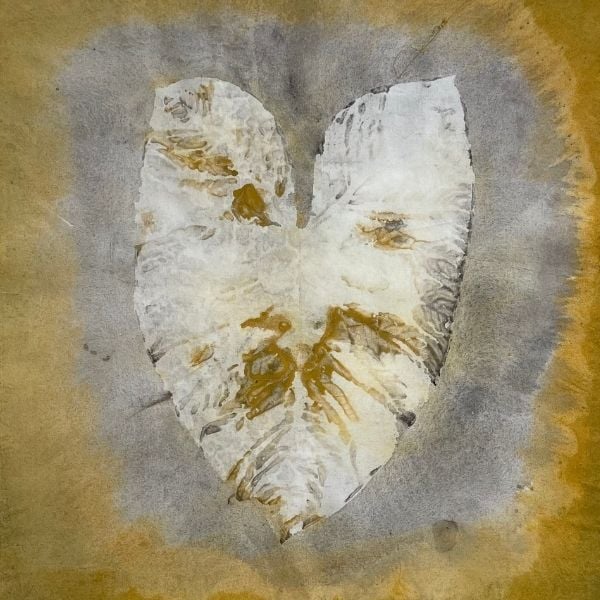
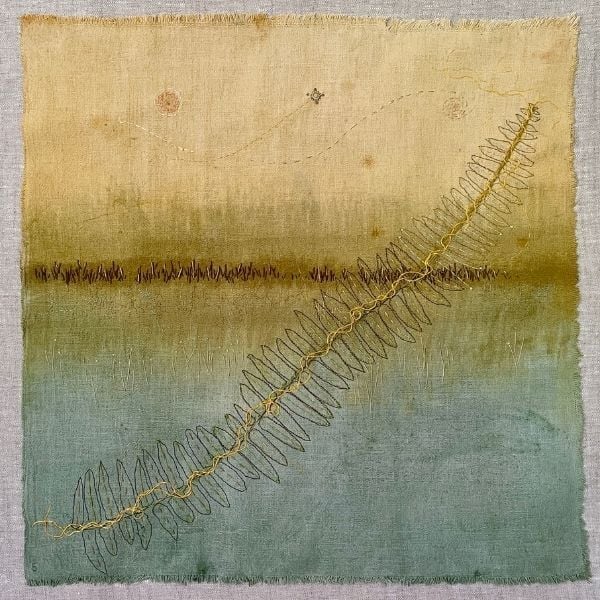
The idea became particularly important while Leslie was creating Colocasia, the work she later submitted to the student exhibition.
The piece takes its name from the elephant ear plants growing around her home. During the process, part of the leaf form began to disintegrate. Initially, Leslie was disappointed. She had wanted more of the leaf to remain visible and recognisable. Instead of trying to repair what had happened, she eventually began asking what the change might offer the work.
The deteriorating form started speaking to her about something much broader. Growth and decay became connected. The imperfect edge was no longer a problem to solve, but part of the life of the piece.
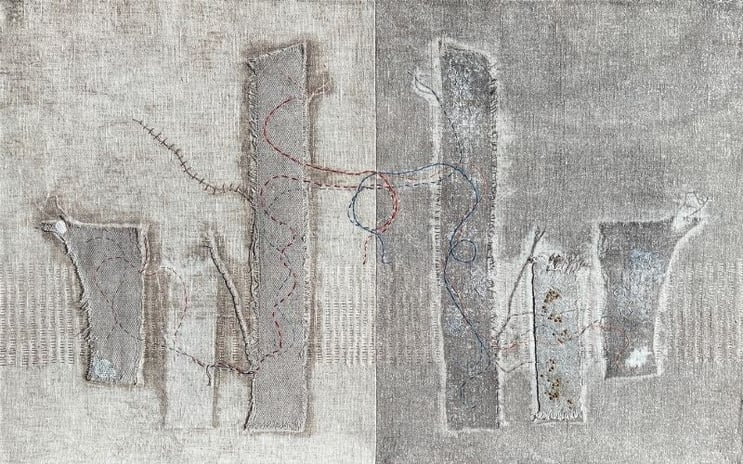
Leslie stitched into the work, removed stitches and stitched again. She also found herself returning to one of Claire’s ideas about simplifying and refining. Rather than continuing to add more, Leslie began removing what was unnecessary and allowing the pigment, shapes and surface of the cloth to do more of the work.
The process became an exercise in restraint as much as experimentation.
Feedback Leslie had specifically wanted feedback when she enrolled, and Claire’s engagement with students became one of the parts of the course she valued most.
What surprised her was that feedback was not always simply about receiving an answer. Claire encouraged students to become clearer about the question they were actually asking.
Was Leslie concerned about colour? Composition? Technique? Materials? Was she trying to understand why something had happened, or was she trying to decide where to take the work next?
Learning to make those distinctions encouraged a different level of self-awareness. Rather than automatically asking what had gone wrong, Leslie began looking more carefully at what she wanted from the work and what information she needed in order to move forward.
The student community reinforced that process. Seeing other artists encounter their own unexpected results demonstrated how many possible responses existed. A suggestion made to another student could easily unlock an idea in Leslie’s own practice.
Leslie’s relationship with materials also began changing.
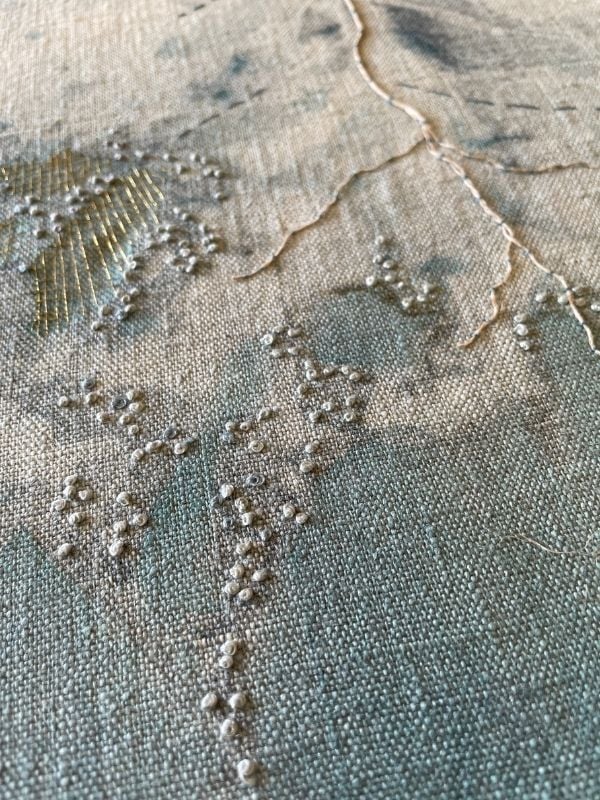
Linen had not previously been her preferred cloth, but repeated handling transformed the way she felt about it. The more she worked with the fabric, the more she appreciated its qualities. It gradually replaced cotton as one of the materials she instinctively reached for.
Earth pigments opened another kind of possibility.
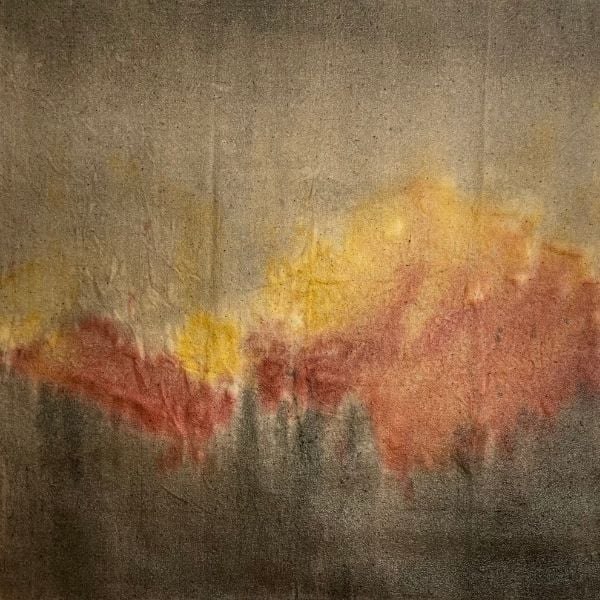
Leslie began recognising that limiting materials could actually expand her thinking. Working with a small number of colours or a single cloth forced her to look harder, experiment more and find variation within what was already in front of her.
Rather than needing more materials to create more possibilities, she began finding greater depth in fewer choices.
The student exhibition marked another significant point in Leslie’s return.
After 35 years away from exhibiting, submitting Colocasia meant placing her work back into a public context. Seeing it alongside work created by other students also allowed Leslie to appreciate just how differently each artist had interpreted the same materials and ideas.
The accompanying exhibition catalogue carried particular meaning.
For Leslie, seeing her work reproduced in print provided a kind of validation that she had not experienced for a long time. It became a tangible record of the moment she returned to exhibiting and something she could revisit as her practice continued developing.
It was not simply a record of a finished artwork. It marked a point in time when Leslie had begun showing up for the work again.
The most significant change in Leslie’s story may be one of the least complicated.
She is making regularly again.
There is preparation, curiosity and anticipation in her practice. There are questions she wants to answer and materials she wants to test. She is no longer trying to determine how to begin because she has already begun.
That renewed confidence also appears in the way Leslie talks about herself.
At the start of her interview, she introduced herself as a fibre artist and then paused to acknowledge how good it felt to say those words again after so many years.
The title had not disappeared because Leslie lacked the training or experience to claim it. What had been missing was the practice that made those words feel true to her.
Now they do.
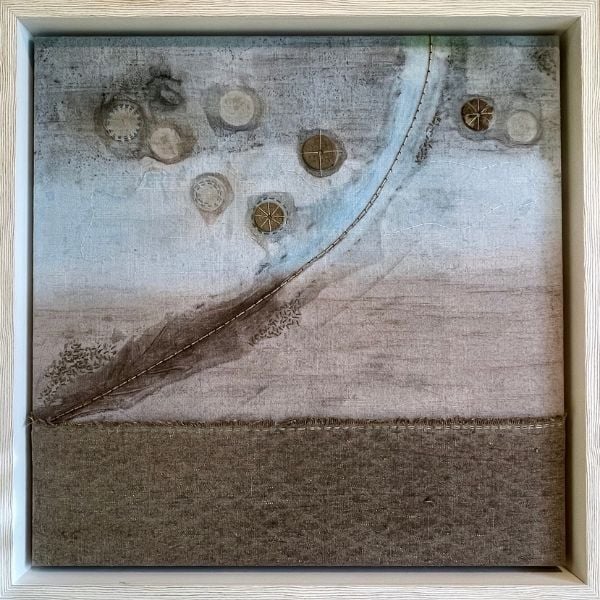
Leslie is already extending what she discovered in Out of This Earth into new territory.
She has begun exploring earth pigments and linen in three-dimensional forms while developing a new body of work around the concept of transplantation. The materials introduced through the course are therefore not remaining confined to the original exercises.
Instead, Leslie is asking how they might carry her own ideas.
That curiosity represents an important progression. The techniques have become tools rather than destinations, and Leslie is beginning to combine them with the experience and interests she already brings to her work.
There is no sense that she needs to know exactly where the new work will lead. The willingness to explore what happens next is now part of the practice.
Leslie believes Out of This Earth has something to offer artists at very different stages of experience. A beginner can develop practical skills and confidence, while an experienced artist can use the processes to question familiar habits and push work in new directions.
Her advice is also reassuringly practical. The techniques are approachable, the course materials can be revisited and the support of Claire and the student community means questions become part of the learning rather than evidence that something has gone wrong.
Most importantly, Leslie encourages future students to participate fully, prepare the materials, make the work and allow themselves to discover what happens.
“If you’re still on the fence about taking this class, I think you should just do it.”
For Leslie, doing exactly that helped reopen a part of her life that had been waiting for 35 years.
1 min read
When Jocelyn Vache pressed pause on her art practice, it wasn’t because she lost interest. It was because the materials she loved – acrylic paint and...
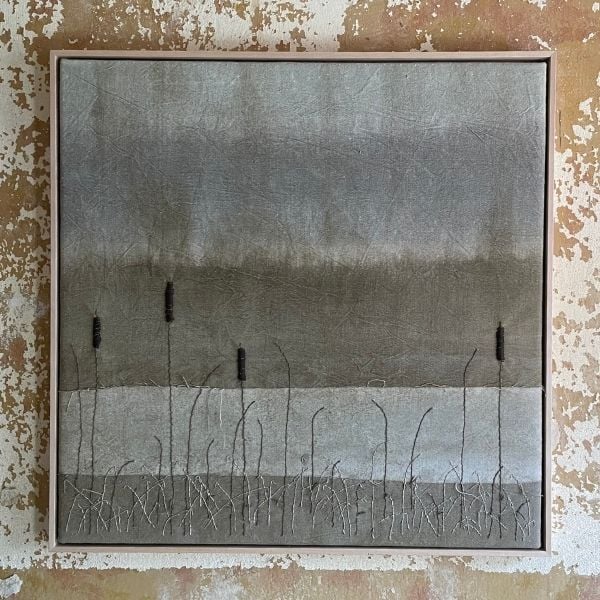
1 min read
For Susanne Lange, creativity had always existed in the margins of a full and demanding life. After decades working in social education, art was...
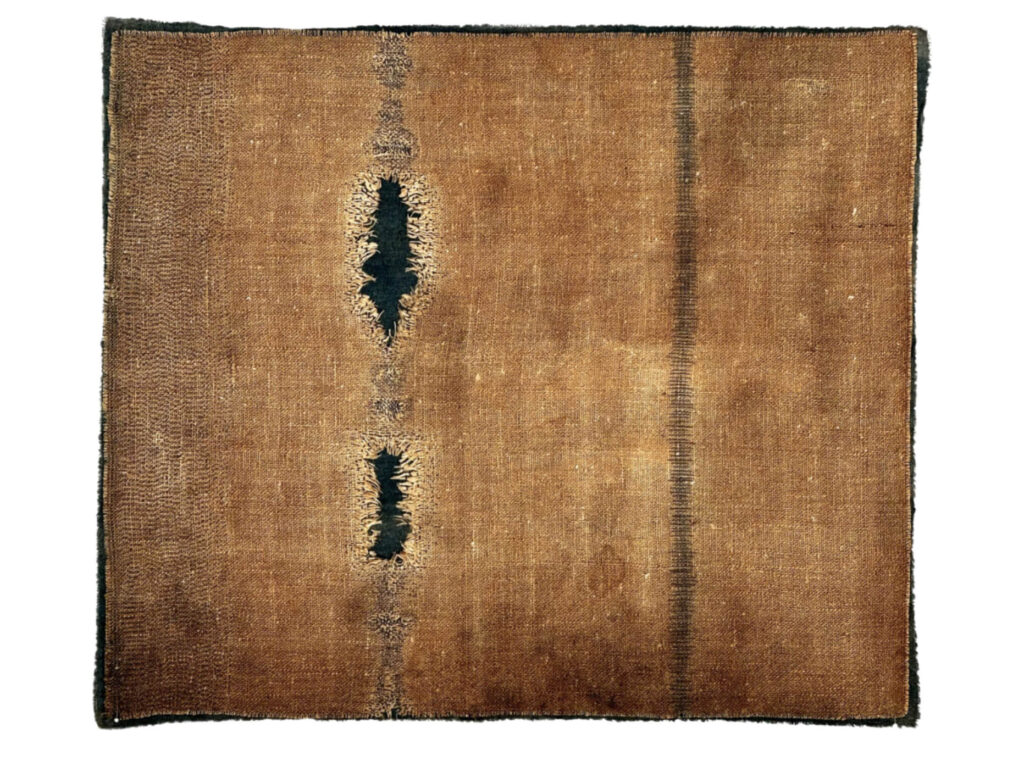
1 min read
.jpg?width=30&name=Benn%20TEXTure%20(6).jpg) Claire Benn : Mar 9 2024
Claire Benn : Mar 9 2024
A dialogue with my work While engaging with participants on the Out of This Earth online workshop a student (Marielle) commented, “It’s about...
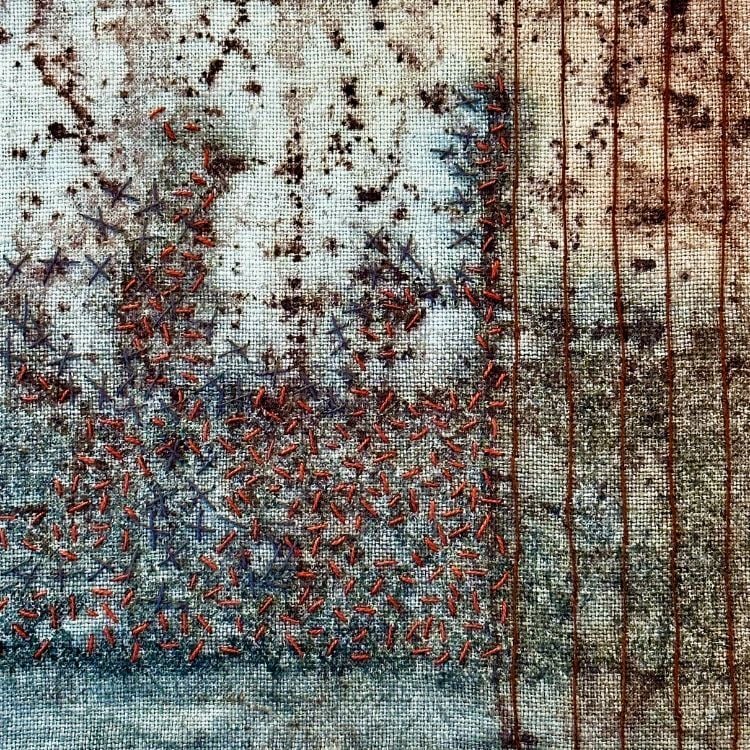
1 min read
Artist Claire Benn works in mixed media textiles, raw earth pigments, natural dyes, acrylic paint and thread. Her work is...