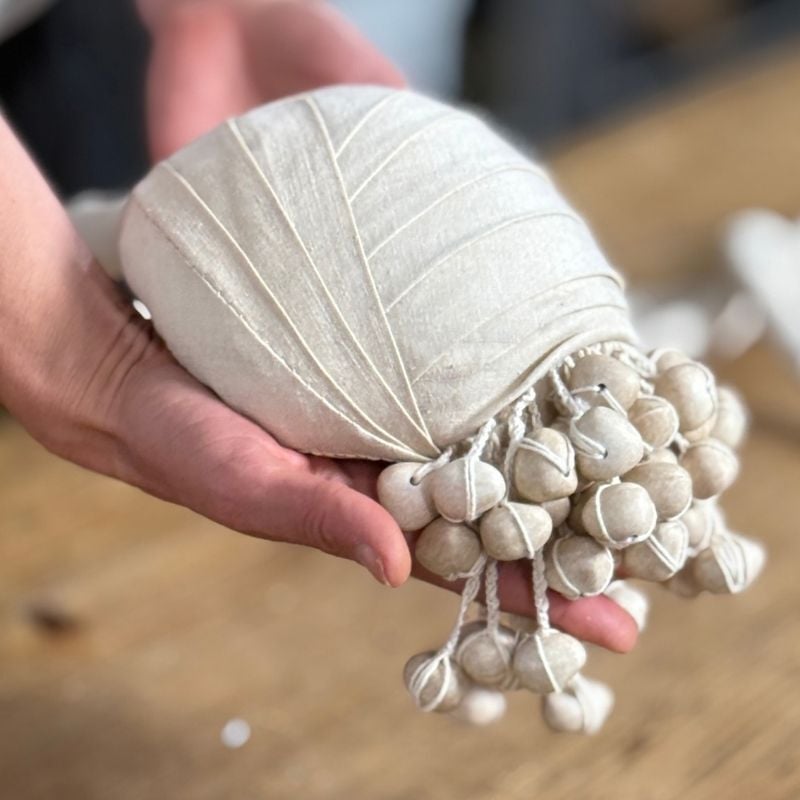
Fabric holds all kinds of memory: the crease of a fold, the shape of a body that once wore it, sometimes even the emotional weight of where it's been. What it doesn't hold on its own though, is a pose. While a hanger or a gust of wind can lift it for a moment, when it’s left to itself it sags and settles back into the shape gravity prefers.
So, what is an armature and what role does it play in sculpture? At its simplest, an armature is a framework - usually made of wire - that an artist can use to build their 3D piece around. It gives the piece shape, structure and form.
What an armature does for soft materials
Textiles excel at texture, colour, and surface, but they're not naturally load-bearing. A flat piece of cloth can hang beautifully on a wall, but the moment you want it to stand freely, or hold a twisted, dynamic pose, it usually needs something firm beneath it.
That's what an armature provides. It bears the weight and holds the pose, which frees the soft fibres to carry the story.
Whether it's a figure with one arm raised, or an abstract form reaching into the room, soft fabric alone can't hold that shape. And without some kind of support, even the most intricate stitching or the richest layering of cloth has nowhere to stand.
An armature allows textile art to take on a three-dimensional form.
Armatures also give you room to plan. Because it can define the base shape before a single stitch is made, you can adjust the balance of a piece early on, rather than discovering a problem after you’re partway through creating your artwork.
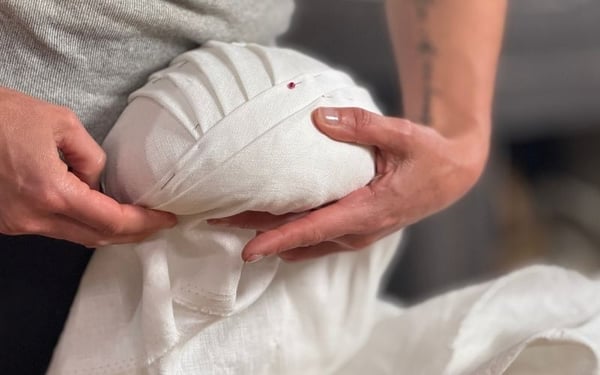 Tina Marais covering an armature while creating a fibre sculpture in Soft Revolution.
When textile sculpture doesn't need an armature
However, not all textile and fibre sculpture is built over a frame. Some artists skip the armature and change the nature of the fabric instead, by soaking cloth in materials like starch, plaster, or resin and shaping it while it's wet.
As it dries, the cloth sets hard, and a fold or drape that would normally relax stays exactly where it was placed by the artist. In these situations, the structure comes from the cloth, rather than from the armature hidden inside it.
How an armature is built for fibre sculpture
Most textile sculpture armatures start with wire: armature wire, aluminium wire, or for smaller pieces, something as simple as pipe cleaners or cardboard and tape. Wire mesh and plastic mesh are common too, especially for broader forms.
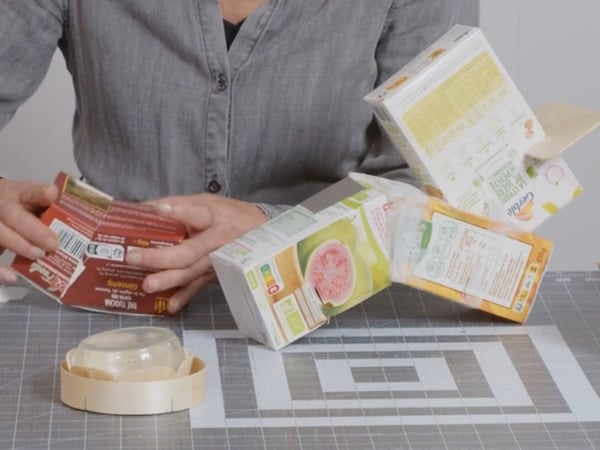 Tina Marais creating an armature using cardboard and tape during Soft Revolution.
The wire is bent and twisted into shape, and sometimes bound with tape to keep it in place, then anchored to a base if the piece needs to be freestanding. From there, the building begins: sometimes wrapping the frame with batting or stuffing to add volume, then layering textile, cloth or fibre over the top, secured with stitch, glue or both.
Scale changes the approach too. A small plate-sized piece can get by with very little (like cardboard or wood), while a larger piece often calls for heavier gauge wire and a weighted base.
Once the sculpture is created, the armature can either disappear, or stay on show: where a visible joint or an exposed wire edge becomes part of the work rather than something to hide.
Armatures beyond textile art
Armatures aren't unique to fibre work. Sculptors have used them for centuries in wax and clay, and they show up in contemporary ceramics too, as a base for building and layering porcelain or clay before it's fired.
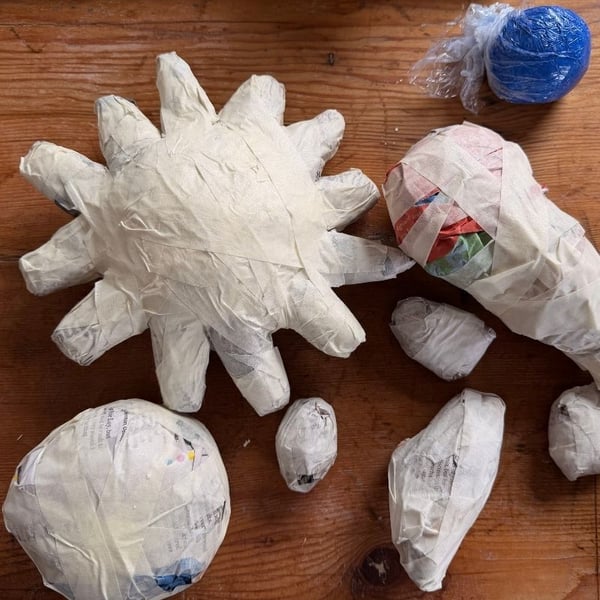 Armatures from Curious Matter with Juz Kitson (contemporary ceramics)
Stop motion animators rely on jointed metal armatures inside most puppets, tucked under a layer of silicone or fabric, so a figure can take up a new position in every single frame.
Wherever a soft or malleable material has to hold a shape it wouldn't keep by itself, an armature is usually the answer. The material changes. The problem it solves doesn't.
The bones beneath the work
Once you understand what an armature is, it's hard to look at dimensional textile art the same way.
Behind many an impossible-looking twist or drape of cloth, there's a structure quietly doing the work underneath. But never think that it’s a shortcut - it's what makes a more ambitious version of the piece possible.
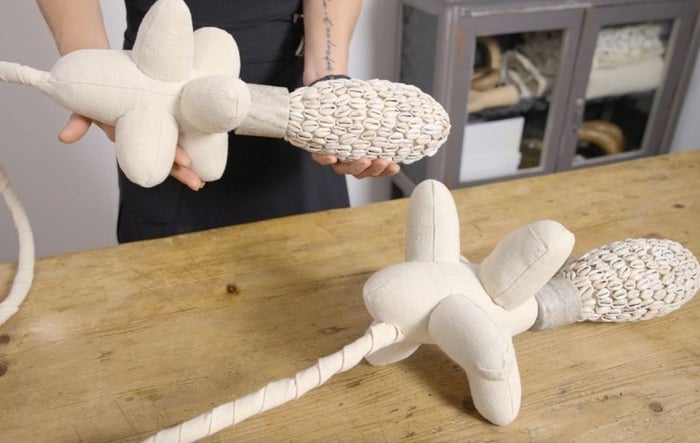 Artwork by Tina Marais
If you'd like to learn how to create your own dimensional sculptures, Tina Marais covers armature building in her online course Soft Revolution: Fibre Sculpture, alongside Canadian smocking, wrapping, binding, and appliqué. She also shares the techniques and philosophies that helped her grow from kitchen-table explorations to international exhibitions.